MM vs MC: Which Cartridge Is Right for You
Moving magnet or moving coil — the difference, explained properly
Two letters decide more about your vinyl sound than most spec sheets will admit: MM or MC. Moving magnet, moving coil. This guide walks through what actually separates them — how they work, what they cost to live with, and which one belongs under your tonearm right now.
How they actually work
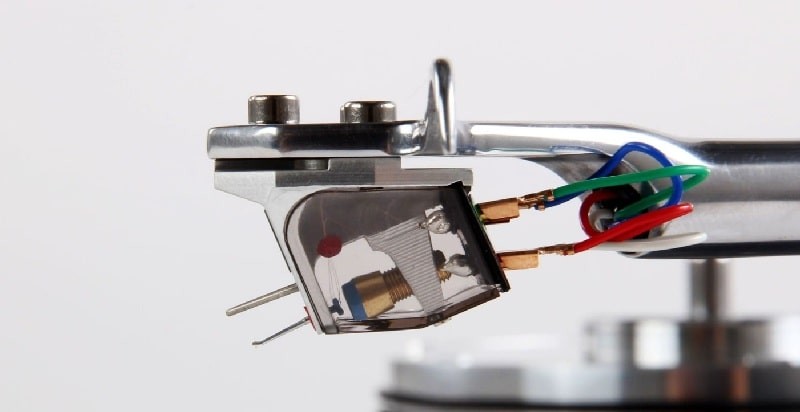
A cartridge turns the groove into an electrical signal by moving a magnet near a set of coils. In a moving-magnet design, the magnet does the moving — it sits at the top of the stylus assembly while the coils stay fixed. In a moving-coil design it is reversed: tiny coils wound on the cantilever move inside a fixed magnet.
That sounds like an engineer's footnote. It is the root of everything else. The coils in an MC weigh far less than the magnet in an MM, so the moving part is lighter and tracks the groove more readily. Every difference that follows — sound, price, upkeep — grows from that one fact.
Output and phono stage: where it really matters
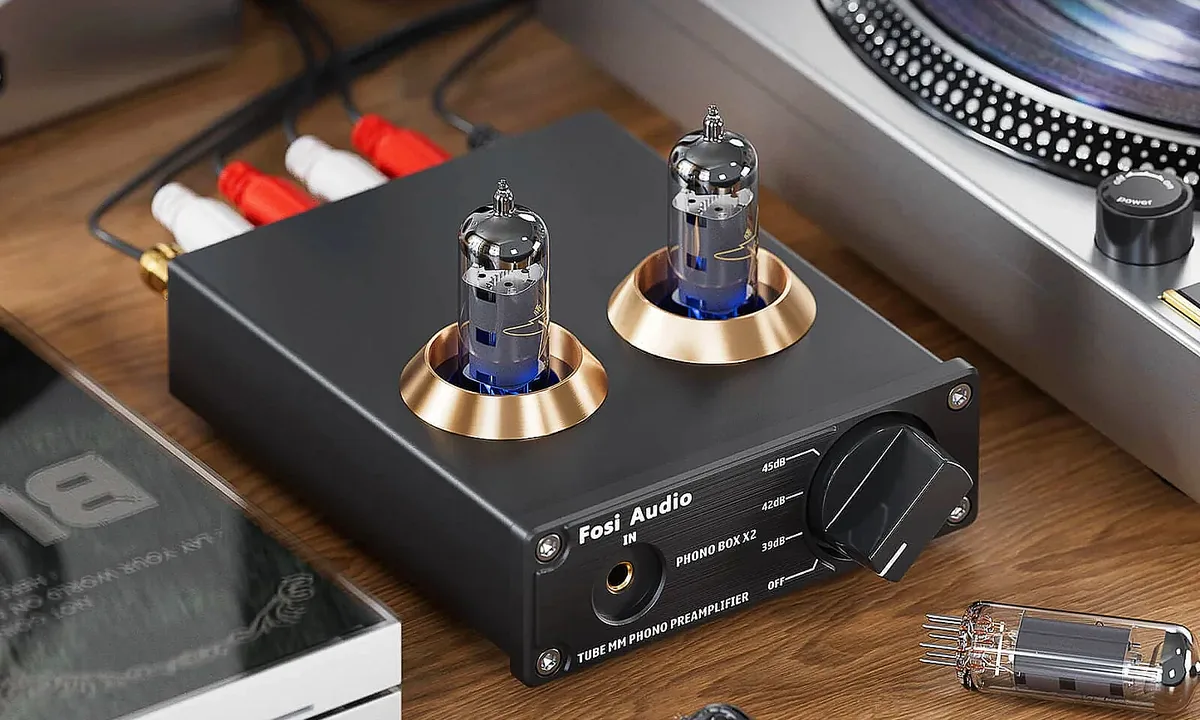
The most important practical difference is not the sound — it is the signal level. An MM puts out around 3-5 mV, enough to drive any standard MM phono input: the kind built into your amplifier or an entry-level preamp. A low-output MC puts out 0.2-0.5 mV, a signal ten times weaker that needs a dedicated MC stage or a step-up transformer to be lifted without drowning in noise.
So an MM works with what you most likely already own. An MC forces the right phono stage into your budget too. High-output MCs exist — around 2-2.5 mV, happy on an MM input — but they are the exception, not the rule.
The stylus question
On an MM, the stylus is a part you pull off and push back on. When it wears, you buy a new one and fit it in thirty seconds. Often you can step up within the same family — an Ortofon 2M Red becomes a 2M Blue by swapping the stylus alone. That is a safety net, and a cheap one.
An MC offers no such thing. Stylus and cantilever are bonded to the body: when the tip is gone, you send the cartridge away for a retip or replace it outright. The sound may justify the cost. The cost, over years, is a different conversation.
The sound, minus the mythology
Generalising about sound is always risky, but a tendency holds. Moving magnets lean warm, full and forgiving: bass with weight, a solid midrange, a texture that excuses a tired pressing or an imperfect arm. Moving coils lean faster and more analytical — more detail, more air up top, surer tracking through crowded passages. In return, they show you a worn record, or a weak link in the chain, without mercy.
One rule survives all the theory: a good MM in a good system beats a cheap MC in a system that cannot use it. The cartridge is a link, not the whole chain.
Which one for you: MM, nearly always
If you are starting out, or you want a path with no headaches, the answer is moving magnet. It costs less, works with the phono stage you already have, costs almost nothing to maintain and forgives mistakes while you learn. The safest first step is the Ortofon 2M Red: the de facto entry-level standard, even-handed and neutral, with the bonus that it can grow — swap the stylus for a 2M Blue when you want more.
Moving coil comes later, once the rest of the system — arm, phono, speakers — is ready to show what it can do. It is not a starting point.
The warmer alternative, for rock and soul
If you mostly play rock, soul and funk, the Nagaoka MP-110 is the other road worth taking. It is a Japanese MM with a warmer, fuller character than the Ortofon — full bass and a forward midrange that let an Otis Redding or Curtis Mayfield record breathe. It costs noticeably more than the 2M Red, though not for its value: in Italy it arrives only through indirect channels, and its international price is lower. For some collections it is still the cartridge that keeps you spinning one more side.
For anyone starting out, and for most collectors, the answer is moving magnet: cheaper, simpler, near-free to maintain, and forgiving. Treat moving coil as a destination, not a starting line — you get there when the rest of the system is ready to thank you for it.
Can I use an MC cartridge with my MM phono stage?
Only if it is a high-output MC (around 2-2.5 mV). Low-output MCs (0.2-0.5 mV) need a dedicated MC phono stage or a step-up transformer; on an MM input they would sound thin and noisy.
Does an MC cartridge always sound better than an MM?
No. It depends on the whole chain. A good MM on a capable arm, phono stage and speakers beats a cheap MC fitted to a system that cannot use it.
Can I upgrade just the stylus on an MM?
Yes, and it is one of its advantages. You often stay within the same family and step up — for example from the 2M Red stylus to the 2M Blue — by changing only the tip.
How long does a stylus last?
Roughly 500 to 1,000 listening hours, depending on the tip profile and the condition of your records. Inspect it periodically and, when in doubt, replace it before it damages the grooves.