Punk and Prog in London: Two Sides of the Same Passion
From the prog big bang to 430 King's Road: two revolutions, one city
London is the city where progressive rock exploded — long suites, concepts, virtuosity — and the same one where, a few years later, punk tore it apart with three chords and no reverence. Two opposite revolutions, sometimes on the same streets. For a collector they're two sides of one passion: two worlds of grails living side by side. This guide is about that tension, and where to buy the records today.
A t-shirt on the King's Road
Two revolutions, a few years apart, on the same stretch of London pavement — that is the whole story of rock in this city, and it is written on a t-shirt. In 1976, on the King's Road, a surly kid named John Lydon is wearing one he has scrawled by hand to read "I Hate Pink Floyd". Outside Malcolm McLaren's shop, the people looking for a singer for a still-nameless band notice him. They take him. Johnny Rotten is born, and with him the Sex Pistols.
Sit with that detail, because it holds everything. Punk was born literally against prog — against Pink Floyd, against virtuosity, against Serious Music with a capital S — and it was born on the very King's Road where, a few years earlier, progressive rock had been at home. Two exactly opposite revolutions, in the same city, sometimes on the same pavement. That's what makes London unrepeatable for a rock collector: you can chase the prog grail and the punk grail without changing neighbourhood.
Two big bangs, a few years apart
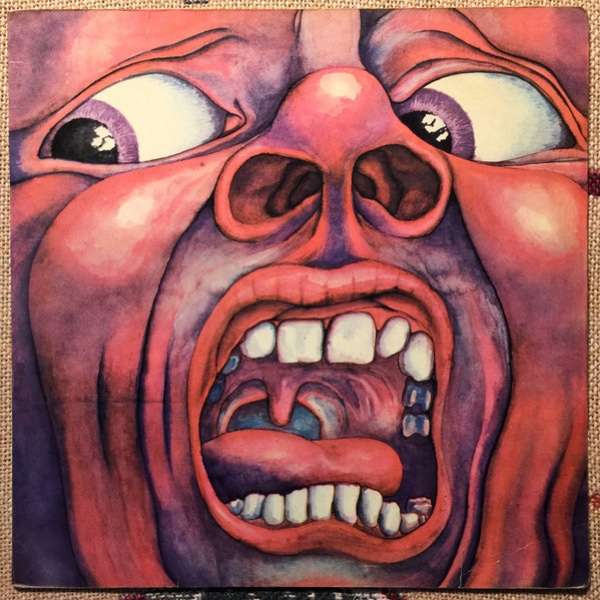
The first is 1969. In the Court of the Crimson King by King Crimson — a band that formed in London in the late 1960s — is the record that detonates progressive rock: structure, ambition, the mellotron as a cathedral. Behind it comes a whole scene — Yes, Genesis, Emerson, Lake & Palmer — and a handful of labels that still quicken a collector's pulse: Island, Charisma, EG, and above all Vertigo, whose spiral swirl logo on the first pressings is a grail in itself.
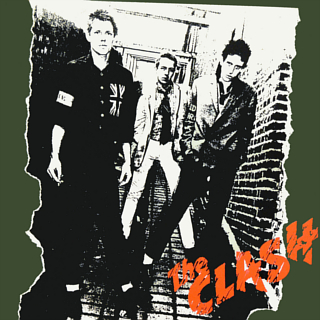
The second big bang is 1976, and it has a precise address: 430 King's Road. There Malcolm McLaren and Vivienne Westwood ran a shop that changed name and skin every season — Let It Rock (1971), then SEX (1974), then Seditionaries (1976), finally World's End (1980) — and out of that shop, quite literally, came a band. The Sex Pistols grew out of the 1972 Swankers/The Strand; Glen Matlock, who worked at SEX, joined in 1974; McLaren became manager in 1975; Rotten arrived, as we said, via a t-shirt. They would split in January 1978, but by then they had opened a door through which came The Clash, The Damned and half of England.
The contrast is total, and it's the point. Prog was virtuosity, concept albums, twenty-minute suites; punk was DIY, three chords, anti-technique on principle. One said "look what I can do," the other "you can do it too, right now." Same city, two opposite ways of meaning the same thing.
And yet the geography unites them. The King's Road, Soho, Camden: the same streets that had housed prog's ambition watched its negation being born. In London the two revolutions aren't separate chapters of a history book but facing pages — and that's what a collector walks through today.
Labels, artists and the collector's bridge
On the prog side the pantheon is familiar — King Crimson, Yes, Genesis, ELP — but for the collector it's the pressings that count: originals on Vertigo swirl, on Island's pink "palm tree", on Charisma and EG, with all their label and matrix variants. That's where the value is decided.
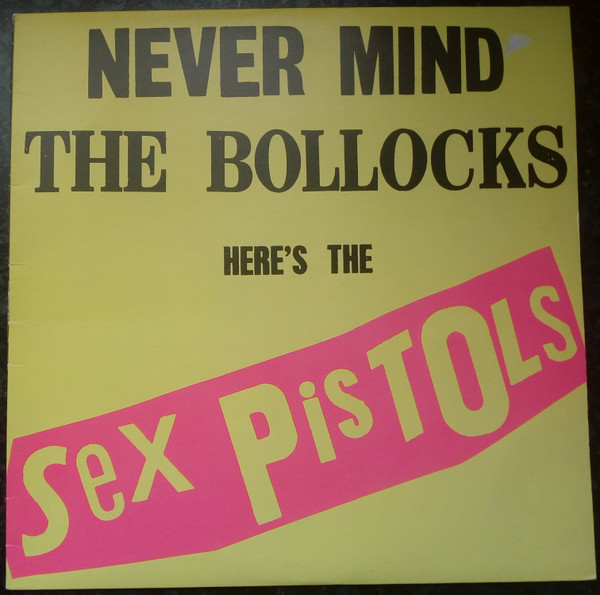
On the punk side the pantheon is shorter and louder — Sex Pistols, The Clash, The Damned, and the Buzzcocks out of Manchester — and the labels tell the story of the do-it-yourself ethic: Stiff, Chiswick, and Rough Trade, which grew from the 1976 shop into a label in 1978, the backbone of British indie. Here the grails are the original singles from the first wave and the early pressings of Never Mind the Bollocks, with all their sleeve and print-run complications.
And that's the bridge between the two worlds: prog and punk look like enemies, but they share the same devoted collector, the same obsession with the original, the same London geography. Two sides, one passion.
The records to look for
Two hunts, two logics. On the prog side, vintage Vertigo swirl and Island originals are true grails: you hunt them second-hand and with specialists, by pressing and condition, not on a big store. A first pressing of In the Court of the Crimson King is the summit, but the whole scene — Yes, Genesis, ELP — has its coveted pieces.
On the punk side, the hunt is for original 1976-78 singles and the early pressings of the big albums: objects often pressed in a hurry, in unpredictable runs, and precisely for that reason tricky to authenticate. Alongside the originals, curated reissues make almost the whole repertoire accessible — the right route for anyone who wants to listen rather than chase.
Cross from one world to the other and you learn they're rare in opposite ways. Punk is rare through instability: different sleeves, print runs revised mid-stream, versions withdrawn and re-pressed within weeks, error and haste as a hallmark. Prog is rare through meticulousness: a label variant, a matrix, a large or small swirl logo can decide hundreds of pounds. Two grammars of rarity — chaos on one side, philology on the other — that ask the collector for two different eyes.
Working rule for both worlds: the original matters, but a well-mastered reissue beats a tired, scuffed original, so weigh the vinyl's condition over the sleeve. Our original pressing vs reissue guide goes deeper.
Which pressing? Check it on Discogs ↗
Which pressing? Check it on Discogs ↗
Which pressing? Check it on Discogs ↗
Where to find them today
Punk has its precise addresses. All Ages Records (Pratt Street, Camden) is the heart: a punk and hardcore specialist since 2003, the place the scene gathers. Rough Trade — opened in 1976 in Ladbroke Grove, today Rough Trade West on Talbot Road — is shop and label in one, a piece of history still running. And Sister Ray (Berwick Street, Soho) keeps the punk and alternative flag flying in the centre.
Prog, on the other hand, has no shop of its own — and that too tells you about the two worlds. It lives in the second-hand racks and the digging: Flashback (with branches around Islington, Shoreditch and Crouch End) turns up first pressings and the Vertigo/Island grails; Reckless (Berwick Street) carries a catalogue that bridges punk and prog in a single afternoon. Fittingly, it's Berwick Street — Soho's "vinyl alley" — that unites the two: Sister Ray and Reckless a few doors apart.
And then there are the landmark places, not record shops but obligatory stops: 430 King's Road, once again World's End today, remains a pilgrimage for anyone who loves punk; Camden and Berwick Street itself are the living geography of this story. Always check the hours before you go.
Who this page is for
Anyone in London chasing rock in its two revolutions: collectors of prog first pressings (Vertigo swirl above all), hunters of original punk singles, and anyone who finds it fascinating that the two worlds shared a single city. For the whole map, start with our London record shops guide; for neighbouring genres, see reggae & dub in London and jazz vinyl in London. The next chapter of this story — post-punk — was written instead by Manchester, with Factory Records.
For punk, All Ages in Camden is the heart, with Rough Trade and Sister Ray to complete it; for prog, the grail lives in the second-hand racks of Flashback and Reckless. Berwick Street unites the two. Two opposite revolutions, one city that holds them both.
Where can I buy punk records in London?
All Ages Records in Camden is the go-to punk and hardcore specialist, opened in 2003. Rough Trade West on Talbot Road (opened in 1976 in Ladbroke Grove) is both shop and label, and Sister Ray on Berwick Street keeps a strong punk and alternative section in the centre.
Where do I find prog on vinyl in London?
Prog has no dedicated shop: it lives in the second-hand racks and in crate digging. Flashback (Islington, Shoreditch, Crouch End) is great for first pressings and the Vertigo and Island grails; Reckless on Berwick Street bridges prog and punk.
Why does London matter for both prog and punk?
Because both revolutions were born here a few years apart: prog with In the Court of the Crimson King (1969), punk with the Sex Pistols who came out of the shop at 430 King's Road in 1976. Two opposite movements, often on the same streets.