Blue Note Records: 85 Years of Sound That Never Ages
Alfred Lion, Van Gelder, Reid Miles and the Tone Poet Series. 85 years of jazz on vinyl.
New York, 6 January 1939. Alfred Lion is twenty-eight years old. He arrived from Germany two years ago, and last night he heard Albert Ammons and Meade Lux Lewis play boogie-woogie at the Spirituals to Swing concert at Carnegie Hall. He cannot sleep. The next morning he calls his friend Max Margulis, gathers four hundred and fifty dollars, and rents a recording studio.
Blue Note Records is born from that session. Not from an industrial plan, not from investment capital, not from market analysis. From a man who cannot keep still after hearing something extraordinary. It is perhaps the best way to start a record label.
Alfred Lion and the honest sound
Alfred Lion and Francis Wolff — both German Jews who fled Nazism — build Blue Note on a simple principle: musicians must feel at ease. Sessions begin in the late afternoon, not in the morning. Musicians are paid well. There is a full rehearsal the day before. Lion stays in the studio until the take is perfect — not until the budget runs out. It is a work ethic that jazz had never encountered at this level before.
"There's nothing like playing for someone who really understands what you're doing." — Miles Davis on Alfred Lion
Rudy Van Gelder and the Hackensack sound
Rudy Van Gelder is an optometrist by profession and a recording engineer by vocation. He records Blue Note in his parents' living room in Hackensack, New Jersey — where he has built a studio with acoustic isolation that professional studios did not have. The Van Gelder sound is recognisable: deep and defined bass, brilliant cymbals without harshness, piano with immediate presence, horns with body and air together. It is not a technical recipe — it is an ear.
Original Van Gelder pressings are not collected only for their historical value. They are collected because they sound in ways that reissues, however carefully produced, have not yet fully replicated. The bass definition on an original A Love Supreme, the midrange presence on a first pressing Maiden Voyage — these are qualities you feel physically, not merely describe.
Reid Miles and the covers that changed design
If the sound of Blue Note is Van Gelder, the images are Frank Wolff. For thirty years, until his death in 1971, Wolff photographs every session with an artist's eye. His black-and-white photographs of Miles Davis, Thelonious Monk, Lee Morgan build an iconography that still defines the aesthetic of jazz today. The graphic designer Reid Miles — who signs almost 500 Blue Note covers between 1956 and 1967 — transforms those photographs into objects of radical design. Wide-spaced typography, flat colours, asymmetric compositions. A Blue Note cover from the Sixties is recognisable at three metres' distance.
Records to have in your collection
There is no single definitive list — Blue Note published over a thousand albums in sixty years. But there are certain titles that every jazz collector sooner or later encounters.
The Tone Poet Series: when the present respects the past
In 2019 Blue Note launches the Tone Poet Series — audiophile reissues produced by Joe Harley and mastered by Kevin Gray from original analogue tapes, pressed on 180g vinyl by RTI. It is the most serious answer the market has seen: how to listen to Blue Note in 2025 without spending collector prices for every single record.
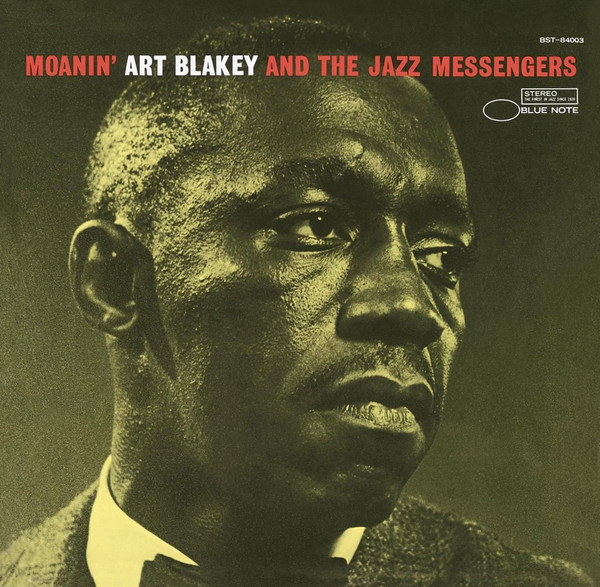
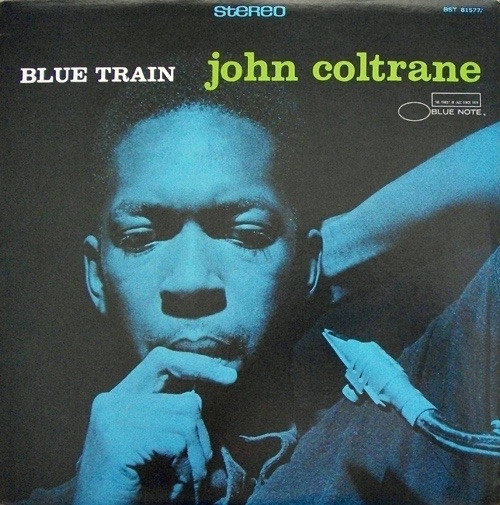
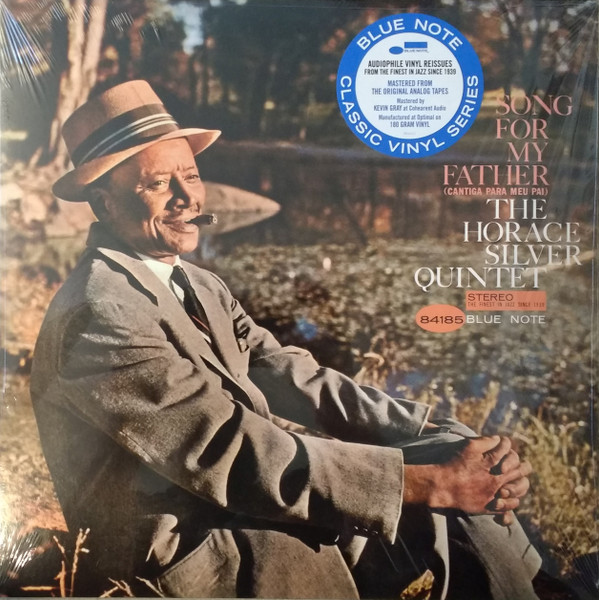
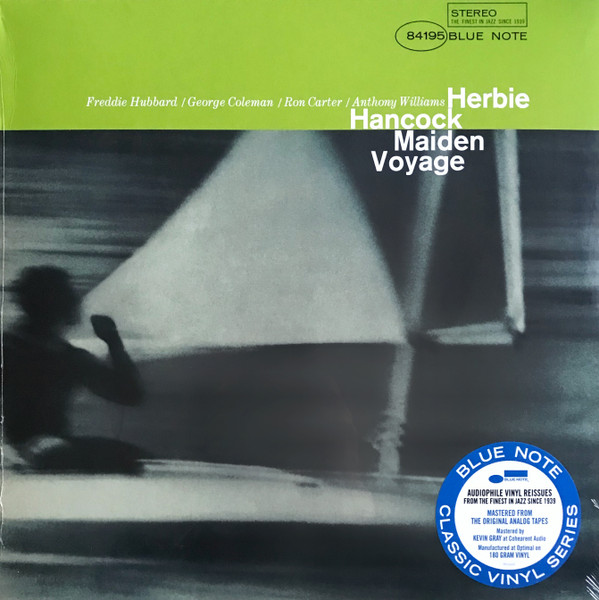
Mastered by Kevin Gray from original analogue tapes. Gatefold sleeves on heavy stock. Prices between £35 and £55 per title. The four titles to start with: Maiden Voyage (Herbie Hancock), Moanin' (Art Blakey), Blue Train (John Coltrane), Song for My Father (Horace Silver).
"Blue Note never made background music. It always made music for listening — with attention, with respect, with the record on the platter and the volume up." — Groov-illa
John Coltrane — Blue Train
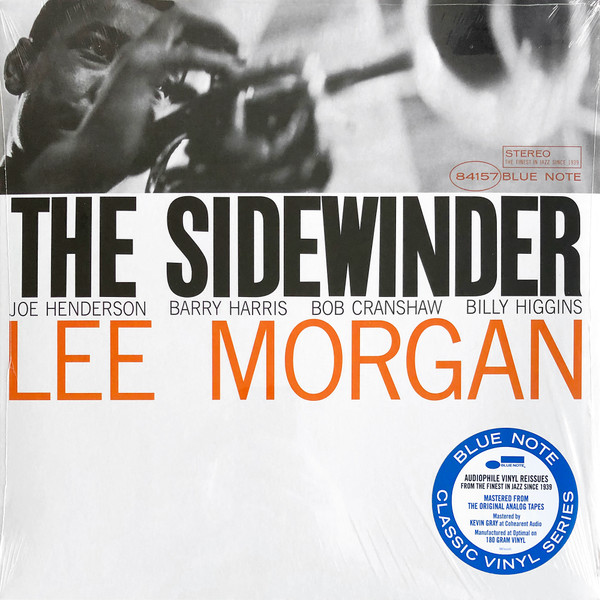
Lee Morgan — The Sidewinder
Herbie Hancock — Maiden Voyage
Horace Silver — Song for My Father
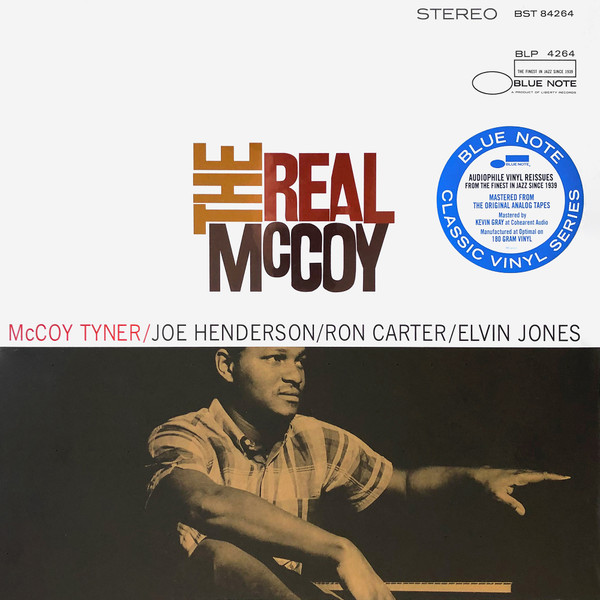
McCoy Tyner — The Real McCoy