From Rocksteady to 2 Tone: How Jamaica Reached Coventry
2 Tone wasn't a ska revival. It was Britain's second generation re-accelerating their parents' Jamaican rhythm and grafting it onto punk. In Coventry.
Call it a "ska revival" and you've already missed it. Put on a Jamaican rocksteady side from 1967 and a Specials single from 1979 and you don't hear a revival — you hear a mutation. It can be the very same song: Dandy Livingstone's "A Message to You Rudy," with Rico Rodriguez on trombone both times, twelve years and an ocean apart. But the second time it's re-accelerated, wired to the mains, sung by a different generation in a different country. That gap is the whole story.
What happened in Coventry at the end of the 1970s was not a nostalgic quotation of an old music. It was a second generation answering the music their parents had carried over from the Caribbean. The Jamaican rhythm that crossed the ocean was picked up by the British children of that migration, switched back on and grafted onto the urgency of punk. Not a revival — a reinvention. The geography of migration turned into sound.
Where we start: rocksteady
It's worth being precise about the starting point. This is not the original Jamaican ska — that of the very early 1960s, too far back for this story. It's ska's slower child: rocksteady. Around 1966, as American soul turned softer, ska eased off — less frenzy, more weight on the downbeat, more sinuous basslines, warmer voices — and for a couple of years, peaking in 1967, it ruled Jamaica before giving way to reggae in 1968. It was the season of the great vocal groups — the Paragons, the Heptones, the Melodians — and of a bassline that stopped running and started to sing: it's that swaying step, not ska's sprint, that is 2 Tone's genetic material.
When the sound reaches Coventry
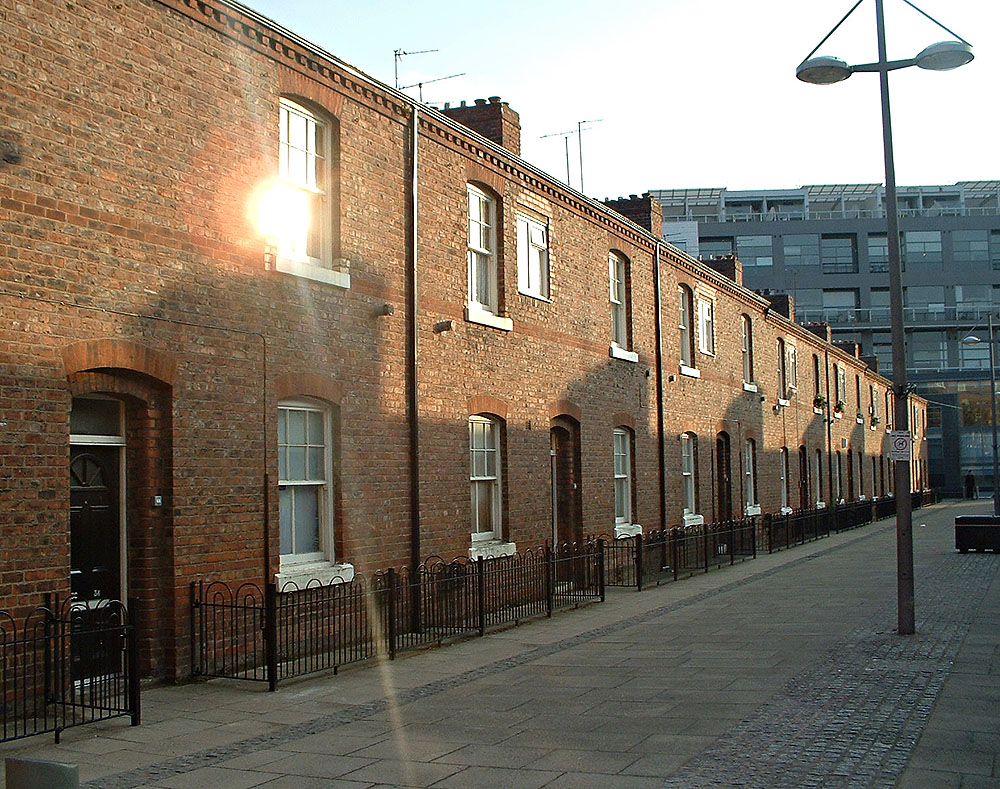
How reggae reached England we've told elsewhere — the Windrush generation, the sound systems, the pop conquest through Trojan. Here it's enough to recall where part of that sound landed: not only London, but the industrial Midlands. Coventry was a city of factories, above all the car industry, and like nearby Birmingham it drew Caribbean communities looking for work in the post-war years. The figures put it soberly: by 1961 more than thirteen per cent of Coventry's residents had been born outside England and Wales, with the Caribbean share growing fast. In those houses, in those neighbourhoods, the Jamaican records kept spinning — brought over, bought, lent around. It's the sound a generation of British children grew up inside.
But the moment matters as much as the place. By the late 1970s Coventry was no longer the boom town of the post-war years: the car industry was faltering, unemployment was biting, and racial tension was rising as the National Front sought a foothold precisely among white youth in the industrial cities. It was in that climate — not in the abstract, but in a specific England of closing factories and edgy streets — that a mixed generation, Black and white, chose to play the music of the Caribbean together. Geography said where; 1979 said why now.
And those records didn't sit still. Caribbean music in the Midlands lived as it did in Kingston: at house parties, at blues dances, around the sound systems that had crossed the ocean with the people. A Coventry kid might know rocksteady before the Beatles — not exotic music to be rediscovered, but the soundtrack of the street, the bass coming through the wall next door.
The second generation turns the tempo back up
And here is the turn. The kids who formed the 2 Tone bands at the end of the 1970s had grown up listening to those 1960s records — that's the widely shared "second generation" reading: not Jamaican but British, children of the music more than of the island. They were mixed bands, Black and white together, a fact that matters here as a sonic one before it's a political one (the politics of the label is another story, one we tell separately). They took rocksteady and early reggae and did something that would never have occurred to their parents: they sped it back up, made it fuller and harder, and grafted on the guitar and the urgency of the punk they'd been hearing.
What actually changes between rocksteady and 2 Tone? The rhythmic heart stays the same — the guitar chopping the chord on the offbeat, the upstroke reggae calls the skank — but everything is pulled tight. The tempo climbs, the guitar turns drier and sharper, the drums push instead of sway, and the voice loses the soul warmth of 1967 for the shouted urgency of punk. It's the same dance step played by people who also have the Clash in their bones. Line up the '67 original and the Specials' version and you hear it at once: not a change of song, a change of adrenaline. The codes inherited from the sound systems survive too — the voice that calls and the room that answers, the spoken-rhythmic toasting over the beat — but sung now in a Coventry accent, not a Kingston one.
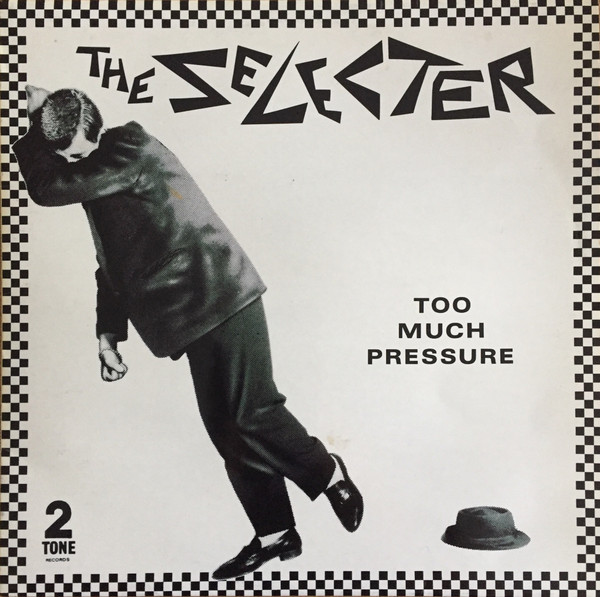
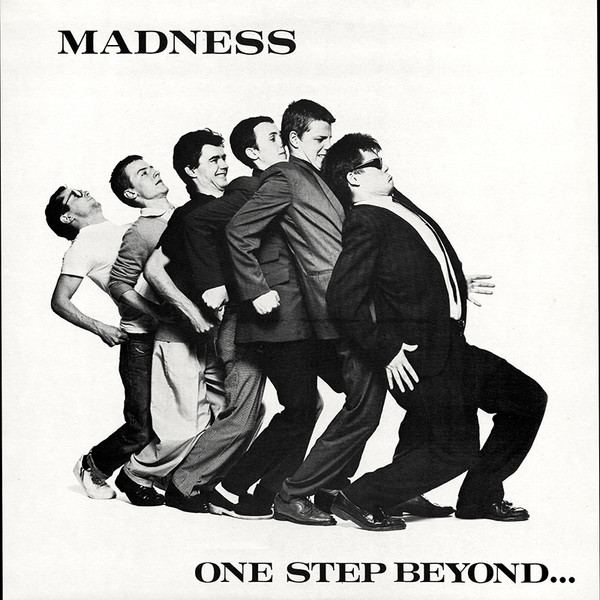
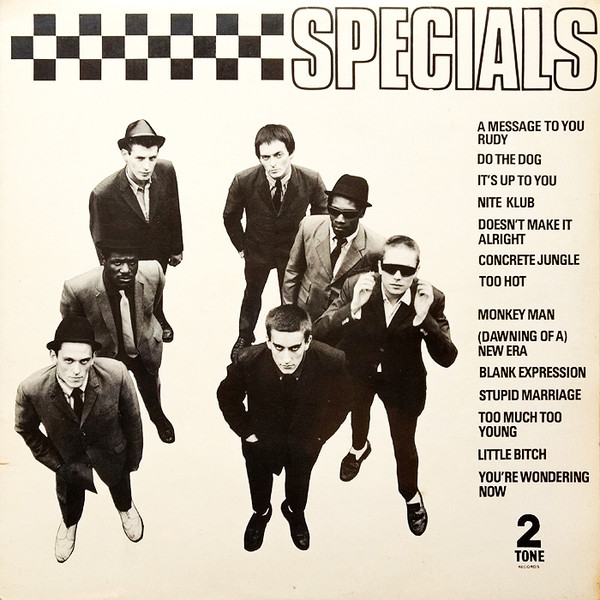
The result has a date and a place: the late 1970s, Coventry. The Specials — formed in 1977, debut album in 1979 — were its flagship; around them, from the same city and its neighbours, the Selecter, and just beyond, Madness and The Beat. The faster tempo, the denser instrumentation, the harder edge next to 1960s ska weren't a betrayal: they were that rhythm translated into the language of kids raised in an England of unemployment and racial tension. Coventry — a working-class, multi-ethnic city — was the perfect crucible.
Reinvention, not revival
This is why "revival" is the wrong word. A revival looks back and copies; 2 Tone looked at itself, at the present of the people playing it. It didn't bring a dead music back to life: it took a music still living — the one playing at home — and forced it to become contemporary. The Specials' cover of "A Message to You Rudy" isn't an archival tribute: it's the same song changing citizenship, ceasing to be Jamaican and 1967 to become British and 1979, without ceasing to be itself. It's the gesture of people who inherit something and decide to rewrite it rather than keep it under glass.
2 Tone didn't revive a dead music. It took the music playing at home and forced it to become the present. — Groov-illa
The object: checkerboard and rude boy
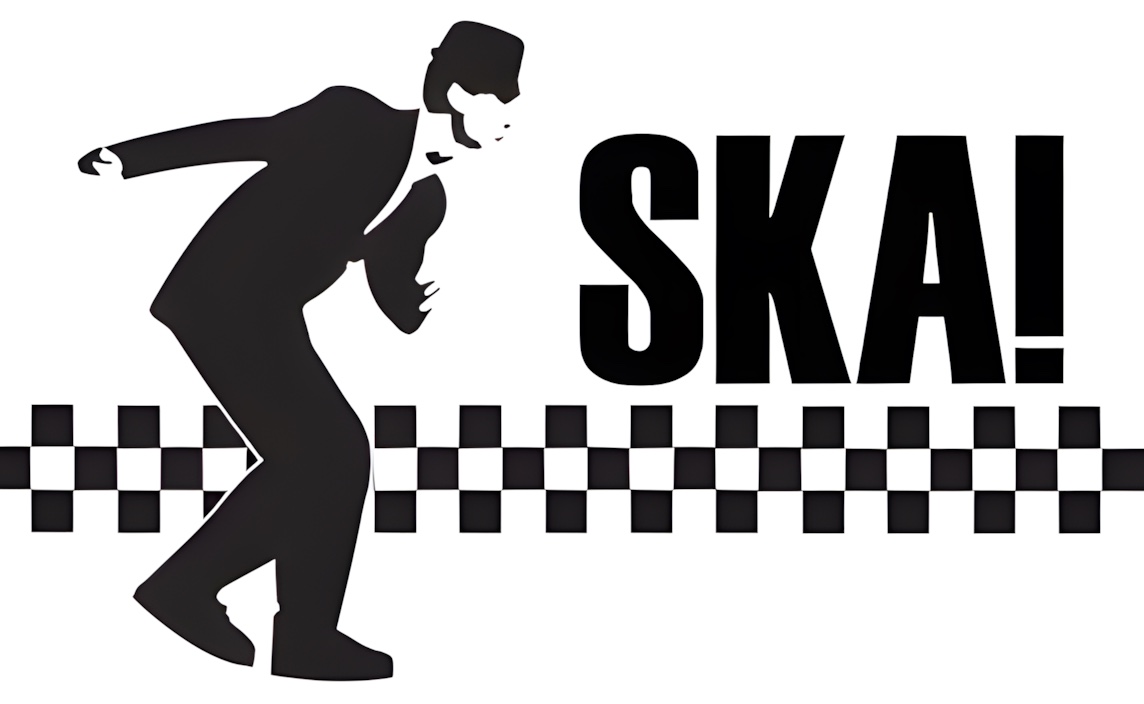
There's a final layer, and it's the one the collector knows best: the object. In 1979 Jerry Dammers of the Specials founded 2 Tone Records in Coventry — at 51 Albany Road, Earlsdon — backed by Chrysalis, and gave it a visual identity that became more famous than almost any single record: the black-and-white checkerboard and a little man in a black suit, white shirt, thin tie and pork-pie hat, the rude boy known as Walt Jabsco. And here's the detail that closes the circle of this whole story: Dammers drew that figure — with Horace Panter — from a photograph of Peter Tosh on the cover of The Wailing Wailers. The face-symbol of British 2 Tone is, literally, a Jamaican musician redrawn by Midlands kids. Migration turned into sound, again — but this time turned into image.
The identity was finished by the graphic designer John "Teflon" Sims, working up the band's sketches: an "anti-design" aesthetic, spare, all grid and black-and-white, a child of 1950s Swiss typography more than of the pop of the day. It worked so well it became a brand before it was a catalogue — the 2 Tone checkerboard was imitated everywhere, from advertising on down — and forty years later it's still recognisable in a tenth of a second. Few labels have had an image strong enough to outlive their own records.
For the collector that aesthetic is also a map of rarity. 2 Tone's 45s came in the famous die-cut checkerboard sleeves — but not the very first: "Gangsters" (credited The Special AKA vs The Selecter), the spark for all of it, initially circulated distributed by Rough Trade in plain white sleeves stamped by hand by the band, before the Chrysalis deal put Walt onto the die-cut sleeve. That's the grail. And there's a tell worth knowing: the first copies of each single came with paper labels, while later runs switched to a blander grey plastic text-only label, to cut costs at the plant. Paper first, grey plastic later: in the run-out and on the label you can still read, today, which copy you're holding.
Around "Gangsters" sits the label's short, dense season: between 1979 and 1981 2 Tone pressed the backbone of the movement — the Specials, the Selecter, Madness's debut with "The Prince," the first steps of The Beat — almost all on 7", almost all in the checkerboard sleeve. It's those original singles, with the paper label and an intact die-cut sleeve, that carry the most value today; the later reissues under the "2 Tone" imprint, useful for listening, don't have the same weight. And, as always with vinyl, condition counts: an intact die-cut sleeve, unyellowed and untorn, is the difference between a common copy and one to keep. (The political meaning of the checkerboard — racial unity against the National Front — is another story, one we tell separately: here it's the object that counts.)
And it's a kind of collecting that says something. To chase a 45 from 2 Tone's earliest months is to chase the object in which the migration, the rhythm and the second generation all condensed: Jamaican music, re-accelerated in Coventry, inside a sleeve bearing the redrawn face of Peter Tosh. The value isn't only scarcity — it's that the record is the physical proof of the thesis.
There's a practical reason to get into it, too. Next to vintage Jamaican pressings — rough, poorly documented, a minefield of pressings and repressings — collecting 2 Tone is almost orderly: one label, a span of a few years, a well-traced catalogue. It may be the cleanest way to own a piece of this migrant story. And it's no accident that anniversary boxes and commemorative reissues keep appearing: forty years on, the checkerboard still sells. For a collector coming from the murk of Jamaican 7"s, that legibility is a relief — a rare case where the paper trail is as clear as the music.
Where this story leads
From here the road forks two ways. Backwards, to the roots; forwards, to what 2 Tone became — not just a sound but a statement: the black-and-white checkerboard, the label that made ska an act of anti-racism, a story that deserves a chapter of its own. Its most famous epilogue — the Specials' "Ghost Town," number one in 1981, a city emptying out sung as England went up in flames — closed the circle exactly where it began: in Coventry.
But it's worth pausing on the roots at least, because that's where the kinship turns concrete. Those Jamaican records spinning in Coventry's houses weren't made for headphone listening: they were made for sound systems, the mobile rigs around which Caribbean culture had organised itself in Kingston and in England alike. It's from that world — the bass up front, volume as a physical experience, the instrumental version on the B-side built for the selector to work over — that dub would draw its aesthetic of space and echo. 2 Tone didn't take dub directly, but it breathed the same air: the idea that rhythm and bass were the heart of the song, and that a track could be taken apart, sped up, reinvented. The Coventry kids inherited not just songs but a way of handling them. That logic — take apart, speed up, reassemble — is the same one dub had pushed to its limit in Jamaica; and it's why 2 Tone, though not dub, resembles it in attitude before it resembles it in sound.
And at the centre stays the band that embodies the phenomenon more than any other, the Specials, the record to start from if you want to hear all of this on a single platter. The rhythm the parents had carried from Kingston hadn't gone home: it had simply learned a new language, and become, in Coventry, something that hadn't existed before.
The Selecter — Too Much Pressure