Masters of Their Own Sound: Strata-East, Tribe and Black Jazz
In the 1970s spiritual-jazz musicians built their own labels to own their music. Today those records sell for four-figure sums. A late, strange justice.
The most valuable spiritual-jazz records are the ones almost nobody bought. Pressed in the low thousands, sold hand to hand at gigs, ignored by radio and the trade press, they vanished within a decade into the dollar bins. A clean original of A Message From The Tribe — Detroit, 1973, matrix PRSD-2226 cut into the run-out — now changes hands for somewhere between eight hundred and eighteen hundred euros. If you can find one at all.
That is not a fluke. It is the pattern. The finest records of American spiritual jazz did not come out on the major labels. They came out on tiny imprints the musicians founded themselves, sold next to nothing, disappeared — and are now among the most hunted objects in record collecting. How that happened is the story of the most radical thing those musicians ever did. It was not playing. It was owning.
Why they had no choice
To understand why black musicians started founding record labels at the end of the 1960s, you first have to understand why they were forced to. In 1966 A. B. Spellman had published Four Lives in the Bebop Business — four long portraits of Cecil Taylor, Ornette Coleman, Herbie Nichols and Jackie McLean — documenting the conditions of the trade from the inside: meagre fees, predatory contracts, clubs that paid in applause, an industry that treated the most ambitious black music as a high-risk investment to be minimised. Nichols, a composer of rare gifts, died at forty-four working dance-band piano dates, ignored by the business that should have kept him.
Free jazz and spiritual jazz, both surging in exactly those years, made things worse: difficult music, long, modal, usually with no single to sell to radio. The majors saw it as a luxury, and when jazz stopped selling the way it had in its golden years, it was the first line item cut. A musician who wanted to record Karma or A Love Supreme depended entirely on a producer's goodwill and a corporation's balance sheet. The answer, when it came, was revolutionary in its simplicity: if the industry won't put out our music, we will. And the masters, the rights, the sleeves, will stay ours.
The story of that revolution — the players, the labels, the self-organising — is told by Valerie Wilmer in As Serious As Your Life.

It was not an isolated idea. These were the years of the New York lofts, where musicians staged the concerts the clubs no longer offered; the years when the civil-rights movement had taught that self-determination was not only political but economic and cultural. To own a label was the recorded-music version of a larger idea: that a community could control the means by which it produced and narrated itself. Spiritual jazz, which preached inner liberation, found in this its material liberation too.

The most radical thing these musicians did was not playing outside the changes. It was signing the cheques. — Spiritual Jazz: The Sound of Black Faith
Strata-East: the cooperative
The clearest version of the model appeared in New York in 1971, when the trumpeter Charles Tolliver and the pianist Stanley Cowell turned their band, Music Inc, into a label: Strata-East. The idea was cooperative in the literal sense. Strata-East did not buy masters to resell them; it housed the records, handled pressing and distribution, and left the musicians ownership of their recordings and the larger share of the proceeds. In miniature, it inverted the entire balance of power in the record business.
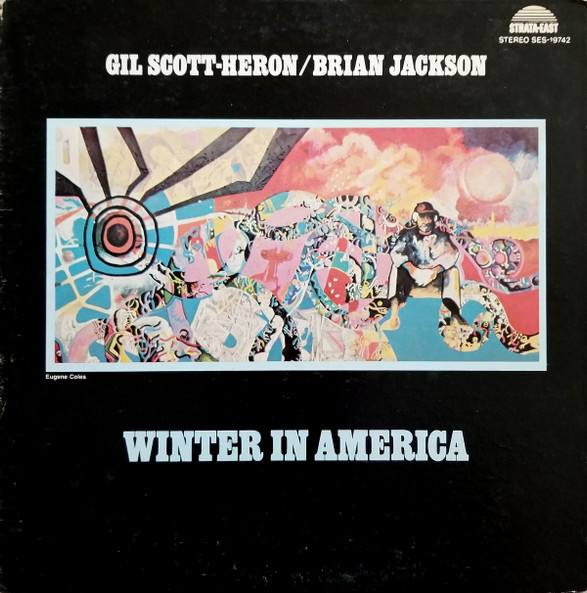
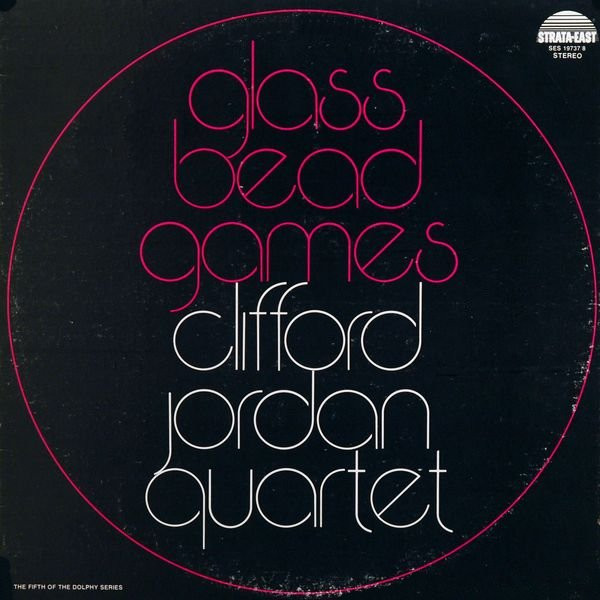
The catalogue that came out over a few years now reads like a secret canon. Tolliver's own Music Inc (SES-1971) and Live in Tokyo (SES-19745); Cowell's Musa: Ancestral Streams (SES-19743), a solo-piano record of almost unbearable beauty; Clifford Jordan's Glass Bead Games (SES-19737/8), a double LP that is one of the label's peaks; and Winter in America by Gil Scott-Heron and Brian Jackson (SES-19742), which launched one of the decade's most political voices. These were records made on modest means and enormous ambition, sold by mail and at concerts, barely reviewed and bought by few.
Put on Glass Bead Games and the stakes are obvious. A 1974 double album with Clifford Jordan on tenor and a rotating cast of pianists including Stanley Cowell and Cedar Walton, it moves with the freedom of music answerable to no one: long themes, modal stretches, a severe beauty no major would have let run that long. Winter in America, the same year, is another thing again — Gil Scott-Heron and Brian Jackson weaving soul, jazz and political speech into songs like The Bottle — but it rests on the same premise: a record that exists because its makers decided it should, not because anyone thought it would sell.
There was, in all this, an idealism the market did not reward. Stanley Cowell spoke more than once of the grind of running a home-made distribution operation, mailing records one by one, dealing with shops that had no idea where to file the music. Musa: Ancestral Streams, his solo-piano album, is perhaps the label's most intimate document: no producer would have commissioned it, yet it exists, because Strata-East existed. It is the kind of record that justifies the whole enterprise on its own.
Yet the principle held. For the first time, a musician could record exactly the music he wanted — no producer asking for a shorter track or a catchier theme — and keep the tape. The price was marginality: no promotion, no radio, no racks in the big stores. Strata-East chose freedom knowing it cost oblivion. For nearly twenty years, that oblivion looked like the end of the story.
Tribe: the conscience of a city
In Detroit the impulse was, if anything, more political still. In 1972 the trombonist Phil Ranelin and the saxophonist Wendell Harrison founded Tribe: not only a label but a collective, and even a magazine. The city was reeling from the 1967 uprising and the slow collapse of the auto industry; Tribe arose as an assertion of black self-determination, a way of saying the community could produce and own its own culture without asking anyone's permission.
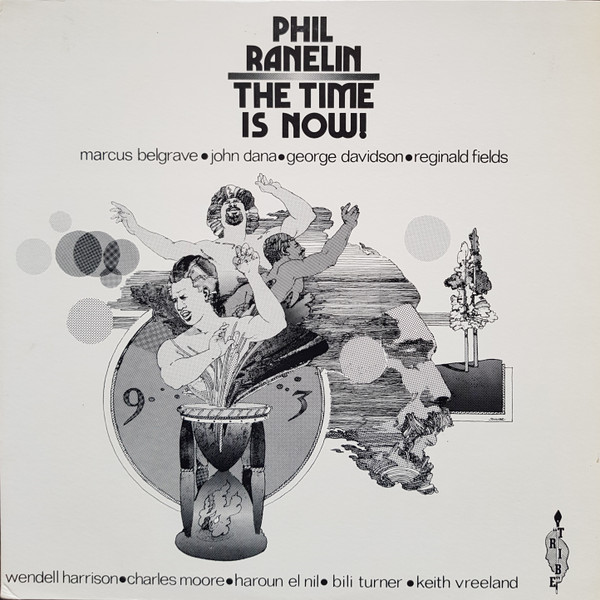
The records carry that tension. Ranelin's The Time Is Now! (TRCD 4006), Harrison's An Evening With The Devil (PRSD 2212), the trumpeter Marcus Belgrave's Gemini II (PRSD 2228), Doug Hammond and David Durrah's Reflections in the Sea of Nurnen (TRCD 4009): music that swings between hardness and tenderness, free playing and groove, political consciousness always near the surface. And then the collective manifesto, A Message From The Tribe (PRSD 2226), the document that sums the whole project up and is today one of the absolute peaks of jazz collecting.
The magazine Tribe came out alongside the records, with covers, interviews and positions taken: the label was also a press organ, a way to control not just the sound but the story around it. Musically, Ranelin's The Time Is Now! remains the perfect calling card — warm trombone, broken rhythms, a title track that is groove and manifesto at once — while Wendell Harrison's saxophone brought a rougher, almost preacherly urgency. Detroit was not New York: here spiritual jazz carried the pulse of funk and the smell of a working city that refused to give up.
Tribe was more than a label: it was a magazine, an informal school and a political statement. In Detroit, to own your records was to own your voice.
Pressing runs were tiny, distribution local or close to it. These were objects made for a community, not a national market. That is precisely what would make them unfindable decades later: they were never produced in numbers large enough for many to survive, and the few that did were often played to death.
Black Jazz: the sound and the word
On the West Coast the project took a different shape. Black Jazz Records was founded between 1969 and 1971 around the pianist Gene Russell and the Ovation company, with a strong graphic identity — austere sleeves, the label's name as a statement — and a clear mission: to give voice to a generation of black musicians fusing jazz, gospel, soul and spiritual consciousness.
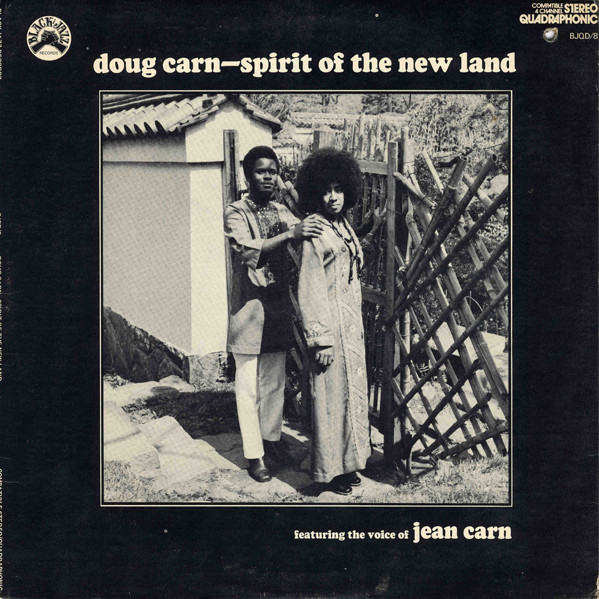
The label's face was Doug Carn, who with his wife Jean Carn on vocals cut three records that became cult objects: Infant Eyes (BJQD 3), Spirit of the New Land (BJQD 8) and Revelation (BJQD 16). The novelty was the voice: Jean Carn sang over the structures of spiritual jazz, turning Coltrane's Acknowledgement into something close to a hymn. Around them came the label's debut, Gene Russell's New Direction (BJQD 1), Walter Bishop Jr.'s Coral Keys (BJQD 2) and The Awakening's Hear, Sense and Feel (BJQD 9). It was spiritual jazz made accessible, singable, almost liturgical — and, paradoxically, just as overlooked by the charts.
What makes the Black Jazz records instantly recognisable is the way they let gospel speak inside jazz. Gene Russell came out of soul and rhythm and blues, and the label never hid it: the open harmonies inherited from Coltrane met the phrasing of the black church, and Jean Carn's voice — later a Philadelphia International star — gave the compositions an almost liturgical dimension. This was spiritual jazz you could sing, and for that reason it reached a public free jazz kept at arm's length.
The venture was brief. Black Jazz issued some twenty titles between 1971 and 1976, then relations with Ovation soured and the label went dark. But in those few years it had fixed an aesthetic — the name in clean type, the spare sleeves, the very idea of a declaredly black, spiritual jazz — that would become a cult marque. Today that logo, on an original, lifts the price on its own.
Three cities, three temperaments — the New York cooperative, the militant Detroit collective, the sung-word aesthetic of California — but a single underlying idea: ownership as a form of freedom. And a single immediate fate: silence.
Strata-East (New York, 1971), Tribe (Detroit, 1972) and Black Jazz (California, 1969–71) did not necessarily know one another, but they answered the same question at the same historical moment. None of the three outlasted the decade. All three, today, define the market for collectable jazz.
What you actually hear
It is worth pausing on the music, because it is easy to talk of labels and prices and forget why any of it matters. The spiritual jazz of those years has recognisable marks: long pieces that take their time to grow; an insistent use of percussion and mode, inherited from A Love Supreme and Karma; an air of rite, of invocation, even where no word is sung. It is music that asks to be heard whole, not in singles — which is, in passing, one reason it never worked on radio.
But within that shared frame the three labels sound distinct. Strata-East is the most chamber-like and severe, close to the New York modal tradition. Tribe is the warmest and roughest, shot through with Detroit funk and soul, feet planted in the city. Black Jazz is the most vocal and gospel-rooted, the most immediately seductive. Three dialects of one language, three ways of saying the same thing: that this music was a form of prayer, and that the prayer belonged to whoever spoke it.
When the records disappeared
Towards the end of the 1970s the wind shifted. Jazz was ceding commercial ground to disco and funk, the majors were shutting their jazz divisions, and the small independents — undercapitalised by definition — had no reserves to ride it out. Strata-East slowed, Tribe stopped, Black Jazz folded. Unsold stock went into the dollar cut-out bins, circulating copies scattered, and in some cases the original tapes were lost or forgotten in a warehouse.
For the musicians it was a double blow: not only did the records fail to sell, but the labels that had made them free had no means to repress or promote them when, years later, someone began to look. The independence that had given them total control over the music now left them without the machine that might have relaunched it. Freedom had had a price, and the price was reaching history late.
For a musician like Phil Ranelin or Doug Carn, the 1980s were an exile. The music they had cut with such urgency was not merely out of print: it was as if it had never existed. Jazz encyclopaedias gave it a line, the magazines had forgotten it, and the few who looked did so on instinct, digging blind through flea-market crates. This was the long winter: the flame had not gone out, only sunk until it was invisible.
The collectors who saved them
The revival did not come from the institutions of jazz. It came from the dancefloors and the bins. In London, between the late 1970s and the 1980s, the rare-groove movement began rediscovering forgotten black records to dance to; and a young DJ, Gilles Peterson, made a religion of those grooves, spinning records nobody knew and later founding labels to reissue them. In Japan, dealers and imprints treated the pressings as treasure from the start. Then, in the 1990s, came the systematic reissues: Soul Jazz, BGP, Luv N' Haight, P-Vine, and later Pure Pleasure and Real Gone Music brought Strata-East, Tribe and Black Jazz back into circulation, often with the editorial care the originals had never received.
Japan deserves a chapter of its own here: it was there that many of these records first found a market willing to pay what they were worth, and often from Tokyo that the best copies returned to circulation in Europe and America. Labels like P-Vine reissued, with devotion, titles no one in the States remembered. Meanwhile the Western reissue map thickened — Soul Jazz and its Universal Sound imprint, BGP, Ubiquity's Luv N' Haight — until a whole generation raised on hip hop, which had already heard those grooves sampled, went looking for the sources.
The market did what official culture had not: it took the music seriously. — Spiritual Jazz: The Sound of Black Faith
It was the collectors, more than the critics, who rewrote the canon. By searching, trading and paying, they established that Glass Bead Games was worth as much as a Blue Note classic, that a Tribe original was a Grail, that the faded sleeve of a Black Jazz record hid one of the decade's finest. The market did what official culture had not: it took the music seriously. Today the numbers say so without embarrassment. A clean original of Glass Bead Games runs around £250–400; Reflections in the Sea of Nurnen around £350–700; A Message From The Tribe, the Detroit manifesto, between £800 and £1,800, with sealed copies going far higher.
The fairest part of this revival is that many of its protagonists saw it with their own eyes. Phil Ranelin returned to record and perform, applauded by a public that had never heard him in his youth; Doug Carn watched his three Black Jazz records reissued and hailed as classics; Charles Tolliver kept leading his music with the same independence as ever. Not all of them lived to see it, and none grew rich on the dizzying prices — that money moves between collectors, it does not flow back to the makers. But the recognition, at least, arrived.
How to tell an original
At these prices, the difference between an original and a reissue is not a detail: it is almost the whole value. Identifying a first pressing is a craft of small signs. The catalogue number on the label and spine must match the period edition; the matrix cut into the run-out — the deadwax — tells where and when the record was pressed; the weight of the vinyl, the label artwork, the lamination of the sleeve and the presence or absence of certain credits separate the original from the reissues that followed. On Tribe, for instance, PRSD and TRCD prefixes coexist and indicate different runs; on Strata-East, the SES matrices are the first thing to check.
The orders of magnitude are worth keeping in mind, because they guard against being fooled. Among the Strata-East titles, Mtume's Alkebu-Lan is one of the rarest, around £350–700; among the Tribe records, Marcus Belgrave's Gemini II runs £300–800. The Black Jazz titles, eased by the fine reissues of recent years, stay more affordable as originals — a Doug Carn in excellent condition around £100–180 — and that is exactly what makes them a good entry point. The golden rule, here as always, is to cross-check your sources: Discogs for discography and pressings, Popsike for the auction results on the rarest pieces.
There is an irony in all this worth facing squarely. These were spiritual records, often born of a religious search, of a desire to transcend the material; many of them preached, in their way, the overcoming of greed and possession. Today those same records are precious commodities, traded in four figures, kept like bullion. The market has done justice to a music the market itself ignored — and it has done so by turning the music into the very thing that music, in its own way, criticised.
Perhaps that is unavoidable. A record is an object, and objects have a price. But the thing those musicians actually owned — the right to cut their own truth without asking permission — was never for sale, and so could never be bought. When you hunt a Tribe original and read the figure, remember that you are not paying for the music. The music, by now, belongs to everyone. You are paying for the physical proof of an act of freedom that, in 1973, was worth nothing — and was worth everything for exactly that reason.
Phil Ranelin — The Time Is Now!
Clifford Jordan — Glass Bead Games
Doug Carn — Spirit of the New Land
Gil Scott-Heron & Brian Jackson — Winter in America