Prefab Sprout: Pop's Great Underrated Recluse
Paddy McAloon wrote some of the finest songs in English pop, then vanished. The story of Prefab Sprout, his writing, and the albums he never released.
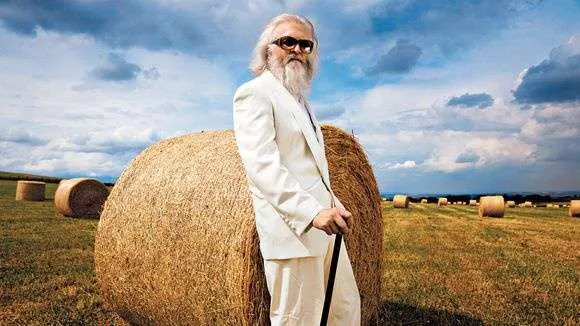
Ask a certain kind of songwriter who the best of their generation is, and a surprising number will name a man almost nobody has heard of. Paddy McAloon is past sixty now, living in the County Durham countryside with a long white beard, his hearing wrecked by illness and tinnitus. He still writes, but amplified instruments hurt, so he composes on an old Atari programmed to imitate a guitar. He has spent forty years making some of the finest songs in English pop. Most of the world has no idea.
That is the paradox of Prefab Sprout, the band McAloon has led since the early 1980s: revered by critics and peers, ignored by the public. They had everything they needed to be huge — Bacharach-grade melodies, a novelist's lyrics, a producer who grasped the talent at once — and stayed a secret instead. Partly through bad luck, partly by temperament: given the choice between the stage and silence, McAloon has almost always chosen silence.
The boy from the petrol station
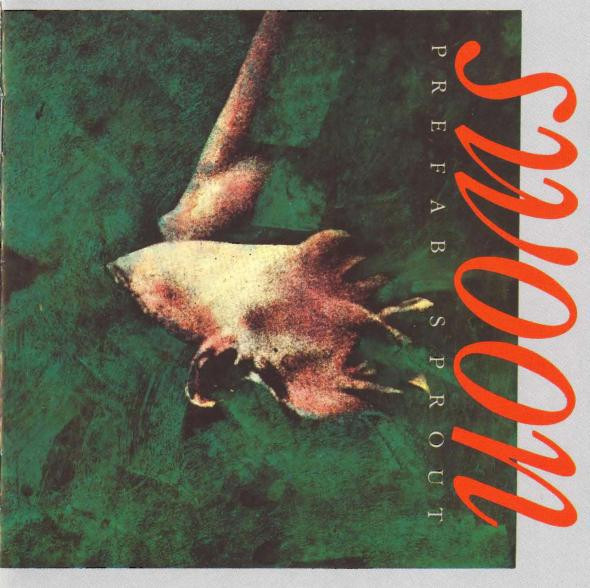
Paddy McAloon is born in 1957 in Witton Gilbert, County Durham, where the family runs a petrol station. A Catholic upbringing, and for a time the thought of the priesthood — you can hear it in lyrics crowded with grace, guilt and redemption. He builds Prefab Sprout around his brother Martin on bass, Wendy Smith on harmonies and Neil Conti on drums. The debut, Swoon (1984, Kitchenware), is wordy and angular, dense with language and oblique chords: not an orthodox pop record, but the calling card of a writer who thinks big and has no intention of simplifying himself.
Steve McQueen, and a producer named Dolby
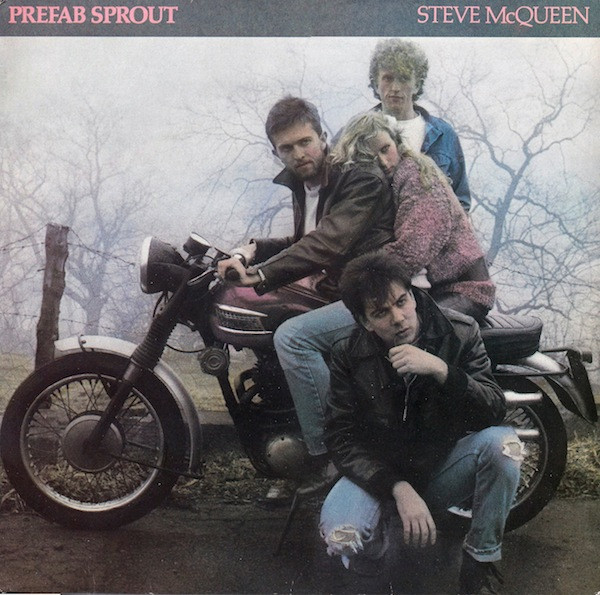
The turn comes almost by accident. On a BBC radio show, Thomas Dolby praises "Don't Sing," a track from Swoon; the band ask him to produce their second album. Dolby travels up to McAloon's Durham retreat and is played a heap of demos — Paddy on his mother's Spanish guitar — choosing the songs he likes and, legend has it, writing them down on the back of a cigarette packet. The result, Steve McQueen (1985), is their summit: disillusioned love songs, polished by Dolby until they gleam without ever turning cold. This is where McAloon's gift finds its perfect frame. In the United States the record had to be retitled Two Wheels Good, for fear of action from the actor's estate.
Why the lyrics are so good
To understand why McAloon's writing stands out, look at who he took as his models. Not his rock contemporaries, but the great twentieth-century lyricists: Cole Porter's elegance, Stephen Sondheim's theatrical precision, the Burt Bacharach–Hal David partnership, and among the moderns Jimmy Webb, Paul McCartney, Brian Wilson. McAloon treated the song as a literary craft — internal rhyme, wit, a control of metre that had few rivals in the pop of the day — to the point of setting a Shakespeare reference (Timon of Athens) inside a song like "Radio Love."
The second key is that he almost never wrote about himself. Where rock confessed, McAloon built characters and situations. On Steve McQueen he plays a disillusioned gumshoe watching love from the outside; elsewhere he gives voice to outlaws, to stars, to an America of pure imagination he had never visited. It is writing for masks, closer to theatre than to the diary — which is exactly why it ages well.
And then there are the individual songs, which work like short stories. "When Love Breaks Down" is the precise anatomy of romantic denial, delivered with a calm that makes it devastating. "Cars and Girls" is a courteous reply to Bruce Springsteen: McAloon objects, fondly, that life is more complicated than cars and girls. "The King of Rock 'n' Roll," their best-known song, hides a bitter meditation on an artist trapped by a novelty hit beneath a deliberately absurd refrain. "Bonny" turns a small everyday absence into something vast. Each has a voice, a point of view, a turn: the grammar of the short story applied to three minutes of pop.
Seek the lyrics out in full: few pens in pop hold up to a reading on the page the way his do.
McAloon did not write rock songs with good words. He wrote like a twentieth-century lyricist who had wandered, by accident, into the 1980s. — Groov-illa
Why you've never heard of him
So why isn't he famous? The answer is a tangle of choices and fashions. McAloon wrote songs too literate for the charts and too melodic for the indie world: he fell in the gap between. The band hated the stage and barely toured, in the very years when a tour built a career. The glossy 1980s production, an asset then, ended up dating some records to later ears. And there is the perfectionism: McAloon polished endlessly and released little. Yet recognition among his peers never faltered — he was, and is, the songwriter other songwriters study.
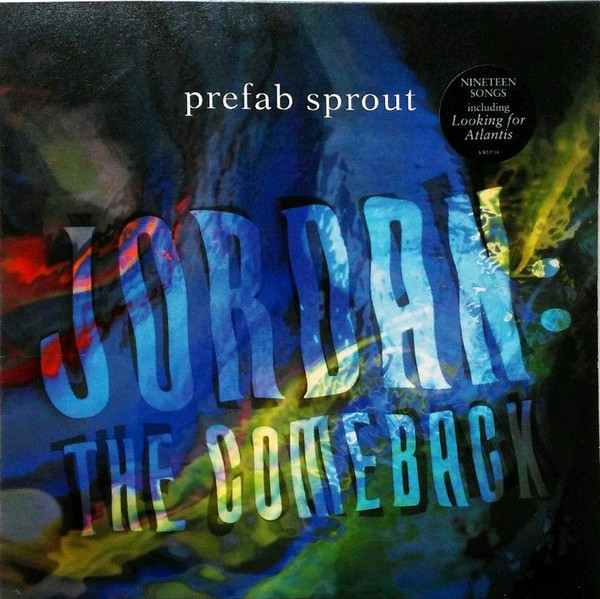
He did try to break through. From Langley Park to Memphis (1988) carried "The King of Rock 'n' Roll," their best-known track — a surreal earworm that became almost a sentence, since many people know only that one. Jordan: The Comeback (1990), nineteen songs again produced by Dolby, was his most ambitious record, a concept on faith and celebrity nominated for a BRIT Award: too vast, too strange to become a mass success, but adored by those who found it.
Too literate for pop, too melodic for indie. A band that wouldn't tour in the age when touring made careers. A perfectionist who polished forever and released next to nothing. And an eighties sheen that time has wrongly made unfashionable. Four alibis for overlooking one of the finest bodies of writing in British pop.
The recluse and the phantom albums
Then the world closed in. Between the late 1990s and the 2000s McAloon suffered detached retinas; out of that experience, and the shortwave radio he listened to while recovering, came I Trawl the Megahertz (2003), an almost entirely instrumental, spoken-word record far from pop. Soon after came Ménière's disease, with tinnitus that makes the act of listening to music itself painful. He withdrew into the Durham countryside, grew the white beard, and became a ghost.
But the most fascinating part is what we have never heard. McAloon has always spoken of whole albums written and never released — a tradition that began early, when Protest Songs (recorded in the mid-1980s) sat in a drawer until 1989. Over the years the archive has swelled with phantom masterpieces:
Some exist as demos, others perhaps only in his head. But it is this invisible library that makes him singular: the one writer whose legend rests as much on what he has released as on what he has kept hidden.
Where to start
For the collector, Prefab Sprout are relatively calm ground. The 1980s Kitchenware originals — Swoon, Steve McQueen — turn up without ruinous prices, and Steve McQueen remains the place to begin: a 2007 double edition added eight songs re-recorded by McAloon on solo acoustic guitar, a rare chance to hear them stripped bare. On vinyl, the official Sony/Legacy reissues have put the key titles back in circulation. Simple rule: start with Steve McQueen, then Jordan: The Comeback when you want to get lost.
Prefab Sprout never had their moment, and perhaps never will. But being underrated is sometimes just a matter of time that has not yet passed. Paddy McAloon wrote some of the most beautiful songs his country has produced, and chose not to defend them, not to explain them, not to carry them around. They sit there, waiting — like the records he never released — for whoever has the patience to go and find them.
Prefab Sprout — Steve McQueen
Prefab Sprout — Jordan: The Comeback