Understanding Folk: The Voice Before the Amplifier
The history and culture of folk music: from Woody Guthrie to Greenwich Village, from Nick Drake and Fairport Convention to De André and Guccini.
There is no clean definition of folk. The category that contains Woody Guthrie also contains Nick Drake, Fabrizio De André, Karen Dalton, an eighteenth-century Scottish ballad and a Greenwich Village protest song from 1963 — and none of these things feels out of place next to the others.
What holds them together is not a shared harmonic language, a typical instrumentation, a common tempo or form. It is an idea: music as collective memory, as document, as instrument for saying things the official channels will not. Every generation that finds folk finds it useful for the same reason: it has a way of going directly to the thing without announcing its intention first. That directness is what makes it survive. This is its history — in three countries, across four decades, told through the records that defined it.
From the Dust Bowl to Greenwich Village
The Depression is where American folk begins to acquire its modern form. The Dust Bowl drives millions of families westward, and out of that displacement comes the figure of Woody Guthrie — guitar, harmonica, flat cap, writing that refuses to distinguish between reportage and poetry. Guthrie does not invent American folk, which has roots in Delta blues, in the ballads of Irish and Scottish immigrants in the Appalachians, in the work songs of Black labourers in the South. What he does is systematise it, bring it into the city, give it a precise political consciousness. This Land Is Your Land (1940) is not a patriotic song. It is a sardonic reply to God Bless America, a piece about land belonging to everyone and therefore to no one. The version taught in American schools has been stripped of its most radical verses. The vinyl has them.
Alongside Guthrie stands Lead Belly, who brings the full weight of Black Southern tradition into the folk repertoire with a force and harmonic depth Guthrie does not match. And then Pete Seeger and the Weavers, who in the 1950s briefly bring folk to the pop charts before McCarthyism blacklists them. Seeger refuses to testify before the House Un-American Activities Committee and pays for it for a decade. He is the great transmitter: folk as tradition to preserve and as political instrument to deploy, simultaneously. The banjo as a weapon.
Washington Square Park, Sunday mornings, late 1950s. No stage, no ticket. Guitarists, banjo players, singers gathering around the fountain. Then a young man from Minnesota arrives in 1961 with an acoustic guitar. Bob Dylan meets Dave Van Ronk almost immediately — Van Ronk teaches him the fingerpicking arrangements Dylan will use for the rest of his life. In those streets, in those years: Joan Baez, Phil Ochs, Fred Neil, Tim Hardin, Karen Dalton, Tom Paxton. It will not happen again.
Dylan is the breaking point and the moment of synthesis simultaneously. The first three albums — Bob Dylan (1962), The Freewheelin' Bob Dylan (1963), The Times They Are A-Changin' (1964) — are American folk at its highest formal expression: acoustic guitar, harmonica, lyrics that reach into the Bible, Whitman, sixteenth-century English broadside ballads. Blowing in the Wind and A Hard Rain's A-Gonna Fall are not protest songs in the rhetorical sense. They are systems of unanswered questions, built on poetic structures that folk had never deployed with this density. Then Newport, 1965: Fender Stratocaster, electric band. Half the audience boos. The other half understands that folk does not end here — it transforms.
«The songs are my lexicon. I believe in the songs.» — Bob Dylan
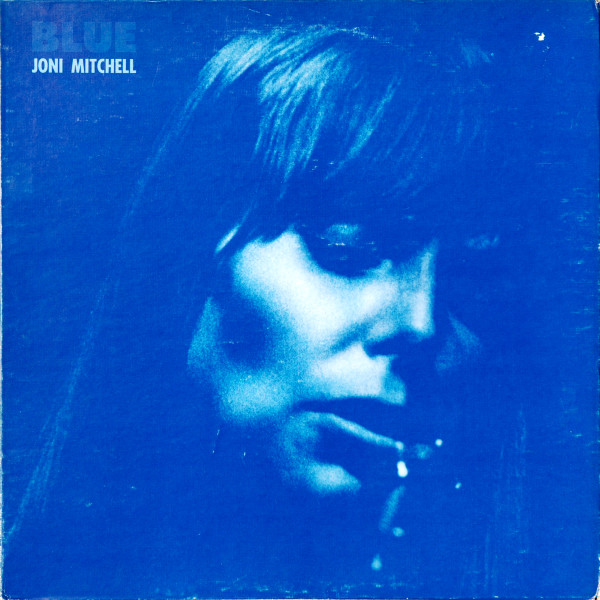
What comes after Newport — Bringing It All Back Home, Highway 61 Revisited, Blonde on Blonde — is folk contaminated by rock, electric blues, literary surrealism. Not betrayal. Evolution. But acoustic folk does not disappear. It retreats into the personal. Joni Mitchell takes that route with Blue (1971): eleven songs on open tunings no one had heard, an autobiography so precise it feels intrusive to listen to. Leonard Cohen brings the European poet's tradition — Lorca, Baudelaire, the Bible — into folk with a bass voice that resembles no folk singer before him. Townes Van Zandt writes from Texas songs that sound ancient but are his own: Pancho and Lefty, For the Sake of the Song, Tecumseh Valley. He dies in 1997 almost unknown. Steve Earle called him the best songwriter alive.
From Davey Graham to Nick Drake
British folk in the 1960s starts from a different place. There is no structured protest tradition of the Guthrie-Seeger type. Instead there is a ballad tradition reaching back to the Middle Ages, preserved in the Cecil Sharp House song collections and in the pubs of Lancashire and Yorkshire. The ignition point is instrumental rather than political: Davey Graham introduces DADGAD — a tuning that opens the acoustic guitar to modal resonances folk had never explored — and mixes Celtic folk with American blues, Indian raga, North African music. Folk, Blues and Beyond (1964) is the record that changes everything. Bert Jansch hears it. Jimmy Page hears it. Paul Simon hears it and learns Angie note for note.
Where American folk is born from necessity, British folk of the 1960s is largely a deliberate rediscovery: educated musicians who knew Delta blues as well as Appalachian ballads as well as the Child Ballads, choosing to reconstruct a disappearing tradition rather than document a living one. The result is music of extraordinary harmonic complexity. When it works — and it works often — it is extraordinary.
Bert Jansch is the direct link between Davey Graham and everything that follows. His first self-titled album of 1965, recorded in a Soho flat on a reel-to-reel, with a fingerpicking technique unprecedented in British folk. Angie becomes canonical. Jansch then forms Pentangle with John Renbourn, Jacqui McShee, Danny Thompson and Terry Cox: medieval ballads, free jazz, blues and Mingus on the same stage, in the same set. Basket of Light (1969) is their masterpiece — Light Flight as a chart single that concedes nothing.
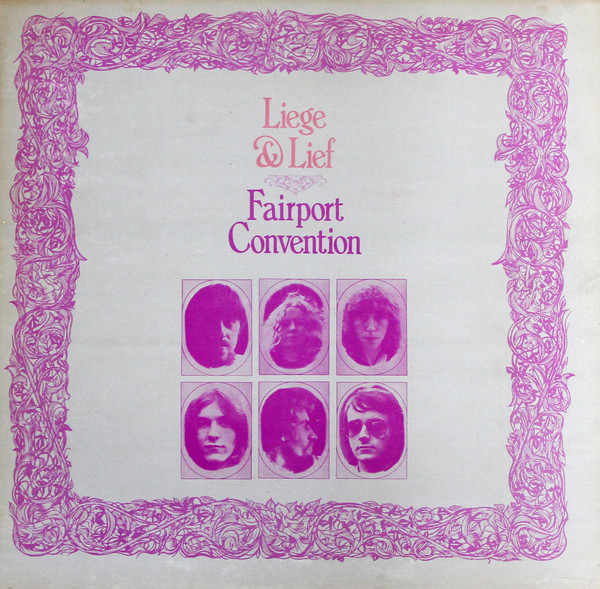
The record that defines electric British folk is Liege & Lief by Fairport Convention (1969). Recorded after a road accident kills drummer Jill Meehan, it transforms traditional English ballads — Matty Groves, Tam Lin, The Deserter — into rock, with Richard Thompson's electric guitar in sustained dialogue with Dave Swarbrick's fiddle and Sandy Denny's voice. It is the same operation Dylan performed at Newport — electricity into folk — but with older material and a specifically British rather than American consciousness. The politics are different. The ambition is the same.
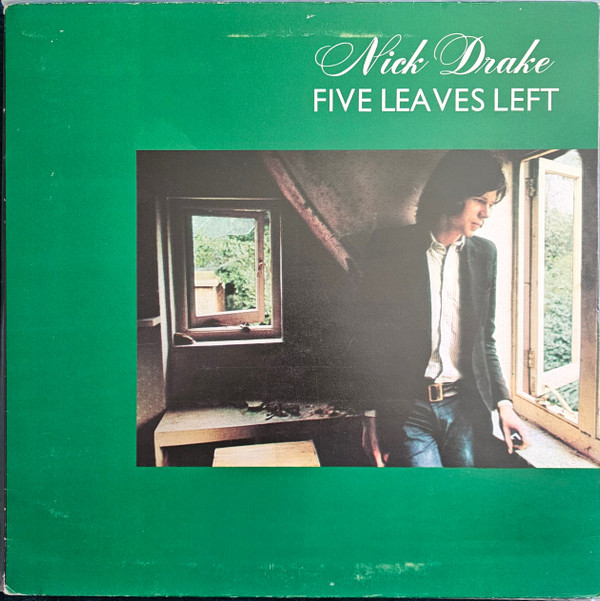
Nick Drake represents the other road: folk taken away from tradition and inside individual psychology. Three albums — Five Leaves Left (1969), Bryter Layter (1970), Pink Moon (1972) — progressively more sparse, more enclosed, more intimate. Drake uses DADGAD variants that no one else replicates exactly, sings in a baritone that never reaches for vibrato, and writes lyrics that describe depression without naming it. He dies in 1974 at twenty-six, probably from an antidepressant overdose. His records had sold almost nothing. Five Leaves Left is now recognised as a masterwork. The belated canonisation changes nothing about the music and everything about how we come to it.
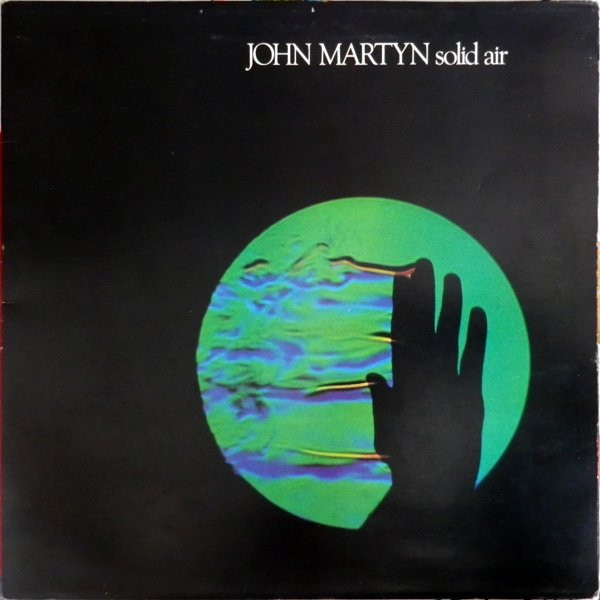
John Martyn completes the triptych. He and Drake were friends — Solid Air (1973) is dedicated to Nick Drake — and they share the tendency to use folk as a departure point for freer exploration. Martyn introduces the Echoplex pedal to the acoustic guitar, creating a looping, layered sound that anticipates ambient music by thirty years. The title track of Solid Air is one of the great songs in English. It is about watching a friend disappear and being unable to reach him. Drake was dead within a year of its release.
De André, Guccini and the cantautorato
Italy arrives at folk by two parallel routes. The first is scholarly and political: the Nuovo Canzoniere Italiano, founded in Milan in 1962 by Roberto Leydi and Gianni Bosio, is a project to research and recover Italian popular tradition — not the commercial folk of light entertainment, but the songs of the rice-field workers, work songs, lullabies, ballads of the South. The project is explicitly Marxist, convinced that popular tradition contains a class consciousness that official culture has systematically suppressed. From it come Ivan Della Mea and Paolo Pietrangeli — Pietrangeli writes Contessa (1966), the Italian protest song most performed at the 1968 student demonstrations. It is still performed at demonstrations today.
The Italian case is unique. De André writes about prostitutes, the marginalised, the poor of God — with the secular compassion of someone who has read the Gospels carefully and taken the wrong people seriously. Guccini writes about Amerigo who emigrates, about locomotives and fathers and the Apennine hills. De Gregori writes about baby Jesus and Buffalo Bill in oblique verses that leave more open than they close. These are not folk singers in any traditional sense. They are something the Italian language has a word for and English does not: cantautori.
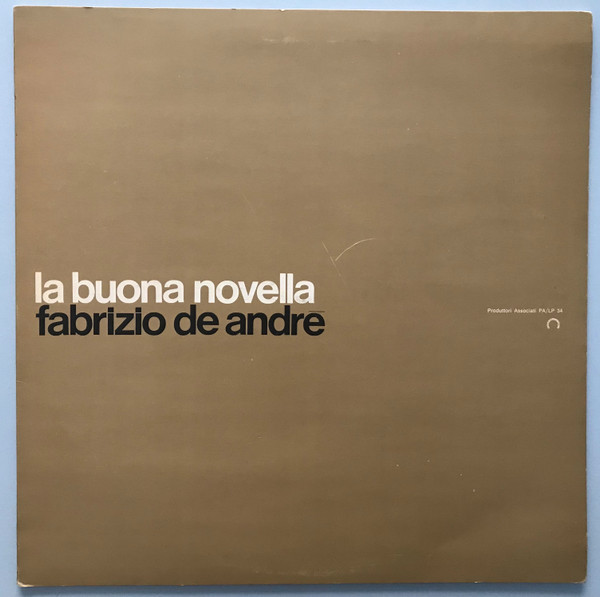
Fabrizio De André is born in Genoa in 1940, studies law without graduating, listens to Brassens and Brel, and begins writing songs about the people at the bottom. His is not simply popular music: it is a moral project conducted over thirty years. Tutti Morimmo a Stento (1968) is the first great Italian concept album, a cycle of ballads about death and poverty after François Villon. La Buona Novella (1970) takes the apocryphal Gospels and makes folk songs of them — De André's answer to 1968 is not ideology but compassion. Non al Denaro, Non all'Amore né al Cielo (1971) takes Edgar Lee Masters' Spoon River Anthology and translates it into Italian provincial life: speaking graves, stories of the last ones. And then Crêuza de mä (1984), in Genoese dialect with Mauro Pagani — Mediterranean folk at a level no one else has reached before or since.
Francesco Guccini is something else. From Modena, a secondary school teacher, he writes Auschwitz at twenty-three — record companies reject it as too heavy, and it is recorded by the Nomadi. He writes about trains (La locomotiva), emigration (Amerigo), geographical identity (Radici, 1972) with a bass voice and a fidelity to narrative that brings him closer to Guthrie than to Brel. Not folk in the technical sense. Folk in the only sense that matters: music about people, for people, told plainly.
An essential timeline
Woody Guthrie writes This Land Is Your Land — American folk acquires its political conscience.
The Kingston Trio record Tom Dooley — the folk revival reaches the pop charts.
Bob Dylan releases his debut album. The Nuovo Canzoniere Italiano is founded in Milan.
The Freewheelin' Bob Dylan — Blowin' in the Wind, A Hard Rain's A-Gonna Fall. Folk as poetry.
Davey Graham releases Folk, Blues and Beyond — DADGAD changes British acoustic guitar permanently.
Newport Folk Festival: Dylan plugs in. Half the audience boos. Folk is no longer only acoustic.
Paolo Pietrangeli writes Contessa. Fabrizio De André releases Via del Campo.
Annus mirabilis: Fairport Convention — Liege & Lief. Nick Drake — Five Leaves Left. Pentangle — Basket of Light.
De André — La Buona Novella. Joni Mitchell — Ladies of the Canyon. Van Morrison — Moondance.
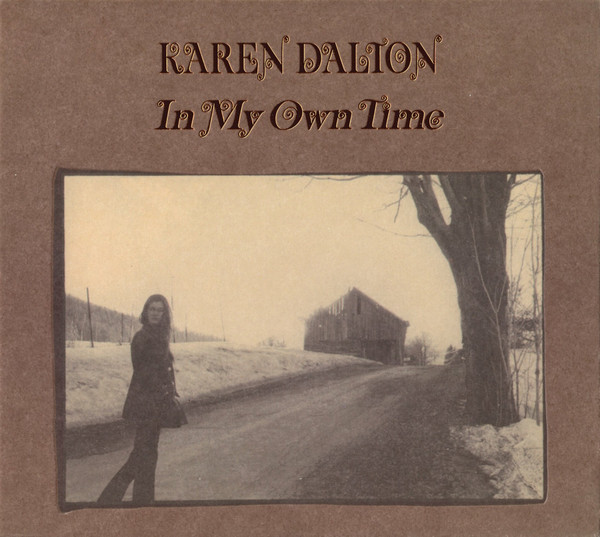
Joni Mitchell — Blue. Karen Dalton — In My Own Time. The singer-songwriter reaches its most intimate point.
Francesco Guccini — Radici. Nick Drake — Pink Moon. Folk strips itself to the essential.
John Martyn — Solid Air, dedicated to Nick Drake. Drake dies in 1974. British folk loses its centre of gravity.
What remains, fifty years later
Folk has not died. It could not — it was never a commercial genre in the proper sense, which means market forces never had the leverage to kill it. It has outlasted its own descendants: the folk-rock of the 1970s, the new age of the 1980s, the alt-country of the 1990s, the freak folk of the 2000s. It survives because the question it poses — who are we, where do we come from, what do we need to remember — does not have an expiry date. Every generation finds the records of Guthrie and Nick Drake and De André and asks how it is possible they did not already know them. The answer is always the same: folk does not advertise itself. It moves from person to person, listen to listen, turntable to turntable. Which is, when you think about it, exactly the tradition it was always part of.
«Folk is not the music of the past. It is the music the past left to the future because it had not finished saying what it had to say. Every time you put a Karen Dalton or a Fabrizio De André or a Nick Drake record on the turntable, the past starts talking again — and it says things the present does not yet know how to hear.» — Groov-illa
Karen Dalton — In My Own Time
Fairport Convention — Liege & Lief
Nick Drake — Five Leaves Left
Fabrizio De André — La Buona Novella
Joni Mitchell — Blue
John Martyn — Solid Air