Vinyl Cities
Vinyl Cities
Series Pilot
Every real music city has its own vinyl geography. Specific addresses, shopfronts on side streets, signs hand-painted decades ago. It doesn't show up usefully on Google Maps. You find it by going.
A vinyl record is also a piece of geography.
To understand any music scene, anywhere, you need to know where the collectors actually go. Not the chart position, not the festival circuit, not the Vice or Rolling Stone feature on a neighbourhood that's already over by the time the article runs. You need to know which shelves are stacked with what, on grey Wednesday afternoons in January. Which dealers only open from two to six. Which street has three serious shops within two hundred metres of each other and which neighbourhoods look central but are dead for vinyl.
This is the kind of knowledge that doesn't really exist online — or exists only in fragments, four years out of date, written by someone who passed through on holiday. And yet it's the knowledge that determines whether a record-buying trip to a new city produces something that matters or just two reissues you could have bought at home for less.
So: Vinyl Cities. A new monthly longform series.
What This Is
Vinyl Cities is a longform monthly dedicated to the cities where vinyl actually lives — not as tourist merchandise, not as Instagram backdrop, but as the daily practice of a community of collectors, DJs, audiophiles, and serious listeners.
Each episode covers one city. It opens with the history of the local scene — why jazz became religion in Tokyo from 1955 onwards, why Soho remains London's vinyl quarter even though most of the original shops are gone, why Berlin's techno micro-economy doesn't quite exist anywhere else. Then into the concrete geography: the neighbourhoods to know, the essential shops, the periodic fairs, the listening bars where listening is taken seriously, the local idiosyncrasies you need to understand to operate as something other than a tourist.
Each episode closes with a record to look for in that city. Not a difficult record — a pressing that exists better there than elsewhere, for reasons of original distribution, scene specialisation, or local production. Tokyo for the Japanese Blue Note pressings of 1973-78. Milan for original 1970s Italian prog. Berlin for the mid-90s techno 12"s that have simply vanished from other markets.
This is not a travel guide. There are no restaurant recommendations, no Instagram tips, no "where to stay" sections. The series is written for people who travel for records — or who dream of doing so, or who live in one of these cities and want to understand what's actually around them.
Why This, Now
There's a structural paradox of the streaming era worth naming. Music is available everywhere — but music scenes have become more localised, not less. When mass distribution ran through major labels and global catalogues, the difference between living in Milan or Boston was relatively small: the same records arrived in the same weeks through the same chains. Now that mass consumption has moved online, the cities with real vinyl scenes have developed sharper local characteristics. A shop's economy depends on who walks in, and who walks in is almost entirely local.
The result: record shops are now among the few remaining places where a city is still itself. The Berlin scene isn't the Tokyo scene isn't the Milan scene. The specialisations diverge. Prices reflect local economies. Openings and closings respond to neighbourhood logic that has little to do with global music flows.
For the collector, this is both opportunity and problem. The opportunity: cities preserve specialisations that aren't replicable elsewhere. The problem: this knowledge is fragmented, local, and disappears fast when a dealer retires or the street changes character.
We want to try to document it while it's still there.
The Cities We'll Cover
The series alternates Italian and international cities, established vinyl capitals and less-celebrated but serious scenes. The schedule is flexible — some cities will need more research, some episodes will run longer than expected — but these are the first twelve episodes planned.
Episode 1 — Milan. Italy's vinyl capital, with the highest concentration of specialist shops in the country and a scene that ranges from original 1970s prog through Italo Disco to contemporary jazz.
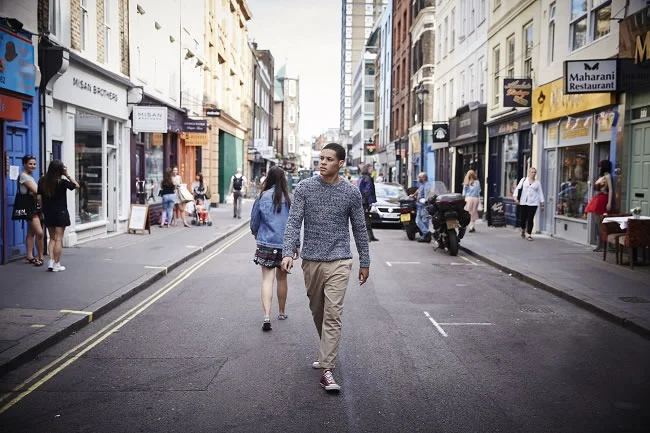
Episode 2 — London. The historical reference. From Soho's mod heyday in the 1960s to the new listening bars of Dalston and Peckham. The city where the very concept of "record shop" as we know it was invented.
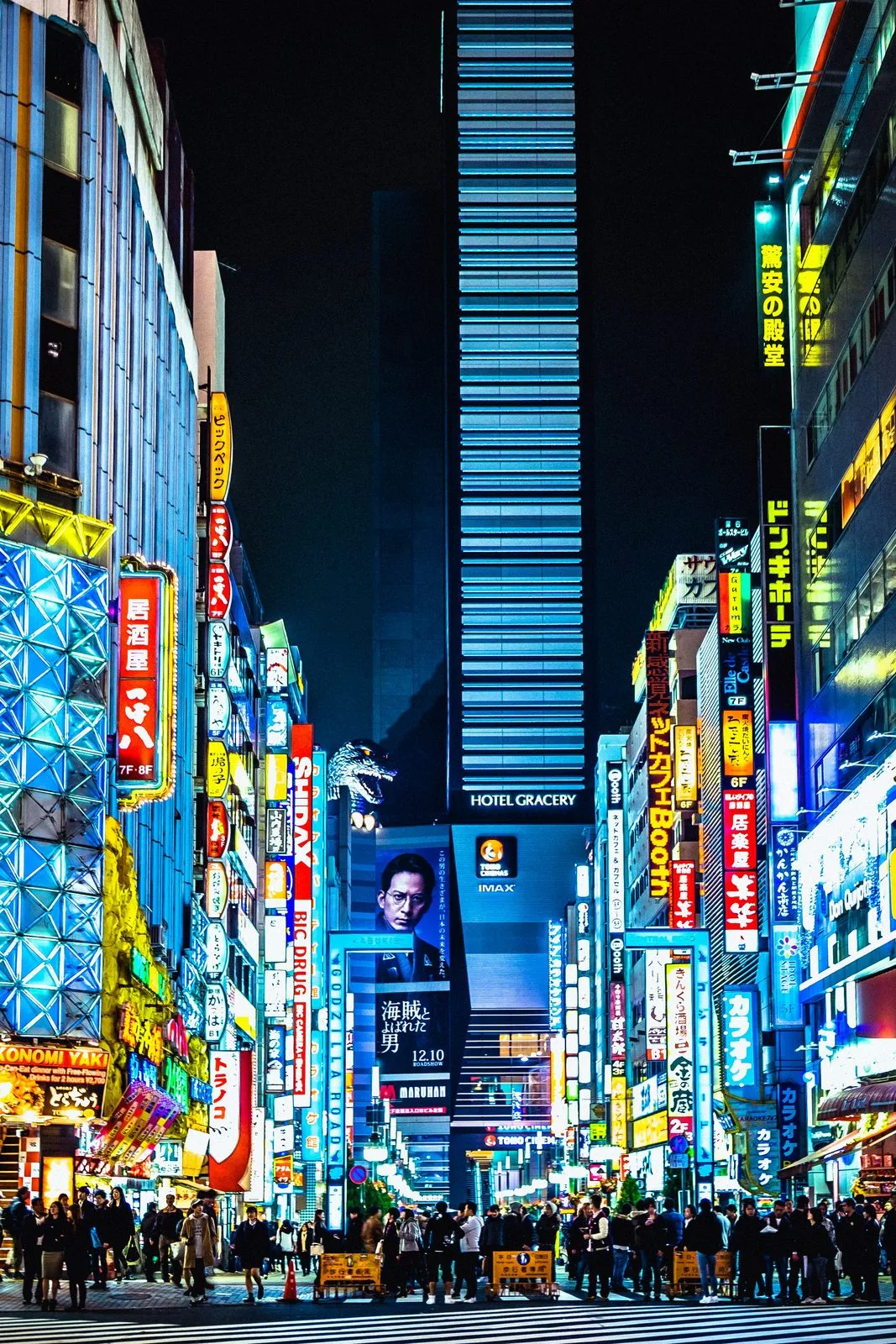
Episode 3 — Tokyo. The world apex of vinyl culture. Hundreds of specialist shops, the jazz kissa that invented listening-bar culture in the 1950s, an audiophile pressing infrastructure that exists nowhere else.
Episode 4 — Berlin. The world capital of collected electronic music. Hard Wax, OYE, Bis aufs Messer, Coretex — a geography running from Kreuzberg to Friedrichshain, written by the techno and post-punk scenes of the past three decades.
Episode 5 — New York. The history of jazz, hip-hop, disco. A1 Records, Academy, Rough Trade NYC. Brooklyn as the new centre of gravity after the diaspora of Manhattan's historic shops.
Episode 6 — Paris. Rue des Taillandiers and the 11th arrondissement as the nerve centre of the French dance scene. The original chanson scene, the European jazz network, the monthly fairs that draw collectors from across the continent.
Episode 7 — Turin. Italy's serious city for soul and funk. A hidden but deep scene, with specialist shops that supply DJs across Europe.
Episode 8 — Rome. The Italian jazz scene, the prog tradition, the soundtrack legacy. A diffuse geography, less concentrated than Milan, but with niche specialisations of remarkable depth.
Episode 9 — Amsterdam. Rush Hour as global hub. A dance scene in constant dialogue with Berlin and London, but with its own warmer, more melodic, more house-leaning identity.
Episode 10 — Madrid. Original flamenco, copla, the post-Movida indie scene. A city where vinyl culture is less structured than Barcelona's but with rare specialisations and honest prices.
Episode 11 — Barcelona. Catalan rumba, the early-2000s electroclash scene, Razzmatazz as gravitational centre. The monthly Sant Antoni fair as one of the richest Mediterranean appointments.
Episode 12 — Bologna. The Italian surprise. An undervalued underground scene that outsiders rarely understand, with shops and collectives operating with editorial coherence for forty years.
What This Isn't
To be clear about expectations, here's what the series isn't.
Not a list. Pieces titled "15 best record shops in Milan" already exist — TimeOut, Vinyl Factory, dozens of blogs. We add nothing to the genre. We want to write something that can be read, not just consulted, with a point of view and an editorial structure.
Not exhaustive. For each city we'll cover six to eight essential shops, two or three main fairs, the most important listening bars. Not every deserving spot. A guide attempting forty shops per city helps nobody — readers remember none of them, and the writer can't actually verify what they're listing. We'd rather focus on what we can recommend with certainty.
Not real-time updatable. Shops open and close. Hours change. Neighbourhoods shift. We'll periodically update episodes as information changes, but the series isn't a live database. This is editorial — a point of view at a moment in time — not a local consulting service.
Not translated. The series runs in Italian and English, but the two versions are original texts written separately for different audiences. The Italian voice addresses an Italian reader thinking about the Italian and international scene. The English voice addresses an English-speaking reader who often has firm ideas about their own cities and is reading us for what we can add — the outside view, the Italian specialisation, the analytical move a British music journalist wouldn't make.
How to Read the Series
Each episode works as a standalone text. You can read Milan without having read the pilot, Tokyo without having read Milan. But there's cumulative value to reading them all — patterns emerge, contrasts sharpen, surprises accumulate. You start to understand why certain cities have strong jazz scenes and others don't, why specific specialisations developed where they did, how the geography of vinyl reflects the urban and cultural history of these places.
We'll publish one episode a month, first Thursday, eight in the morning. Episodes go live in Italian and English simultaneously.
To not miss the releases, subscribe to the Groov-illa newsletter. You'll get an email on each publication day, plus a monthly digest of other site coverage.
A Note on Contributors
For many of the cities we'll cover, we'll work with local collaborators — collectors, DJs, shop owners who know the scene from inside. The editorial voice stays Groov-illa's, but the information and viewpoints will be verified by people who actually live in those cities. We can't afford to write about Tokyo the way an American on holiday writes about it, or about Berlin the way a passing Londoner does. Every city has someone who knows it better than we ever will from two weeks of remote research.
If you live in one of the cities we'll cover and want to contribute — flagging a shop, suggesting an angle, telling the story of a scene — write to hello@groovilla.com. We can't respond to everyone, but we read everything.
We Begin
The first episode runs Thursday next. Subject: Milan. Shops, fairs, scene. A geography some of you know well, others not at all, and worth redrawing from the perspective of vinyl and the people who take it seriously.
Vinyl is geography. Time to map it.
→ Episode 1: Milan — Italy's Vinyl Capital
Subscribe to the Groov-illa newsletter for upcoming episodes.