How to Read a Vinyl Record's Matrix (Deadwax) and Spot a First Pressing
A record is a first pressing because of what is etched and stamped on the vinyl, not because the seller says so. The matrix, the writing in the smooth band between the last groove and the label, is the record's fingerprint: it tells you which lacquer was cut, for which side, and by whom. Here is a seven-step method to read it and to tell a first pressing from a later period pressing or a reissue.
Find the catalogue number and the country
The catalogue number is on the spine, the back cover and the label (BLP 4003 for Moanin' on Blue Note, for instance). Write it down together with the country of pressing: you need both to open the right Discogs entry and to see which variants exist.
The same catalogue number does not mean the same pressing. A hit record comes out dozens of times under one number, years apart, and a first US pressing and a first Japanese pressing are two different objects.
Read the label
Labels change over time: logo, address, shape, edge text. On Blue Notes from the 1950s and 60s the address («47 West 63rd», later «New York USA») and the presence of «INC.» or the ® symbol help date the pressing. The deep groove, a ring pressed into the label area, is on both sides in the 1950s and disappears when Liberty takes over.
No single mark is enough: it is the combination that counts. The full method, with examples on ten titles, is in The 10 Most-Wanted Blue Note Originals.
Turn the record over and find the matrix
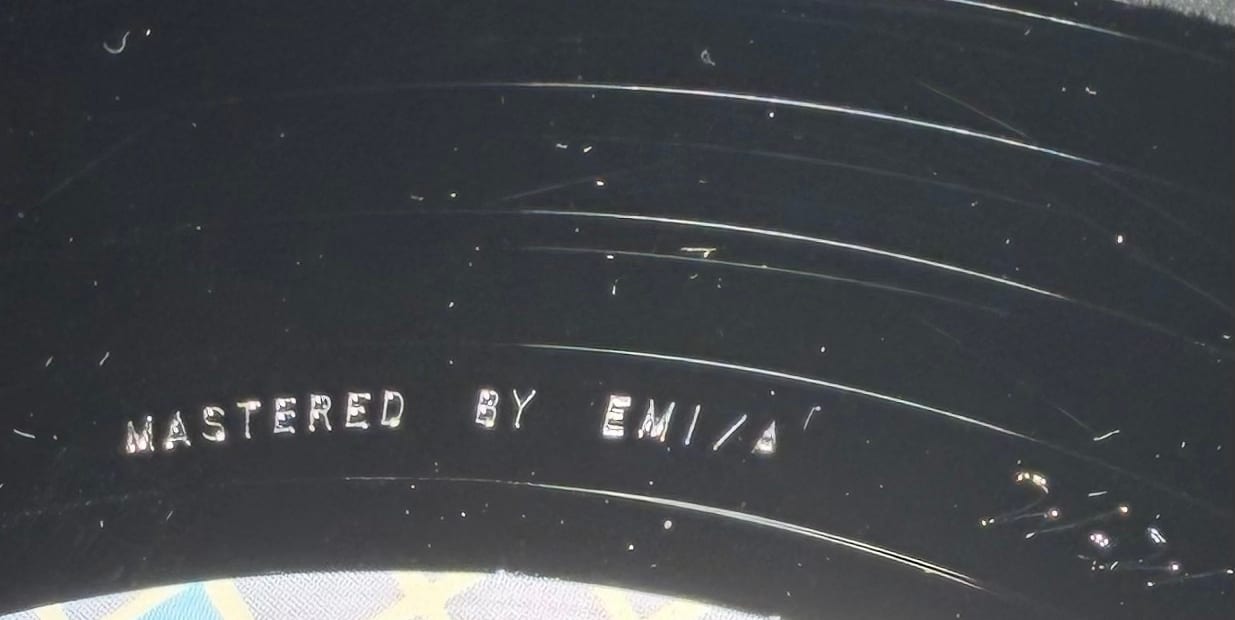
The deadwax is the smooth band between the last track and the centre label. Hold the record under raking light: a phone torch held low and to the side is enough, and hand-etched marks only show up that way. Rotate the disc, because the writing can be small and tucked against the label.
Photograph both sides with side light before you start searching. If you are buying online, ask the seller for exactly these: the label, the matrix on both sides and the back cover.
Decode the matrix: number, suffix, marks
A matrix usually carries four kinds of information.
| Mark | What it tells you | Example |
|---|---|---|
| Matrix number | Identifies the lacquer cut for that side; often echoes the catalogue number | BNLP 4003-A / BNLP 4003-B (Moanin') |
| Suffix | A number or letter counting lacquer or stamper generations; a low suffix usually means a pressing closer to the original, but it is a hint | -1, -2, A, B |
| Mastering mark | Who cut the lacquer, stamped or hand-etched | «RVG» in the 1950s, «VAN GELDER» in the 1960s |
| Plant mark | Where the record was pressed | Plastylite's «P» on the independent-era Blue Notes; gone after Liberty |
Modern reissues carry the name of the mastering engineer and the plant instead: on the Blue Note Classic Vinyl series, for instance, Kevin Gray.
Check the cover, the inserts and the barcode
A right matrix on a wrong cover is a warning sign. Is the cover laminated? What address and typeface does the back carry? Are the inserts the period ones? On Moanin', a back reading «Blue Note Records Inc.» in bold sans serif gives away a second pressing even when the labels are identical.
The barcode is the quickest check: records from before the 1980s usually have none, while modern reissues do.
Compare with Discogs, and do not trust a single entry
Search by catalogue number, open the variants and compare the matrix (the Matrix / Runout field), the label and the photos with what you hold. If two entries look alike, read the notes and the comments from other collectors.
A Discogs entry is the opinion of whoever filled it in, not a certificate: matrices are typed by hand and can contain errors. When the marks do not add up, trust the record, not the listing.
Avoid the three traps
First: first pressing is not most-wanted pressing. On Discogs, the most desired copy of Blue Train or The Sidewinder is not the true first pressing, and the price jumps accordingly.
Second: unofficial reissues. A recording from the 1950s or early 60s is in the public domain in Europe, and many editions that are not from Blue Note have appeared since 2019. Check the barcode and buy official editions only.
Third: the suffix is not a guarantee, and a first pressing does not automatically sound better. It is a rule of thumb with exceptions, and many well-made reissues sound just as good or better.
A first pressing is identified by three things together: a period label, a matrix with the right mastering and plant marks, and a matching cover. One mark alone never proves it, and the seller is not a source.
What is the matrix of a vinyl record?
It is the string of numbers, letters and marks etched or stamped in the smooth band between the last groove and the label, the deadwax. It identifies the lacquer cut for that side and often shows who did the mastering and where the record was pressed.
How do I know if my record is a first pressing?
Compare three things: the label (address, logo, deep groove), the matrix (number, suffix, mastering and plant marks) and the cover (lamination, back, inserts). Then look up the catalogue number on Discogs and check your variant. No barcode and a matching matrix put you on the right track.
Does a higher number after the matrix mean a worse pressing?
Usually a higher suffix means a later lacquer or stamper generation, so a pressing further from the first. It is a hint, not a rule: the same title can have different matrix variants within the same period.
What do RVG and the P in the deadwax of Blue Note records mean?
RVG are the initials of Rudy Van Gelder, who cut the lacquer; in the 1960s the full name appears, «VAN GELDER». The P stands for the Plastylite plant, which pressed for Blue Note until the Liberty takeover.
Does a first pressing always sound better than a reissue?
No. First pressings often use lacquers closer to the master, but it depends on the record and the mastering, and many well-made reissues sound as good or better. You buy a first pressing mainly for its collector value.