Rega Planar 1 vs Pro-Ject T1: Which One to Buy?
Two design philosophies, two different sounds, same price. The definitive guide to choosing the right entry-level turntable.
Choose the Rega Planar 1 if:
- Sound comes first for you: Hi-Fi Choice, which compared them, prefers the Rega
- You want a platform to grow: stylus, cartridge, then Planar 2 and 3
- Simplicity is a value, not a limitation
- You don't plan to swap cartridges yourself
- You don't have an amplifier with a phono input (consider the Planar 1 Plus)
Choose the Pro-Ject T1 Phono SB if:
- You don't have an amplifier with a phono input (the built-in preamp solves this)
- You want to play straight away, from a single box
- You want to change speed with a button, without moving the belt
- A stylus upgrade (OM10, OM20) is all the growth you need
Rega Planar 1 and Pro-Ject T1 Phono SB. Two entry-level turntables in the same price bracket (£300–350), with opposing design philosophies. One comes from Southend-on-Sea, England, from a company that has made turntables since 1973. The other comes from Vienna, Austria, designed to play from a single box, phono stage included. On sound we report the people who listened to them, with a link to each review: it is not our own test.
This guide does not declare an outright winner. It helps you work out which of the two is right for you, based on what is already in your system and where you want to go.
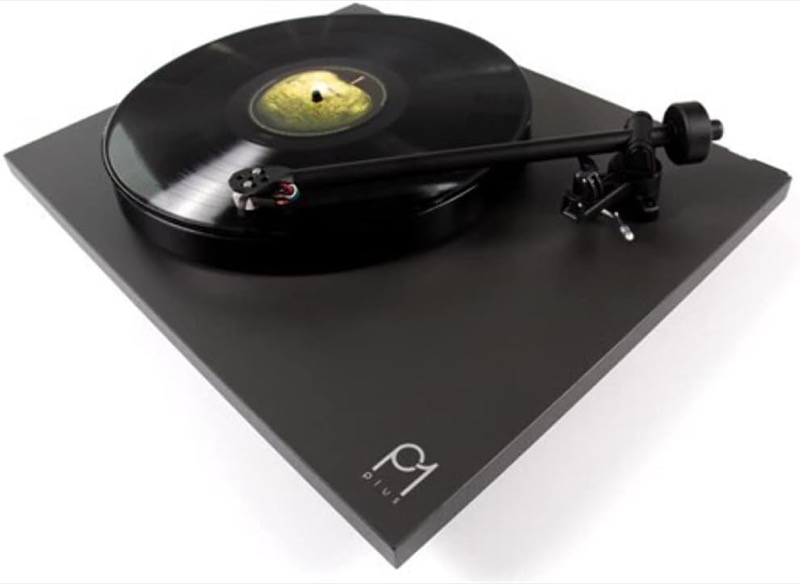
- Belt drive
- RB110 tonearm
- Rega Carbon cartridge
- No built-in preamp
- Factory-set geometry
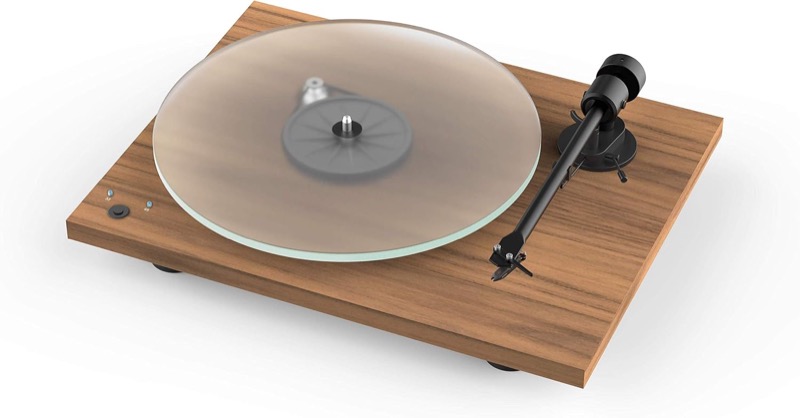
- Belt drive
- 8.6" tonearm
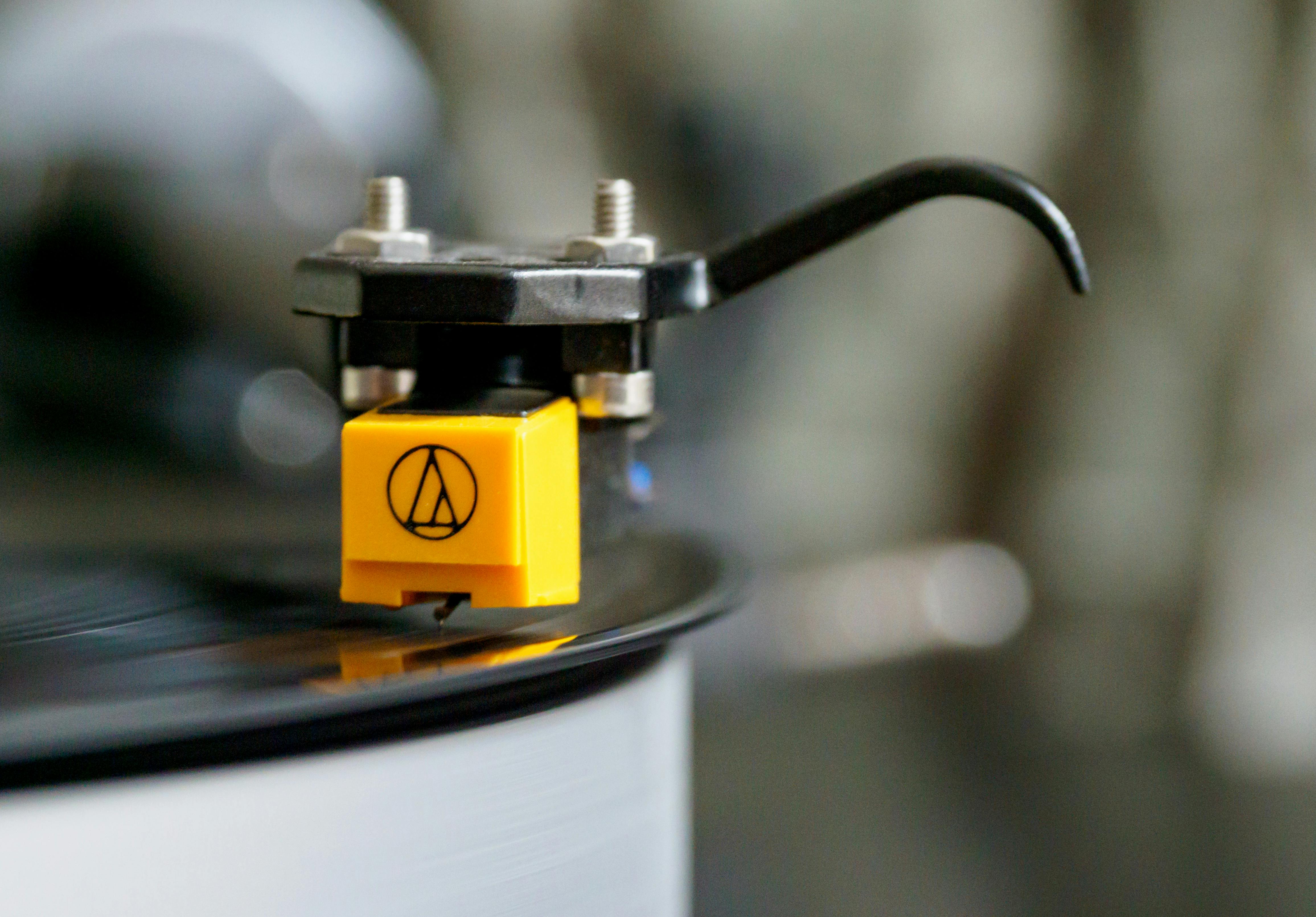
- Pre-fitted Ortofon OM5e cartridge
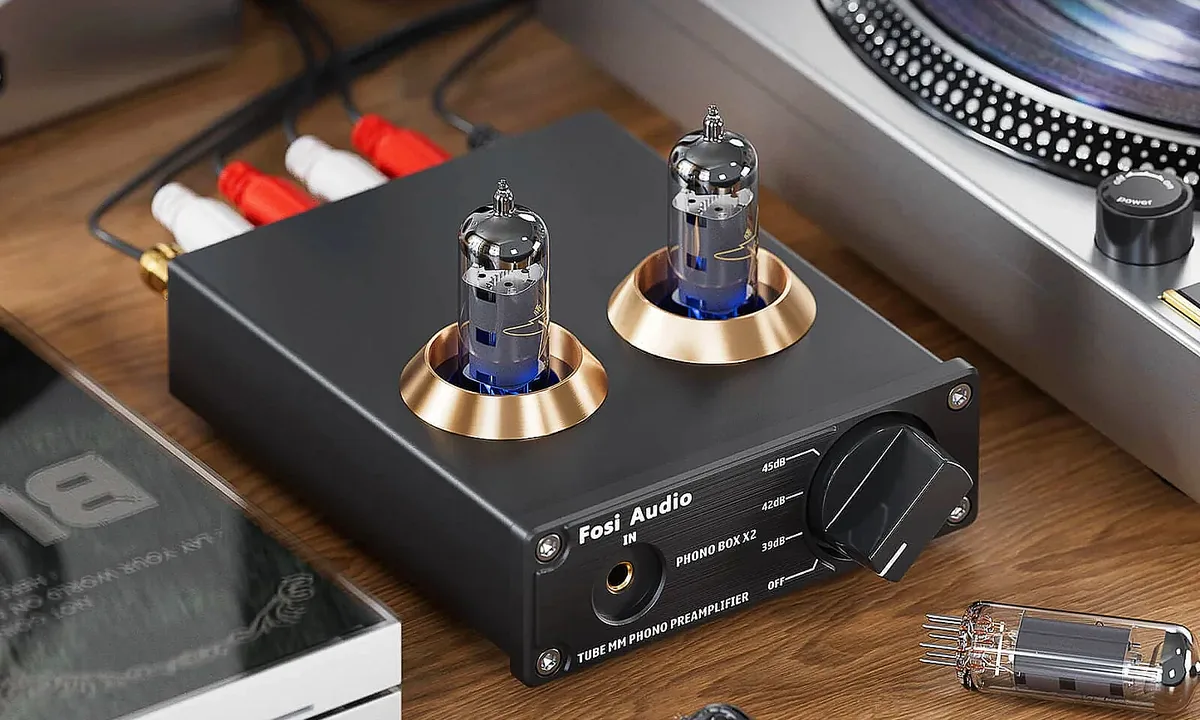
- Bypassable built-in preamp
- Electronic 33/45 speed change
Design philosophy
The Rega Planar 1 is a statement of principle: a turntable should be as light and rigid as possible. The laminated wood plinth is engineered for rigidity, not mass. The RB110 tonearm is a simplified version of the legendary RB300 — same principle, fewer adjustments. The idea is that fewer adjustable mechanics means fewer setup errors. The geometry is set at the factory. You place it and play.
The Pro-Ject T1 Phono SB is the philosophical opposite: rather than taking things away from a beginner, it hands them everything. It has a built-in phono preamp (bypassable), push-button electronic speed change and a pre-fitted Ortofon cartridge, with tracking force and anti-skate set at the factory. The platter is glass, the plinth MDF. It is built to play straight away, from a single box.
The sound
According to TechRadar (Simon Lucas, November 2022, on the 2021 version) the Planar 1 has a coherent presentation, with natural rhythm and timing, plenty of fine detail and good dynamics; bass is full and well articulated. With recordings that are already warm and soft, the same review notes, it tends to indulge them a little too much. What Hi-Fi? (2016, on the previous version with the same RB110 arm and Carbon cartridge) stresses its lively character and detail above its price class.
According to Hi-Fi Choice (Ed Selley) the T1 Phono SB sounds energetic and flowing: bass is not the deepest but is handled with agility, and with brightly cut pressings the treble can turn edgy, with some sibilance. SoundStage! Hi-Fi (Philip Beaudette, February 2021), who listened to it through its own phono stage, describes it as lively, with warm, controlled bass and natural voices. Hi-Fi Choice compared the two and gives the Rega the edge on sound, as the Planar 1 Plus with built-in phono, finding it more forgiving of mediocre pressings.
Setup and installation
The Rega installs in ten minutes: remove the belt from the transit support, mount the counterweight, set tracking force (1.75g) and play. No azimuth adjustment, no tonearm height adjustment. Everything is factory-set to tight tolerances.
The T1 also goes together in a few minutes: the sub-platter makes assembly almost automatic, the cartridge arrives fitted, and tracking force and anti-skate are set at the factory. The price of that convenience is that there is little left to adjust later.
Upgrade path
The Rega has a vertical upgrade path: Planar 1 Plus, Planar 2, Planar 3 — each step is a new turntable. The tonearm is not easily replaceable. The Carbon upgrades to the Elys 2 or Exact, but requires a dealer to fit correctly.
The Pro-Ject T1 grows a little, cheaply: the Ortofon stylus steps up within the family (OM10, OM20) and the built-in preamp can be bypassed with an external one. Beyond that it does not go far: for Hi-Fi Choice, fixed anti-skate and a pre-set cartridge leave little room.
- Sound comes first for you: Hi-Fi Choice, which compared them, prefers the Rega
- You want a platform to grow: stylus, cartridge, then Planar 2 and 3
- Simplicity is a value, not a limitation
- You don't plan to swap cartridges yourself
- You don't have an amplifier with a phono input (consider the Planar 1 Plus)
- You don't have an amplifier with a phono input (the built-in preamp solves this)
- You want to play straight away, from a single box
- You want to change speed with a button, without moving the belt
- A stylus upgrade (OM10, OM20) is all the growth you need
Can I connect the Rega Planar 1 directly to active speakers?
The standard Rega Planar 1 has no built-in preamp — you need an amplifier with a phono input or an external phono preamp. The Rega Planar 1 Plus adds a bypassable built-in preamp for around £50 more. The Pro-Ject T1 Phono SB includes the preamp and can connect to any line input.
Which stock cartridge is better?
Both are entry-level MMs: the Rega Carbon has a conical stylus, the Ortofon OM5e an elliptical one. The OM5e has the clearer upgrade path, since only the stylus changes (OM10, OM20); the Carbon steps up to the Bias 2 stylus or a better Rega cartridge. Both are starting points, not endpoints.
Is the Rega Planar 2 worth the extra £100?
The Planar 2 is the next step in the same range, with the RB220 arm. If you are staying with Rega and have the budget it is the natural path; how much the sound changes we do not say here, because none of the reviews cited on this page compares them.