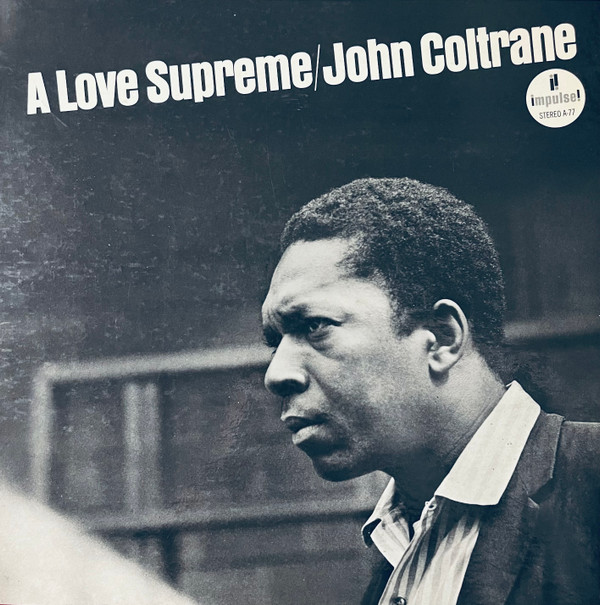
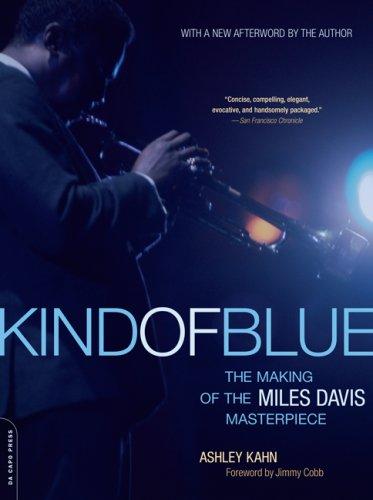
Some records have had everything written about them. A Love Supreme finally had the right book written about it. Ashley Kahn does for the watershed album of spiritual jazz what he had already done for Miles Davis's Kind of Blue: he stops mythologising and starts documenting. The result is the book every jazz collector should keep beside their copy of the record, whatever pressing that copy happens to be.
Kahn's strength is method. Rather than build another hagiographic portrait of Coltrane as a saxophone saint, he reconstructs the album's material genesis: the recording session of 9 December 1964 at Van Gelder Studios in Englewood Cliffs, the conditions under which the music was made, who was in the room, what happened in those hours. The book rests on enormous research — over a hundred interviews with musicians, producers and family members, plus unpublished material, including never-before-printed interviews with Coltrane himself and bassist Jimmy Garrison.
For anyone who loves spiritual jazz, the book's value lies in how it holds together three planes that usually stay apart. There is the biography — the years that carried Coltrane from addiction and crisis to the spiritual rebirth of 1957 and on to the musical vow that is A Love Supreme. There is the musical analysis — the four-movement structure, the famous four-note cell of the first movement, the psalm Coltrane wrote out by hand and printed on the inner sleeve. And there is the cultural context — what the record meant at the height of the political and spiritual moment of Black America in the 1960s.
Kahn reproduces and analyses facsimiles of the manuscripts, Coltrane's notes, the scores. For the reader who owns the record — and especially for the one who owns it on vinyl and knows every breath of it — seeing the material genesis of the music, understanding how the prayer you hear was built note by note across a few hours of a December evening, changes the way you listen to it permanently.
There is a rare quality in Kahn's writing: he never loses sight of the fact that he is discussing a record loved by millions, and so he falls into neither dry technicality nor reverent excess. This is high-level music journalism — transparent, passionate without being pious. The British press called it one of the most accessible pieces of jazz history you'll find, and that is true: a newcomer can read it as an introduction, an expert for the detail.
For the Groov-illa reader, and for anyone building a spiritual jazz collection, Kahn's A Love Supreme is the natural bibliographic starting point. Coltrane is the source from which all spiritual jazz descends, and this is the book that tells how the source first flowed. Keep it next to the record. They were made to sit together.