Recorded in a single evening in 1964: Coltrane's prayer-suite, the wellspring of spiritual jazz, and the mono-vs-stereo puzzle every collector must solve.
Some records document a performance; A Love Supreme documents a prayer. On the evening of 9 December 1964, in Rudy Van Gelder's studio at Englewood Cliffs, John Coltrane's classic quartet recorded the whole four-part suite in a single sitting — few takes, almost no overdubs — and were done. Coltrane had conceived it as an offering of thanks to God, seven years after freeing himself from heroin.
Around him, the quartet at its peak: McCoy Tyner on piano, Jimmy Garrison on bass, Elvin Jones on drums. Bob Thiele produced; Van Gelder engineered, and by Thiele's account barely touched the controls that day — there was no need. Even the sleeve carried the seriousness of the thing: it was the first Impulse! release to drop the orange-and-black spine for an austere white one, and inside the gatefold Coltrane printed a poem-prayer.
Part I — Acknowledgement opens on the famous four-note bass figure, turning and turning until Coltrane sings it into words, chanting "a love supreme" in overdubbed voices. Part II — Resolution is melody and momentum, Tyner's broad chords. Part III — Pursuance lets Elvin Jones loose in one of the most incendiary drum solos in jazz. And Part IV — Psalm is the secret summit: Coltrane "recites" the printed poem without words, playing every syllable on the saxophone — a wordless prayer, note for note.
A whole world descended from it. A Love Supreme is the wellspring of the spiritual jazz that followed — from Alice Coltrane to Pharoah Sanders to labels like Strata-East and Black Jazz — and it sold around a million copies, an unthinkable figure for music this radical.
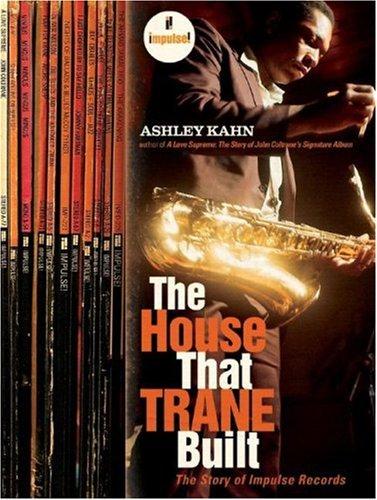
The album's genesis — that December 1964 evening, take by take — is reconstructed by Ashley Kahn in A Love Supreme.
On vinyl, this is where the Groovilla questions really matter, because the choice counts. The original is the 1965 Impulse!: AS-77 in stereo, A-77 in mono, orange-and-black label, laminated gatefold, the VAN GELDER stamp etched in the dead wax. The one thing every collector should know: the stereo first press carries a rare Van Gelder cutting error — a background hum, the notorious hum of many RVG pressings; the mono, technically a fold-down of the two-track master, is rarer and places Coltrane's sax dead centre, which many prefer, hum aside. Clean stereo originals run from several hundred upward (roughly $300–800 VG+), monos more. To hear it without bleeding your wallet, the Acoustic Sounds Series (Verve/UMe, 2022, mastered by Ryan K. Smith at Sterling from analog tape, pressed at QRP, tip-on gatefold) is the accessible reference; the Analogue Productions 45rpm double LP (cut by Kevin Gray, QRP) is the audiophile summit at a summit price; and the 60th-anniversary mono (2025, again Smith from analog tapes) brings mono back into print for the first time in half a century.
A Love Supreme turned gratitude into sound: a prayer you can set on a turntable. You don't have to believe in it to feel it. Just lower the lights and let Garrison sound those first four notes.
One of the absolute peaks of jazz: Coltrane's prayer-suite, cut in a single evening by Van Gelder. The stereo AS-77 original carries the famous RVG hum; the mono is rarer and better centred. To hear it best without original-pressing money, the 2022 Acoustic Sounds Series is the reference.
A Love Supreme on Vinyl — Which Pressing?
AS-77 stereo / A-77 mono, orange-and-black label, laminated gatefold, VAN GELDER stamp in the dead wax. The stereo carries the rare RVG cutting hum; the mono (a fold-down) is rarer and centres the sax. Stereo VG+ ~$300–800, mono more
180g all-analog, mastered by Ryan K. Smith (Sterling) from analog tape, QRP pressing, tip-on gatefold. The accessible modern reference. ~£35–45
45rpm double LP 200g, cut by Kevin Gray (AcousTech), QRP. Audiophile summit, high price (a UHQR box also exists)
mono for the first time in 50 years, mastered by Ryan K. Smith from analog tapes, 180g tip-on gatefold. For the centred sax without chasing an original
Which pressing? Check it on Discogs ↗
Groov-illa participates in the Amazon and eBay Partner Network affiliate programmes. Purchasing through my links may earn me a small commission at no extra cost to you. The Discogs link is not an affiliate link: I earn nothing from it. How we review →
Which is better, the mono or the stereo original of A Love Supreme?
It depends what you're after. The stereo first press (AS-77) has the wide, warm soundstage typical of Van Gelder, but it carries a rare cutting error of his: a background hum found on many RVG pressings. The mono (A-77) is technically a fold-down of the two-track stereo master, yet it's rarer and places Coltrane's saxophone dead centre — which many collectors prefer for exactly that reason. If you find a clean copy and the hum bothers you, the mono is the safer choice.
What does a 1965 Impulse! original cost, and how do I spot one?
Look for the orange-and-black Impulse! label with the exclamation point, catalogue number AS-77 (stereo) or A-77 (mono), the laminated gatefold and, above all, the 'VAN GELDER' stamp etched in the dead wax. The matrices read AS-77-A-1 / AS-77-B-1. Clean stereo originals in VG+ start in the several hundreds of dollars (roughly $300–800), and monos are worth more. Beware later reissues with 'ABC Records' on the label.
Which reissue is the best to listen to?
For the best value, the Acoustic Sounds Series (Verve/UMe, 2022): all-analog, mastered by Ryan K. Smith at Sterling from analog tape and pressed at QRP, in a high-quality tip-on gatefold, around £35–45. If you want the absolute peak and price is no object, the Analogue Productions 45rpm double LP (cut by Kevin Gray) is the most spectacular. And since 2025 there's the 60th-anniversary mono edition, for anyone who wants that centred sound without hunting an original.