MM o MC: quale testina fa per te
Moving magnet o moving coil: la differenza spiegata per davvero
C'è un momento, dopo i primi mesi col giradischi, in cui la parola «testina» smette di essere un dettaglio e diventa una scelta. La prima forcella che incontri è una sigla: MM o MC. Questa guida spiega la differenza per davvero — non in teoria, ma in quello che cambia quando metti su un disco e quando apri il portafoglio.
La differenza in due parole
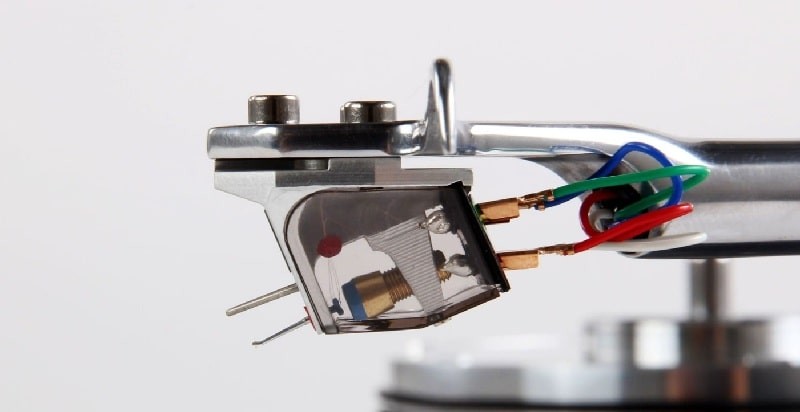
Una testina trasforma il solco in segnale elettrico, e lo fa muovendo un magnete dentro un campo di bobine. Nelle MM — moving magnet — è il magnete a muoversi, fissato in cima allo stilo, mentre le bobine restano ferme. Nelle MC — moving coil — è il contrario: bobine minuscole avvolte sul cantilever si muovono dentro un magnete fisso.
Sembra un dettaglio da ingegneri, e invece è la radice di tutto il resto. Le bobine di una MC pesano molto meno del magnete di una MM, quindi la parte mobile è più leggera e segue il solco con più prontezza. È da qui che nascono le differenze di suono, di prezzo e di manutenzione che vedremo.
Output e preamp: qui si decide tutto
La differenza pratica più importante non è il suono: è il segnale. Una MM esce a circa 3-5 mV, abbastanza da pilotare qualsiasi ingresso phono MM standard — quello che trovi nel tuo ampli o in un preamp economico. Una MC a bassa uscita esce a 0,2-0,5 mV: un segnale dieci volte più debole, che ha bisogno di uno stadio MC dedicato o di uno step-up trasformatore per essere amplificato senza affogare nel rumore.
Tradotto: una MM funziona con quello che probabilmente hai già. Una MC ti obbliga a mettere in conto anche il preamp giusto. Esistono MC ad alta uscita, intorno ai 2-2,5 mV, che lavorano su un ingresso MM, ma sono l'eccezione, non la regola.
Lo stilo: si cambia o si rifà?
Su una MM lo stilo è un pezzo che si sfila e si rimette. Quando si consuma, ne compri uno nuovo e lo monti in trenta secondi. Spesso puoi anche salire di livello restando nella stessa famiglia: una Ortofon 2M Red diventa una 2M Blue cambiando solo lo stilo. È una rete di sicurezza, ed è economica.
Su una MC quel lusso non c'è. Stilo e cantilever sono solidali al corpo: quando lo stilo è finito, spedisci la testina per un retip o ne compri un'altra. Il suono può valere la spesa, ma la spesa, nel tempo, è un'altra storia.
Il suono, senza mitologie
Generalizzare sul suono è sempre rischioso, ma una tendenza c'è. Le MM tendono a un carattere caldo, pieno, indulgente: bassi con peso, medi corposi, una grana che perdona un pressing stanco o un braccio non perfetto. Le MC tendono a essere più rapide e analitiche — più dettaglio, più aria sugli alti, un tracciamento più sicuro nei passaggi affollati. In cambio, ti mostrano senza pietà un disco rovinato o un anello debole della catena.
La regola che conta resta una sola: una buona MM su un buon impianto suona meglio di una MC economica su un impianto che non la sfrutta. La testina è un anello, non la catena intera.
Quale per te: MM, quasi sempre
Se stai iniziando, o se vuoi un percorso senza pensieri, la risposta è MM. Costa meno, funziona con il preamp che hai, si mantiene con pochi euro e perdona gli errori mentre impari. Il punto di partenza più sicuro è la Ortofon 2M Red: è lo standard de facto dell'entry-level, equilibrata e neutra, e ha il vantaggio di poter crescere — basta cambiare lo stilo per salire alla 2M Blue quando vorrai di più.
La MC arriva dopo, quando il resto dell'impianto — braccio, phono, diffusori — è pronto a far vedere cosa sa fare. Non è un punto di partenza.
L'alternativa più calda, per rock e soul
Se ascolti soprattutto rock, soul e funk, la Nagaoka MP-110 è l'altra strada da considerare. È una MM giapponese dal carattere più caldo e corposo della Ortofon, con bassi pieni e medi avanti che fanno respirare un disco di Otis Redding o di Curtis Mayfield. Costa sensibilmente più della 2M Red, ma non per il suo valore: in Italia arriva solo per canali indiretti, e il suo prezzo internazionale è più basso. Per certe collezioni è la testina che ti fa restare al giradischi un disco in più.
Per chi inizia, e per la grande maggioranza dei collezionisti, la risposta è MM: costa meno, è più semplice, si mantiene con niente e perdona. La MC trattala come un traguardo, non come una linea di partenza — ci arrivi quando l'impianto è pronto a ringraziarti.
Posso usare una testina MC con il mio preamp MM?
Solo se è una MC ad alta uscita (circa 2-2,5 mV). Le MC a bassa uscita (0,2-0,5 mV) hanno bisogno di uno stadio phono MC dedicato o di uno step-up: su un ingresso MM suonerebbero deboli e rumorose.
La testina MC suona sempre meglio della MM?
No. Dipende da tutta la catena. Una buona MM su braccio, phono e diffusori all'altezza batte una MC economica montata su un impianto che non la sfrutta.
Posso aggiornare solo lo stilo su una MM?
Sì, ed è uno dei suoi vantaggi. Spesso resti nella stessa famiglia e sali di livello — per esempio dallo stilo della 2M Red a quello della 2M Blue — cambiando solo la punta.
Quanto dura uno stilo?
Indicativamente tra le 500 e le 1.000 ore di ascolto, a seconda del tipo di punta e dello stato dei dischi. Conviene ispezionarlo periodicamente e, nel dubbio, sostituirlo prima che rovini i solchi.