Technics SL-1200
The Icons 03 — the turntable that never breaks, if you buy the right one
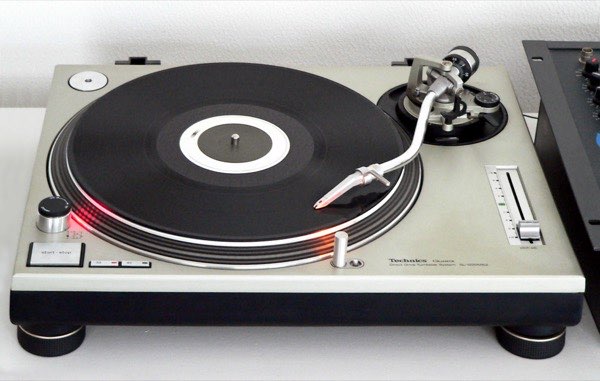
It is the most famous turntable in the world, and perhaps the most misunderstood on the used market. You find one for sale and the temptation is to think "it's a Technics, it's indestructible" — and that is true, but only if you buy the right one. Because under the same name, today, two very different machines coexist: the original vintage and the modern reissues. This guide is about the vintage only, and the first thing it does is teach you to tell them apart. As with the Thorens and the NAD, I speak as a buyer, not a technician, and the general method for judging used gear is in our restoration hub. But here there is an advantage the other two classics do not have: the SL-1200 is built not to break. Where the Thorens is delicate — a sprung sub-chassis, an arm to handle with care — the Technics is the exact opposite: direct drive, professional construction, a motor made to spin for decades in radio stations and clubs. It is the easiest of the classics to own. Provided, again, you buy the right one.
Why it is a classic
The SL-1200 was born in 1972 as a mid-range hi-fi turntable, but it is with the MK2 of 1979 that it became a legend: direct drive with a brushless DC motor connected straight to the platter, quartz speed control, a slider pitch. Radio and club DJs adopted it en masse for exactly what makes it special for the listener too: very high torque (1.5 kg·cm), a 0.7-second start-up, nailed-on speed (quoted wow & flutter 0.01% WRMS), and a build that survives any abuse.
It is the exact opposite of the Thorens, and that is its argument. Where the TD 160 isolates vibration with a delicate sprung sub-chassis, the SL-1200 fights it with mass: a die-cast aluminium upper cabinet, a heavy rubber base, no empty space. Fewer parts that can break, less maintenance, decades of service. The S-shaped arm has a universal mount, so it takes any cartridge. It is the turntable that never breaks — and for anyone who does not want to think about it again, that is a quality worth as much as the sound.
The critical point: vintage or reissue
This is where the purchase is decided, and the reason this guide exists. The original production of the SL-1200 runs from 1972 to 2010, when Panasonic suspended the Technics brand. Then, from 2016, production resumed with entirely new machines: the SL-1200G, GAE, GR and GR2 series for audiophiles, and the MK7 (and M7) for DJs. They are not the same product: they use a different motor — a new "coreless" direct drive — and cost far more than the vintage used ones, often as much as a high-end new deck.
There is nothing wrong with the reissues: they are excellent turntables. But they are not the classic to hunt for that we mean here, and the risk, on the used market, is paying a vintage price and getting something else — or the reverse. The rule is simple: if the listing carries one of the post-2016 badges (G, GAE, GR, GR2, MK7, M7), it is not the vintage. Always ask the year of production, and exclude those badges in your search. The true vintage runs, at the latest, to the MK6 of 2008.
The vintage sub-versions
Within the vintage, the versions follow one another but the heart stays the same. They are worth knowing, because they change details and prices:
- SL-1200 (Mk1), 1972-1979: the first series, with rotary pitch control rather than a slider. Different from the later ones, and rarer today. - SL-1200MK2, 1979-2010: the emblematic version, the one that defined DJing. Slider pitch, quartz lock. It remained the base model for thirty years and is the most common on the used market. - SL-1200MK3 / MK3D, from 1989: refinements, black finish, gold RCA plugs, a pitch-reset button. - SL-1200MK4, 1996: adds the 78 rpm speed, useful for those with period records. - SL-1200MK5 / MK6: the final refinements before the end, in 2010.
A note on names: the SL-1200 is the silver version, the SL-1210 the black — same machine, different colour. And mind the letters: an "MK5G" is vintage, while a plain "1200G" is a modern reissue. The letter, here, changes everything.
What to check before buying
The beauty of the SL-1200 is that it rarely breaks. But "rarely" is not "never", and on an example that may have worked in a club for twenty years there are things to look at — all observable without technical knowledge:
- Speed and pitch. Switch on, bring the platter to 33 rpm and watch the strobe on the edge: the dots should stay still. If the speed wavers even with the quartz lock engaged, or if the pitch slider is dirty and "jumps", it is a signal — usually fixable, but to be factored into the price. - The start-up. It should reach speed instantly, in a fraction of a second. If it takes time or starts slowly, the motor or the electronics want attention. - The arm. Move it: it should turn freely and without play on its bearings. Check that the cue lowers smoothly and that the height adjustment works. - The feet and the chassis. The damping feet harden over the years; the chassis, being metal, holds up well, but check for knocks and corrosion on the contacts. - Its past life. A club example, used for scratching, has worked harder than a living-room one. It is not a veto — the machine was born for it — but it is something to know when haggling.
Compared with the Thorens, the list is shorter and calmer: that is the point of this turntable.
What to expect to pay
No hard figures: vintage moves, and the SL-1200 has risen a lot in recent years, driven by DJ demand and the return of vinyl. In order of magnitude, a working MK2 on the used market sits in a wide band — roughly between four hundred and eight hundred euros, with the early series, well-kept examples or special finishes at the upper end, and heavily used club examples lower down.
The advantage, compared with other vintage gear, is that spares exist and the machine is simple to have serviced: feet, the pitch slider, and the capacitors after many years — there is no belt, it is direct drive. The full sum — price plus any setup — is the one to do first, and it is set out in the restoration hub. But it is, among the classics to hunt for, the one with the fewest possible surprises.
The SL-1200 is the classic to hunt for anyone who wants a turntable that never makes them think about it again: direct drive, professional construction, decades of service without drama. It is the opposite of the Thorens — where that one is delicate, this one is indestructible — and it is the easiest of the three to own. But its toughness will not protect you from the commonest buying mistake: confusing the original vintage (1972-2010) with the reissues from 2016. Before buying, ask the year and exclude the modern badges (G, GAE, GR, GR2, MK7, M7); then check speed, start-up and arm, and weigh how hard it has worked. Do that, and you bring home the turntable that defined a trade — and that will keep spinning when many others have stopped.
Affiliate link — no extra cost to you · How we review →
How do I tell a vintage Technics SL-1200 from a reissue?
By the badge and the year. The vintage runs from 1972 to 2010 (the most common is the MK2 from 1979). The reissues, from 2016, carry badges like G, GAE, GR, GR2 (audiophile) or MK7 and M7 (DJ) and have a new motor. If the listing shows one of those badges, it is not the vintage: always ask the year of production.
What is the difference between the SL-1200 and the SL-1210?
It is only the colour: the SL-1200 is the silver version, the SL-1210 the black. The machine is identical. Mind the letters after the number instead: 'MK5G' is vintage, while a plain '1200G' is a modern reissue.
Is it true it never breaks?
It very rarely breaks: direct drive has fewer wear-prone parts than a belt-drive turntable, and the build is professional. But on a heavily used example you should still check the speed stability, the pitch slider, the arm bearings and the feet. The advantage is that spares exist and servicing is simple.
Can I fit any cartridge?
Yes: the S-shaped arm has a universal mount with a detachable headshell, so it takes almost any cartridge. It is one of the reasons for its versatility, and it makes it suited both to listening and to DJ use.