The 9 Best Turntables under £500
Three tiers, nine turntables: from your first automatic to near-audiophile under 500. Entry-level doesn't mean compromise — it means choosing well.
- 🏗️ Best build → Rega Planar 1: a build score of 9 out of 10, the highest among the turntables here with a full review page; timing and detail praised by TechRadar and What Hi-Fi?.
- ⭐ Our pick → Pro-Ject T1 Phono SB: ready to use with a built-in preamp and electronic speed change, the most balanced choice under £300 (as of 26 October 2026 not available on Amazon, see eBay).
- 💰 Best value → Fluance RT85: Ortofon 2M Blue + acrylic platter, more premium hardware per pound.
- 🪙 Minimum budget → AT-LP60X: automatic, the first turntable that won't ruin your records.
- 📻 Wireless → Sony PS-LX3BT: Bluetooth and a built-in preamp, convenience.
- 🎚️ DJ/USB → AT-LP120XUSB: direct drive, three speeds, digitise your records.
There's a question anyone approaching vinyl asks sooner or later: how much do I need to spend before I stop doing damage? The honest answer is: less than you think. Under £500 you'll find turntables built in Europe, with carbon tonearms, Ortofon cartridges and mechanical engineering that genuinely means business — and one fixed point first: suitcase turntables under £50 wreck your records, because the conical stylus doesn't track the groove, it wears it down.
This ranking contains affiliate links. Buying through them costs you nothing extra. How we review →
This ranking, updated for 2026, splits nine turntables into three tiers. Budget (£165-246) is the first real turntable: automatic, simple, no damage. The core (£279-338) is where serious vinyl begins: better tonearms, upgradeable cartridges, the real step up. Serious (£362-480) reaches toward audiophile while staying under 500: premium components as standard, substantial build. Each model carries a quality score; where value is notable, a value badge.
Editorial ratings, based on specifications, features and the reviews we cite: not the result of hands-on testing by us.
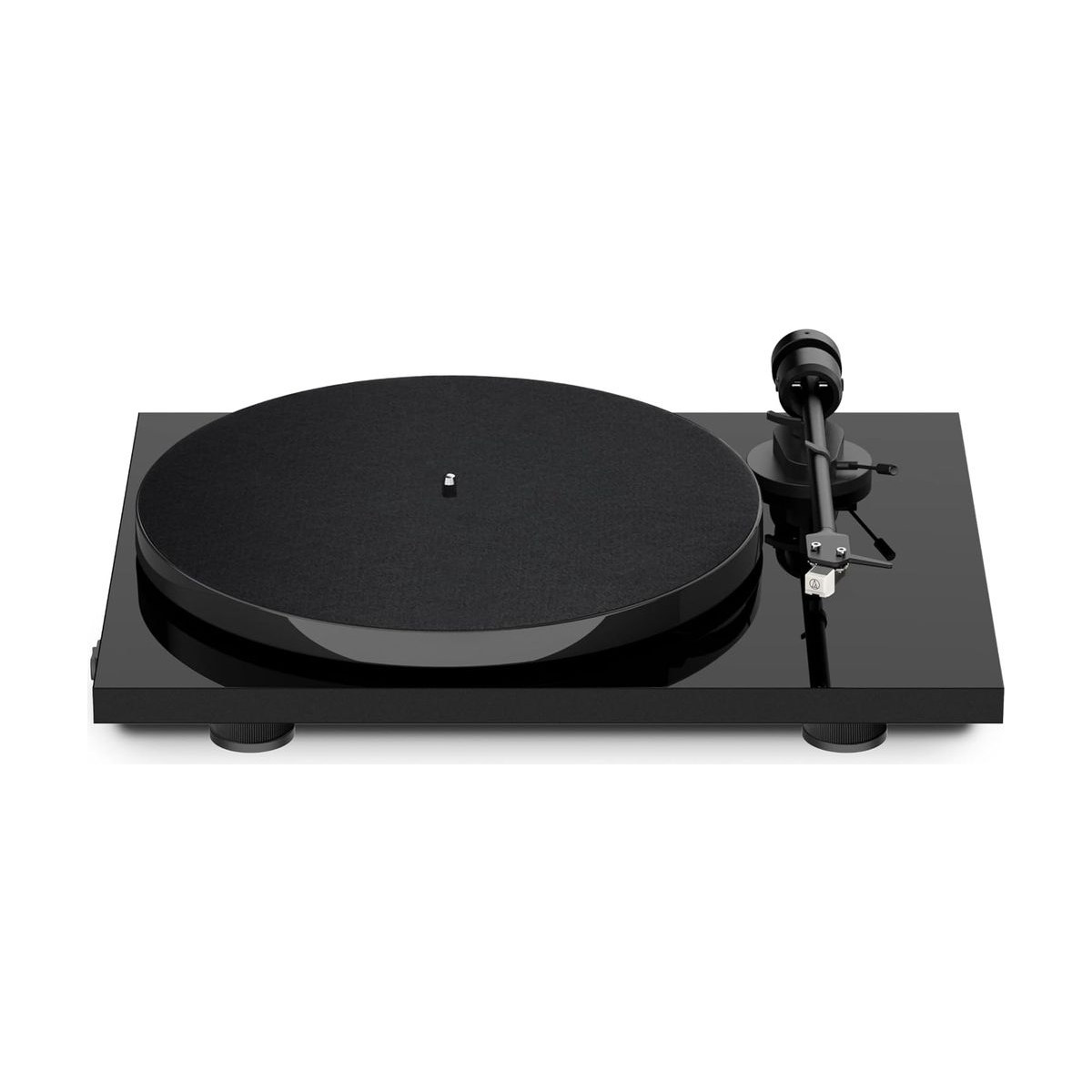
The honest entry point. Tight budget, first collection, zero record damage.
Read the review- Under £200
- Universal headshell (easy upgrade)
- Bypassable built-in preamp
- Detail and good timing according to SoundStage! Access
- Some plastic components on the tonearm
- OM5e cartridge has obvious room for improvement
- More spartan chassis than competition

The mainstream wireless one: the Sony that brings vinyl into the Bluetooth world with no boxes, cables or setup. The PS-LX3BT is the 2026 replacement for the hugely popular PS-LX310BT, and it's built for a specific listener — someone who wants records with the same convenience as streaming. It's fully automatic, with a built-in phono preamp and aptX Adaptive Bluetooth output: switch it on, drop the record, press a button and the arm starts on its own; the signal reaches wireless speakers or headphones with nothing else in between. The built-in preamp is the key to plug-and-play: no amp with a phono input required, any active Bluetooth speaker will do. But Bluetooth is a convenience choice: the signal travels compressed (aptX Adaptive is a lossy codec), while over a cable it arrives whole. What Hi-Fi? (Harry McKerrell, April 2026, five stars) describes it as solid, controlled and well organised, with excellent detail and a good built-in phono stage; the limits are a light build, little scope to change the cartridge and the odd struggle on very complex tracks. The limits are those of a consumer deck: the cartridge is basic (a conical stylus that tracks heavy, around 3.5 grams), the headshell isn't removable, and there's no real upgrade path — what you buy is what you keep. It's not an audiophile turntable, and doesn't pretend to be. It's the simplest way in the world to spin a record, and it's honest about that.
- aptX Adaptive Bluetooth + built-in preamp: no extra boxes
- Fully automatic: starts and stops on its own
- Updated Sony build (aluminium platter and tonearm)
- Not audiophile: fixed tracking, non-removable headshell, limited upgrades
- Over Bluetooth the signal is compressed; over a cable it arrives whole

The first real turntable, and the exact point where you stop damaging your records. The AT-LP60X is the budget automatic by definition: belt drive, a fully automatic tonearm, a moving-magnet cartridge with a replaceable conical stylus. The automatic action is its whole point — press a button and the arm lowers itself at the start of the record; at the end of the side it lifts and returns to rest. For anyone who's never used a turntable, or fears the act of lowering the stylus by hand, it's the assurance of never scratching a groove through a slip. It has a switchable built-in preamp, so you connect it to a pair of active speakers and you're running, with nothing else to buy. But it's an honest entry-level, and the limits are those of the price: the cartridge is the most basic here (with a conical stylus), the build is plastic, and there are no adjustments — no counterweight to set, no anti-skating, everything preset at the factory. Against the suitcase turntables that wear records down, though, it's another planet. It's the right first step: for under £170, an automatic deck that respects your collection. What Hi-Fi?, on the Bluetooth AT-LP60XBT version, finds it coherent and well balanced but short on detail in dense arrangements, with a cheap-feeling build, and gives it three stars.
- Fully automatic: the simplest to use
- Switchable built-in preamp: connects to active speakers
- Under £170: the true cheap entry without record damage
- Conical stylus, not elliptical
- Plastic build, simple arm
- Proprietary cartridge: limited upgrade path
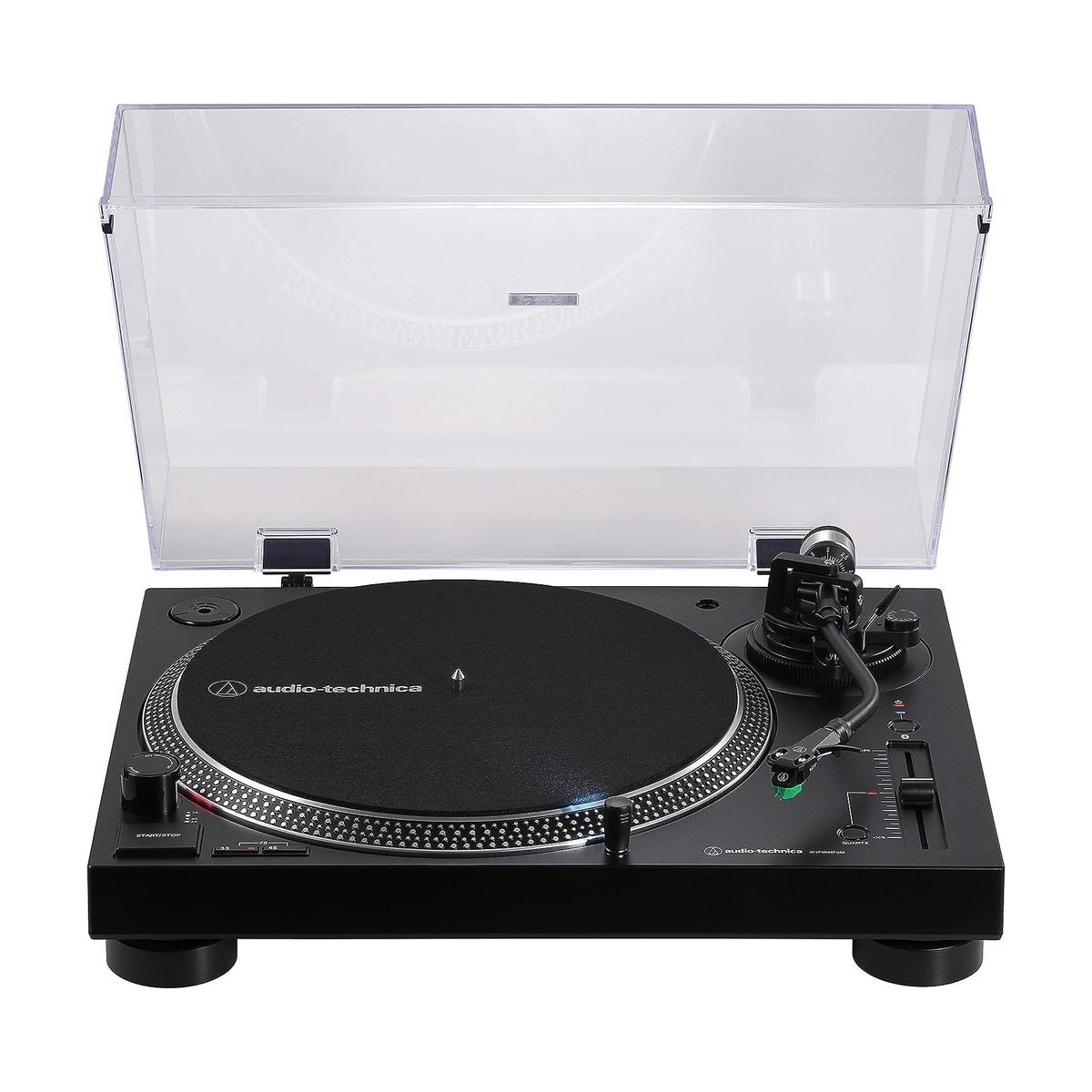
The most versatile: USB, 3 speeds, direct drive. Full and vivid according to Louder, with good timing according to Trusted Reviews.
Read the review- Reliable direct drive long-term
- USB output for digitising
- Three speeds (33/45/78 RPM)
- Excellent AT-VM95E cartridge included
- Predominantly plastic body
- Heavy (4.5 kg)
- Trusted Reviews rates the Rega Planar 1 better-sounding at a similar price
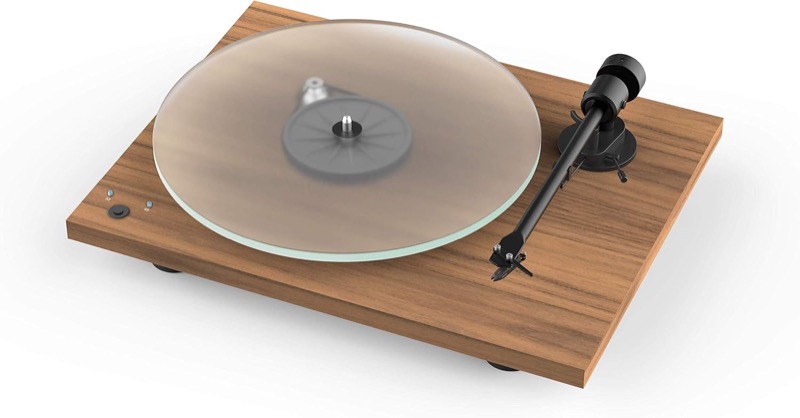
Ready to use, upgradeable. The most balanced choice under £300. As of 26 October 2026 it is not available on Amazon: see eBay.
Read the review- 8.6-inch aluminium tonearm and glass platter
- Electronic speed change
- Bypassable built-in preamp
- Works immediately without extra purchases
- MDF chassis (less rigid than aluminium)
- Modest OM5e cartridge
- No USB output
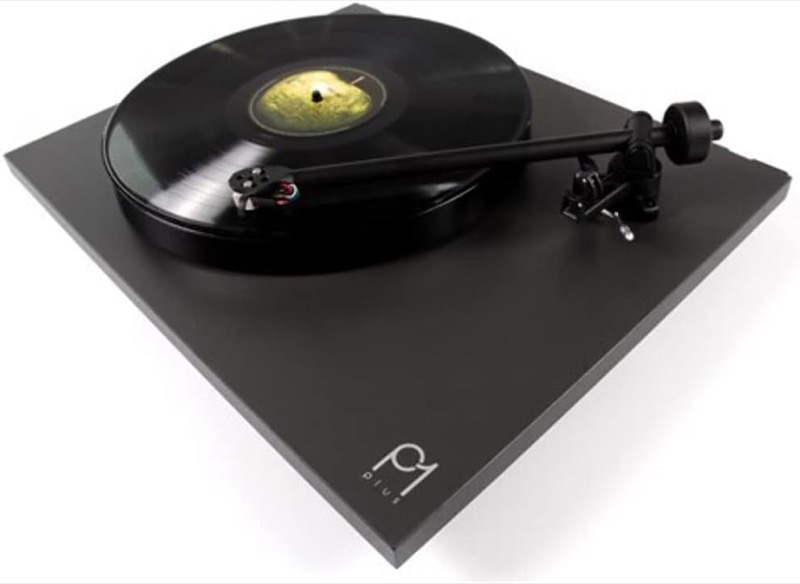
In the £300–400 range, TechRadar finds it coherent, with natural rhythm and timing and plenty of fine detail. Requires amp with phono input. Staff pick for its reviews and build: the T1 adds a built-in phono stage.
Read the review- Hand-assembled RB110 tonearm
- Zero-tolerance bearings
- Timing and detail praised by TechRadar and What Hi-Fi?
- Built to last decades
- No built-in preamp
- Manual speed change (belt)
- No USB output

The Fluance entry, and a textbook case of build-for-the-money. Where rivals around £300 skimp on the chassis to spend on electronics, the RT81 does the opposite: a solid, engineered MDF plinth that damps vibration, an aluminium platter with a rubber mat, an aluminium tonearm with adjustable counterweight and anti-skating — real adjustments, rare at this price. The cartridge is the Audio-Technica AT95E, elliptical: no longer the benchmark (the VM95 series has moved past it), but still easily upgradeable. The preamp is built in and bypassable: use it straight away with active speakers, or switch it off for a better external phono stage as your system grows — pure flexibility. Against the Pro-Ject T1 in the same tier it puts more 'wood and metal' in your hands; against the AT-LP120 it trades USB and direct drive for belt drive. It's the choice for anyone who wants to see where their money went: into the chassis, not the marketing. Long Live Vinyl (Paul Rigby, 2019), which tested it with the same AT95E, found more air around the cymbals, good dynamics and solid bass, but notes that the built-in phono stage adds a veil of noise.
- Solid MDF plinth: build above the class
- AT95E elliptical cartridge + bypassable built-in preamp
- Adjustable counterweight and anti-skating (real adjustments)
- Manual speed change (moving the belt)
- AT95E now superseded by the VM95 series

The best value here, and the definition of 'more premium hardware per pound.' At this price the Fluance RT85 puts an Ortofon 2M Blue — a cartridge people usually buy as an upgrade — and a high-density acrylic platter in your home, two things rivals charge extra for. Servo-controlled isolated motor (0.07% wow/flutter), high-mass wood plinth, aluminium tonearm with detachable headshell. No onboard phono. It lacks the carbon-tonearm pedigree of the Pro-Ject, but on components-per-euro it's unbeatable: a turntable that's already 'grown up', with no need to upgrade the cartridge straight away. SoundStage! Access (Thom Moon, September 2019) credits it with impactful bass and a crisp presentation that holds up in dense passages; among the limits, sensitivity to knocks and an arm that bounces if you lift it in a hurry. For Trusted Reviews it is warm, unified and rhythmically assured, though not the most vigorous listen.
See the comparison- Ortofon 2M Blue as standard: an upgrade already included
- High-density acrylic platter + isolated servo motor (0.07%)
- High-mass wood plinth, unbeatable components-per-euro
- No built-in phono: needs external phono or an amp with phono input
- Aluminium tonearm, not carbon like the Pro-Ject EVO 2

The step above the RT81, and the first Fluance to take the purist route. It shares the Reference platform with the RT85 — the same high-mass wood plinth, the motor moved outside the platter to cut vibration, the three-isolation-foot design — but it sets itself apart with two deliberate decisions. First: the cartridge is the Ortofon OM10, elliptical, in place of the RT81's AT95E. Second, and most important: no built-in phono. This is where you see why it costs more than the RT81 while being 'only' the model below the 85: you pay for a better cartridge, and you pay for the choice to take the electronics out of the turntable. No onboard preamp means you need an external phono stage or an amp with a phono input; it isn't plug-and-play. Against the RT81 you step up in cartridge and drop the preamp; against the RT85 you give up the acrylic platter and the Ortofon 2M Blue, staying on aluminium and the OM10. It's the right turntable for anyone who already has a phono preamp at home and wants to spend every euro on cartridge and mechanics, not convenience. For 9to5Toys (Jordan Druber, December 2019) the sound is clean and clear, with good detail; TechRadar (Lewis Leong) finds it more detailed and dynamic than the RT81 but warm, with plentiful bass that sometimes bleeds into the mids.
- Ortofon OM10 cartridge, upgradeable along the Ortofon line
- Motor outside the platter + three isolation feet (Reference line)
- High-mass wood plinth, substantial build
- No built-in phono (Reference line)
- OM10 is good but bettered by the 2M Red/Blue of the higher models
Pro-Ject Debut EVO 2 ~£600 · The comparison with the Fluance RT85 →
| # | Model | Quality | Value | Price | Tier |
|---|---|---|---|---|---|
| 1 | Pro-Ject E1 Phono | 7.7 | 7.0 | ~£179 | BUDGET |
| 2 | Sony PS-LX3BT | — | 7.8 | ~£246 | BUDGET |
| 3 | Audio-Technica AT-LP60X | — | 8.0 | ~£165 | BUDGET |
| 4 | Audio-Technica AT-LP120XUSB | 8.2 | 8.0 | ~£279 | THE CORE |
| 5 | Pro-Ject T1 Phono SB | 7.8 | 7.5 | ~£299 | THE CORE |
| 6 | Rega Planar 1 | 7.5 | 7.0 | ~£338 | THE CORE |
| 7 | Fluance RT81 | — | 8.5 | ~£302 | THE CORE |
| 8 | Fluance RT85 | — | 9.0 | ~£480 | SERIOUS |
| 9 | Fluance RT82 | — | 8.7 | ~£362 | SERIOUS |
🏗️ Best build → Rega Planar 1: a build score of 9 out of 10, the highest among the turntables here with a full review page; timing and detail praised by TechRadar and What Hi-Fi?.
⭐ Our pick → Pro-Ject T1 Phono SB: ready to use with a built-in preamp and electronic speed change, the most balanced choice under £300 (as of 26 October 2026 not available on Amazon, see eBay).
💰 Best value → Fluance RT85: Ortofon 2M Blue + acrylic platter, more premium hardware per pound.
🪙 Minimum budget → AT-LP60X: automatic, the first turntable that won't ruin your records.
📻 Wireless → Sony PS-LX3BT: Bluetooth and a built-in preamp, convenience.
🎚️ DJ/USB → AT-LP120XUSB: direct drive, three speeds, digitise your records.
How to choose. By tier: budget (£165-246) if it's your first turntable and you want simplicity and no record damage; the core (£279-338) if you want the real step up, with better tonearms and cartridges; serious (£362-480) if you're reaching toward audiophile while staying under 500. By need: automatic (AT-LP60X, Sony) to press a button and listen; manual (all the rest) if you don't need the automation; USB (AT-LP120XUSB) to digitise records; Bluetooth (Sony) for wireless speakers and headphones; MM→MC upgrade (Pro-Ject Debut EVO 2, outside the ranking above £500) for a deck that grows toward moving-coil. Golden rule: put more into the cartridge and turntable than into accessories — the source rules.