The Crate-Digger's Grails: Records Worth the Hunt
What makes a record a grail? Not the price, but the meeting of scarcity, myth and sound. A tour of the records collectors truly hunt.
Somewhere, right now, a producer is looping two bars of drums lifted from a record almost no one has heard. Somewhere else, a collector refreshes a Discogs page where a 1970 folk album is listed at four thousand dollars. Different worlds, same object: the grail. And a grail, it turns out, is never simply the most expensive record — it is the point where three things meet.
Scarcity, myth and sound. A rare but dull record stays merely expensive; a magnificent but common one stays merely a good record. The grail lives at the intersection: when the story of its rarity — a botched run, a label going under, a flop turned legend — fuses with music genuinely worth the hunt. That is where the crate-digger stops breathing. This is a map of those meeting points, in the territories a collector can still work.
On the obsession of extreme collecting — the hunt for the world's rarest 78s — the finest account is Do Not Sell At Any Price by Amanda Petrusich.

What makes a record a grail
Scarcity always has a concrete cause: few copies pressed because the record flopped, because the label went bankrupt, because a run was withdrawn or destroyed. Myth is the story that lights the desire: the artist who vanished, the phantom record plundered for samples, the failure recast as a classic. Sound is the acid test: it has to survive the listening, not just the auction. Remove any one of the three and the grail evaporates — leaving only a price, which is a grail's symptom, never its cause.
There is a fourth, subtler element too: the myth has to be maintained. Producers who sample an obscure record have an interest in keeping it obscure; sellers narrate the rarity as part of the value; and provenance — which pressing, which matrix, what story a given copy carries — becomes narrative in itself. A grail is not just an object: it is an object with a biography. And it is the biography, more than the vinyl, that you buy.
Scarcity: few copies, from a flop, a bankrupt label, a withdrawn run. Myth: a story that feeds the desire — the vanished artist, the sampled phantom, the fiasco turned legend. Sound: it must hold up to listening, not just to bidding. Take away one of the three and you don't have a grail: you have a record that is expensive, or rare, or merely beautiful.
A rare but ugly record is just expensive. A grail is when the rarity has something to say. — Groov-illa
The prog Japanese collectors pay a fortune for
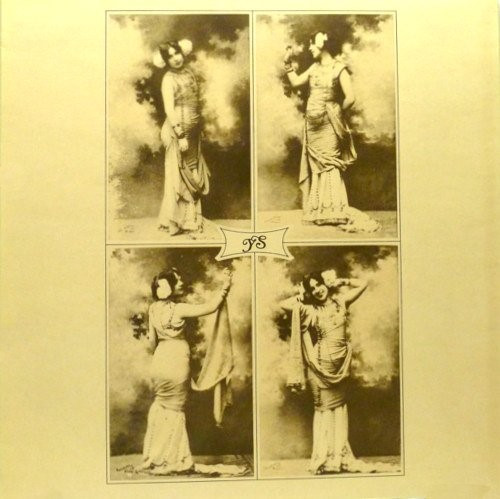
Nobody pays for prog like Japanese collectors. The first pressings of early-1970s Italian progressive rock — often a few thousand copies, on labels that didn't believe in them — have become hard currency in the hands of buyers in Tokyo. It was Japanese collectors and labels, in fact, who built the market for Italian prog across the 1980s and 1990s, reissuing it with obsessive care (obi strips, mini-LP sleeves) and driving up the price of the originals. The textbook case is Ys (Polydor, 1972) by Il Balletto di Bronzo: forty minutes of dark, theatrical prog, a gatefold with a four-page booklet glued inside, catalogue 2448 003. The title comes from the Breton legend of the sunken city of Ys, and Gianni Leone's music — organ, mellotron, harpsichord, a neurotic vocal — is among the most extreme Italian prog produced. The first pressing is known by the label credit "Parole e musica di N. Mazzocchi"; the immediate repress, from the same 1972, already adds a second name (Minellono). A quirk collectors love: an English-sung version was partly recorded and never finished. Clean originals of the gatefold-with-booklet now run to several hundred euros.
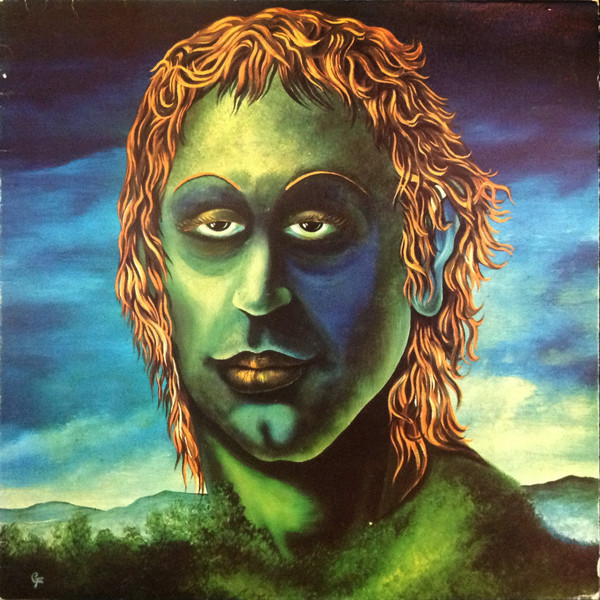
If Ys is the entry-level grail, Dedicato a Frazz by Semiramis (Trident, TRI 1004, 1973) is the one for initiates. They cut it in eleven days, between 17 and 28 September 1973 — five of them, in a band born when they were fifteen — then, like almost everyone in Italian prog, vanished after a single album. It is among the rarest and dearest of the genre, and it carries one of those details that drive collectors mad: the cover spine was misprinted "DISCO: TRN 1004" — TRN was Trident's prefix for 7" singles — and on some copies the error was covered with a sticker bearing the correct number, TRI 1004. If your copy is genuine, the sticker (or its trace) is there: the accidental signature of the first pressing. As fate had it, the only one of the boys to stay in music was singer-guitarist Michele Zarrillo, later a name in Italian pop — while the record they made as teenagers turned into a several-hundred-euro object.

Zeuhl: a planet of its own
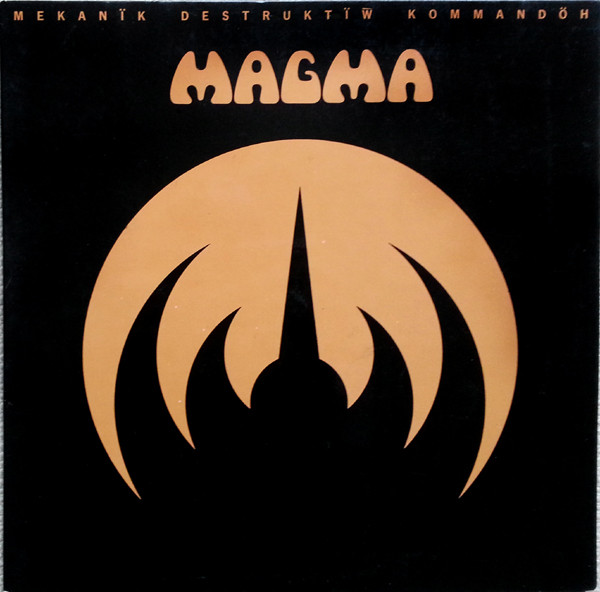
Then there is a territory that is a planet of its own — literally. Zeuhl is the genre invented by France's Magma around a science-fiction mythology and a made-up language, Kobaïan. Mekanïk Destruktïw Kommandöh (1973), the fourth album by Christian Vander's group, is its summit: a martial, hypnotic oratorio somewhere between Carl Orff and John Coltrane, sung in a language that does not exist. It tells the prophecy of a seer from the planet Kobaïa, and was cut between The Manor in England and the Aquarium in Paris, with the arrival of bassist Jannick Top hardening the pulse. It came out on 6 May 1973 on Vertigo in France (catalogue 6499 729) and A&M abroad. The first French pressing — Vertigo "spaceship" label, silver lettering, no "℗1973 A&M" on the spine and no "DA" in the run-out — is the one to want; the original Vertigo swirl pressings of those years are collectors' currency across Europe.
The funk hip-hop dug back up
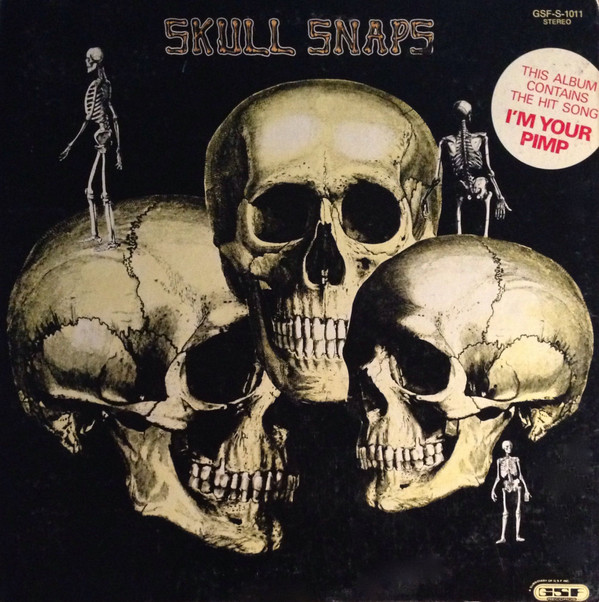
No territory owes more to chance than rare funk. Take Skull Snaps: a mysterious trio, a single self-titled album in 1973 for Lloyd Price's GSF label — a label that folded months after pressing the record in very few copies. They weren't even beginners: behind the name were three soul veterans (Samm Culley, Ervan Waters, George Bragg), formerly the Diplomats, who recorded at Venture Studios in New Jersey. The cover — a skull — looked more like hard rock than soul, and hid pure funk. It would have vanished, were it not for two bars of drums opening "It's a New Day": one of the most sampled breaks in history, in more than five hundred tracks, from Gang Starr to Ol' Dirty Bastard. (A kid named Vernon Reid, the future Living Colour guitarist, learned to play on that record.) The GSF original goes for three figures; for years only an unauthorized Charly CD circulated, and the official reissue arrived only in 2019, on Mr Bongo.
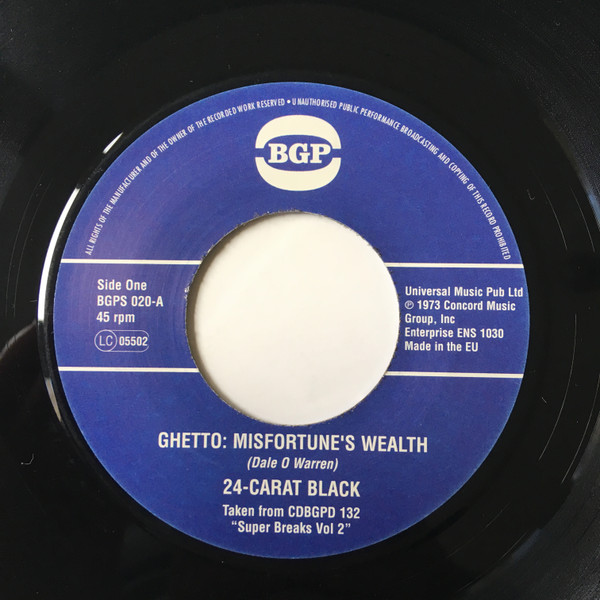
The same arc — flop, disappearance, resurrection by sampling — made a grail of Ghetto: Misfortune's Wealth by 24-Carat Black (Enterprise/Stax, 1973). A soul-funk concept in eight "synopses" on inner-city poverty, written and arranged by Dale Warren — a classically trained violinist, an in-law of Berry Gordy, already Isaac Hayes's arranger at Stax. The band, a group of Cincinnati kids Warren had renamed, broke up; the flimsy cardboard cover, almost papier-mâché, fell apart at a glance; the record vanished. Then hip-hop producers dug it up — Eric B & Rakim, Dr. Dre, Jay-Z, Digable Planets, on to Kendrick Lamar and Pusha-T — and Numero Group released its unissued sessions in 2009 (Gone: The Promises of Yesterday). Al Bell, the head of Stax, would later call it a lost masterpiece. An original with the cover intact — the rarest part — remains a several-hundred-dollar object.
Here the myth has a bitter edge. These records now fetch high sums and have generated, through sampling, enormous revenue for others; but the musicians who made them often saw almost none of it. Numero Group cut the members of 24-Carat Black three-figure cheques; on the unauthorized Skull Snaps CD the artists' credits had simply been erased. The grail celebrates a record and, at the same time, tells the story of its injustice: anyone chasing it should know as much.
The folk that vanished and came back
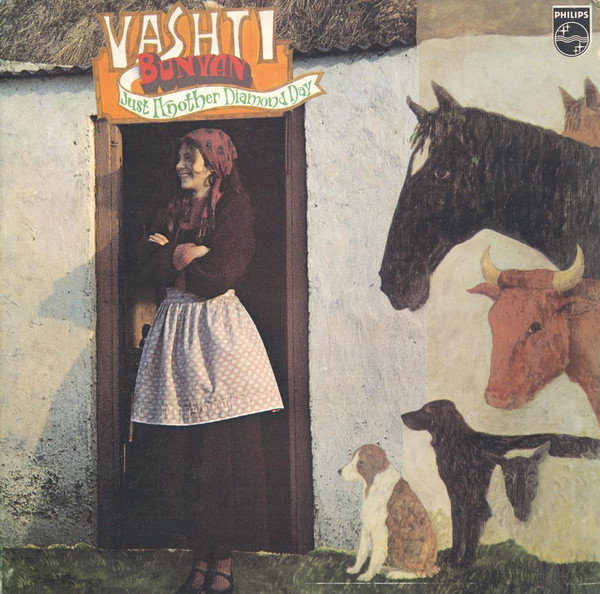
Acid folk is perhaps the territory where scarcity and myth fuse best. Just Another Diamond Day by Vashti Bunyan (Philips, 1970) is the perfect example: recorded in late 1969 with Joe Boyd producing and Robert Kirby — Nick Drake's arranger — on strings, it gathers the songs of the near-two-year journey Bunyan made toward the Hebrides in a horse-drawn cart, to join an artists' community around Donovan — a community that, by the time she arrived, had already scattered. It sold almost nothing and drove her out of music for thirty years. Only a few hundred copies were pressed; an original has surfaced on Discogs at around $4,000. Then the rediscovery — Devendra Banhart and Joanna Newsom crowned her a godmother — and the reissue in 2000. In the same vein sit two records we have already written about at Groov-illa: Parallelograms by Linda Perhacs and In My Own Time by Karen Dalton, two American records that disappeared and re-emerged for the same reasons.


When failure becomes myth
Finally there is the grail born of pure failure. Scott 4 (Philips, 1969) came out under its author's real name, Noel Scott Engel: a record of all-original songs, ambitious and dark, that sold so poorly it was deleted from the catalogue. It was the end of his pop phase and the start of the myth. Reappraised over decades, it is now considered his peak — proof that sometimes it is the flop itself, with its story of rejection, that turns a record into a cult object.

How to spot an original
So how do you tell an original from a reissue? You read the record, not just the cover. The dead wax — the matrix stamped in the run-out — carries the plant and lacquer codes: on the first pressing of Mekanïk Destruktïw Kommandöh, for instance, there is no "DA" marking the later ones. Labels change in their details (the lyricist who appears or disappears on Ys); spines tell stories (the TRI 1004 sticker on Dedicato a Frazz); vinyl weight, fonts and the type of lamination tell the rest. It is a craft, and worth learning before you spend: we have devoted a guide to spotting a first pressing to exactly this.
In the end the grail is not a question of money but of convergence. Price is the symptom; the cause is that rare interlock between a story that cannot be replicated and a sound you never stop chasing. A Neapolitan flop turned legend in Tokyo, an imaginary planet sung in an invented tongue, a drum break that became the backbone of half of hip-hop, a folk album recorded on the road in a cart: none of these records was meant to matter, and that is exactly why they do.
The crate-digger is not hunting copies: they are hunting the moments when rarity and beauty decided, for once, to sit in the same groove. And when they find one — at the back of a crate, in a plain sleeve — they are not buying a record. They are recovering a story the world had thrown away.
Il Balletto di Bronzo — Ys
Semiramis — Dedicato a Frazz
Magma — Mekanïk Destruktïw Kommandöh
Skull Snaps — Skull Snaps
24-Carat Black — Ghetto: Misfortune's Wealth
Vashti Bunyan — Just Another Diamond Day