Do You Really Need a Phono Preamp?
The honest answer to the question every new vinyl listener asks
The phono preamp is the most misunderstood component in the vinyl chain. Some people don't know it exists. Some assume a turntable with a built-in preamp is automatically inferior. Some spend €500 on a standalone unit for a system that can't justify it, while others plug a Rega Planar 3 into the wrong input and wonder why it sounds so quiet. This guide answers the question once and clearly: what a phono preamp is, why it exists, when you need a separate one, and — when you decide to get one — which to choose at each budget level.
What a phono preamp is and why it exists
A phono cartridge produces an extremely weak electrical signal — in the millivolt range, compared to the volts produced by a CD player or digital source. If you connected a turntable directly to a line input on an amplifier, you would hear the music at very low volume, with no body and no bass. The phono preamp does two things: it amplifies the signal to standard line level, and it applies the RIAA curve.
The RIAA curve is the reason you cannot use just any amplifier input. When a record is cut, high frequencies are boosted and bass frequencies are attenuated — without this correction, the grooves would be physically too wide to fit within the recording area of the record. During playback, the phono preamp inverts the curve: it cuts the highs and restores the bass, returning the sound to its original form. A preamp that does not apply the RIAA curve correctly doesn't just sound different — it sounds wrong.
A phono cartridge produces an extremely weak electrical signal — in the millivolt range, compared to the volts produced by a CD player or digital source. If you connected a turntable directly to a line input on an amplifier, you would hear the music at very low volume, with no body and no bass. The phono preamp does two things: it amplifies the signal to standard line level, and it applies the RIAA curve.
The RIAA curve is the reason you cannot use just any amplifier input. When a record is cut, high frequencies are boosted and bass frequencies are attenuated — without this correction, the grooves would be physically too wide to fit within the recording area of the record. During playback, the phono preamp inverts the curve: it cuts the highs and restores the bass, returning the sound to its original form. A preamp that does not apply the RIAA curve correctly doesn't just sound different — it sounds wrong.
Does your amplifier already have a phono input?
Before buying anything, look at the back panel of your amplifier. If there is an input labelled PHONO — not LINE, not AUX, not CD, but PHONO — you already have a built-in preamp inside the amplifier. Connect the turntable there, select the correct input, and you need nothing else.
Hi-fi amplifiers produced up to the 1980s almost universally included a phono input — it was the standard. From the 1990s onwards, as vinyl declined, many manufacturers stopped including one. Modern amplifiers — particularly those aimed at streaming — often lack it entirely. Check before spending.
One important caveat: not all phono inputs are equal. The phono circuit in a €200 entry-level amplifier does not sound like a €200 dedicated external preamp. The phono stage is frequently the component manufacturers sacrifice to control costs. This is why an external preamp — even an inexpensive one — can improve the sound compared to the built-in phono input on many budget amplifiers.
Before buying anything, look at the back panel of your amplifier. If there is an input labelled PHONO — not LINE, not AUX, not CD, but PHONO — you already have a built-in preamp inside the amplifier. Connect the turntable there, select the correct input, and you need nothing else.
Hi-fi amplifiers produced up to the 1980s almost universally included a phono input — it was the standard. From the 1990s onwards, as vinyl declined, many manufacturers stopped including one. Modern amplifiers — particularly those aimed at streaming — often lack it entirely. Check before spending.
One important caveat: not all phono inputs are equal. The phono circuit in a €200 entry-level amplifier does not sound like a €200 dedicated external preamp. The phono stage is frequently the component manufacturers sacrifice to control costs. This is why an external preamp — even an inexpensive one — can improve the sound compared to the built-in phono input on many budget amplifiers.
The turntable has a built-in preamp: is that a problem?
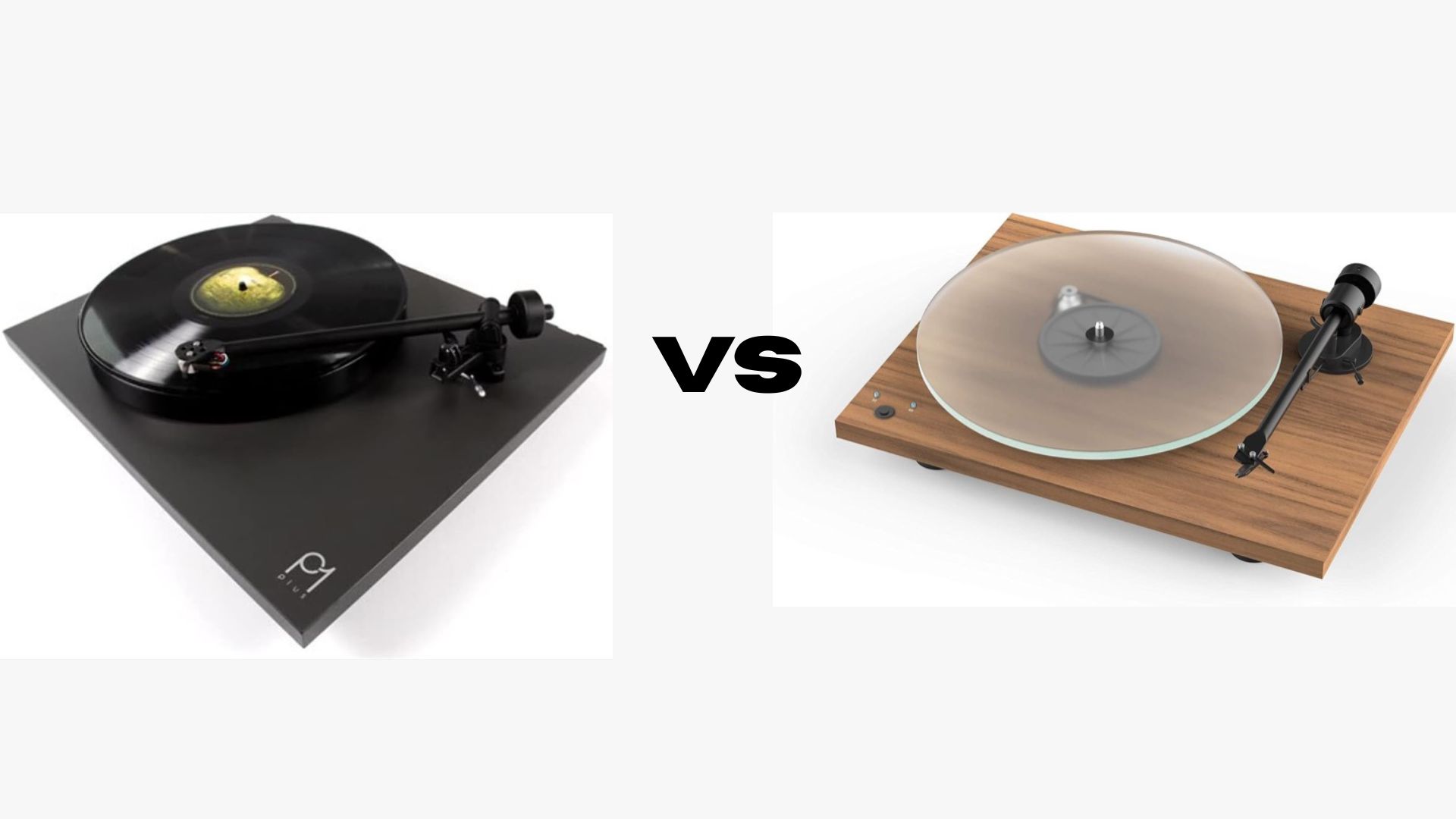
Many modern turntables — particularly entry-level models such as the Pro-Ject T1 Phono SB or the Audio-Technica AT-LP120XUSB — have a phono preamp built into the turntable body. This means they can be connected directly to any line input (AUX, CD, LINE) without needing an external preamp.
This is a compromise, not an inherently inferior solution. For newcomers, for simple systems, for anyone connecting a turntable to active speakers: the built-in preamp solves the problem practically. The limitation is qualitative: integrated preamps in turntables use inexpensive components, often the same circuit across an entire product range, and rarely allow the cartridge to express its full potential.
The practical rule: if the turntable costs less than €300, the built-in preamp is probably the weakest link in the chain — but the turntable and cartridge also have their limits, and an €80 external preamp will not transform a Pro-Ject E1 into an audiophile experience. If the turntable costs €400 or more, it makes sense to bypass the built-in preamp (almost all models allow this with a switch) and use a dedicated external unit.
Many modern turntables — particularly entry-level models such as the Pro-Ject T1 Phono SB or the Audio-Technica AT-LP120XUSB — have a phono preamp built into the turntable body. This means they can be connected directly to any line input (AUX, CD, LINE) without needing an external preamp.
This is a compromise, not an inherently inferior solution. For newcomers, for simple systems, for anyone connecting a turntable to active speakers: the built-in preamp solves the problem practically. The limitation is qualitative: integrated preamps in turntables use inexpensive components, often the same circuit across an entire product range, and rarely allow the cartridge to express its full potential.
The practical rule: if the turntable costs less than €300, the built-in preamp is probably the weakest link in the chain — but the turntable and cartridge also have their limits, and an €80 external preamp will not transform a Pro-Ject E1 into an audiophile experience. If the turntable costs €400 or more, it makes sense to bypass the built-in preamp (almost all models allow this with a switch) and use a dedicated external unit.
MM or MC: the difference that changes the preamp
Phono cartridges divide into two main categories: MM (Moving Magnet) and MC (Moving Coil). The distinction matters because MM and MC preamps have different electrical requirements — impedance, load capacitance, gain — and an MM preamp will not work correctly with an MC cartridge.
MM cartridges produce a higher output signal (typically 4–5 mV) and are the standard choice at entry and mid-range price points. Almost all budget phono preamps are designed for MM. If you have an Ortofon 2M Red, an Audio-Technica VM95, a Rega Carbon — you have an MM cartridge.
MC cartridges produce a much lower signal (typically 0.2–0.5 mV for standard MC, even less for low-output MC) and require either a preamp with a dedicated MC stage, or a step-up transformer (SUT) paired with an MM preamp. MC cartridges become relevant above €300–400 in cartridge cost and belong to already-structured systems. If you are starting out, this is not yet your problem.
Phono cartridges divide into two main categories: MM (Moving Magnet) and MC (Moving Coil). The distinction matters because MM and MC preamps have different electrical requirements — impedance, load capacitance, gain — and an MM preamp will not work correctly with an MC cartridge.
MM cartridges produce a higher output signal (typically 4–5 mV) and are the standard choice at entry and mid-range price points. Almost all budget phono preamps are designed for MM. If you have an Ortofon 2M Red, an Audio-Technica VM95, a Rega Carbon — you have an MM cartridge.
MC cartridges produce a much lower signal (typically 0.2–0.5 mV for standard MC, even less for low-output MC) and require either a preamp with a dedicated MC stage, or a step-up transformer (SUT) paired with an MM preamp. MC cartridges become relevant above €300–400 in cartridge cost and belong to already-structured systems. If you are starting out, this is not yet your problem.
When a separate external preamp makes sense
There are three situations where an external phono preamp is the right choice:
1. The amplifier has no phono input. The solution is mandatory. Any dedicated preamp from €60 upwards is superior to having nothing.
2. The turntable has a built-in preamp but you want to improve the sound. Bypass the internal preamp, use an external unit from €80–150. The qualitative difference is audible — better bass control, more precise soundstage, lower noise floor.
3. You have upgraded the cartridge to a better model. An Ortofon 2M Blue or an Audio-Technica VM540ML running through a mediocre built-in preamp is a waste. The preamp is often the bottleneck preventing the cartridge from expressing its full capability.
When an external preamp does not make sense: a complete entry-level system under €300, a Bluetooth speaker setup, occasional listening. In these cases the turntable's or amplifier's built-in preamp is adequate.
There are three situations where an external phono preamp is the right choice:
1. The amplifier has no phono input. The solution is mandatory. Any dedicated preamp from €60 upwards is superior to having nothing.
2. The turntable has a built-in preamp but you want to improve the sound. Bypass the internal preamp, use an external unit from €80–150. The qualitative difference is audible — better bass control, more precise soundstage, lower noise floor.
3. You have upgraded the cartridge to a better model. An Ortofon 2M Blue or an Audio-Technica VM540ML running through a mediocre built-in preamp is a waste. The preamp is often the bottleneck preventing the cartridge from expressing its full capability.
When an external preamp does not make sense: a complete entry-level system under €300, a Bluetooth speaker setup, occasional listening. In these cases the turntable's or amplifier's built-in preamp is adequate.
Recommended preamps at every budget
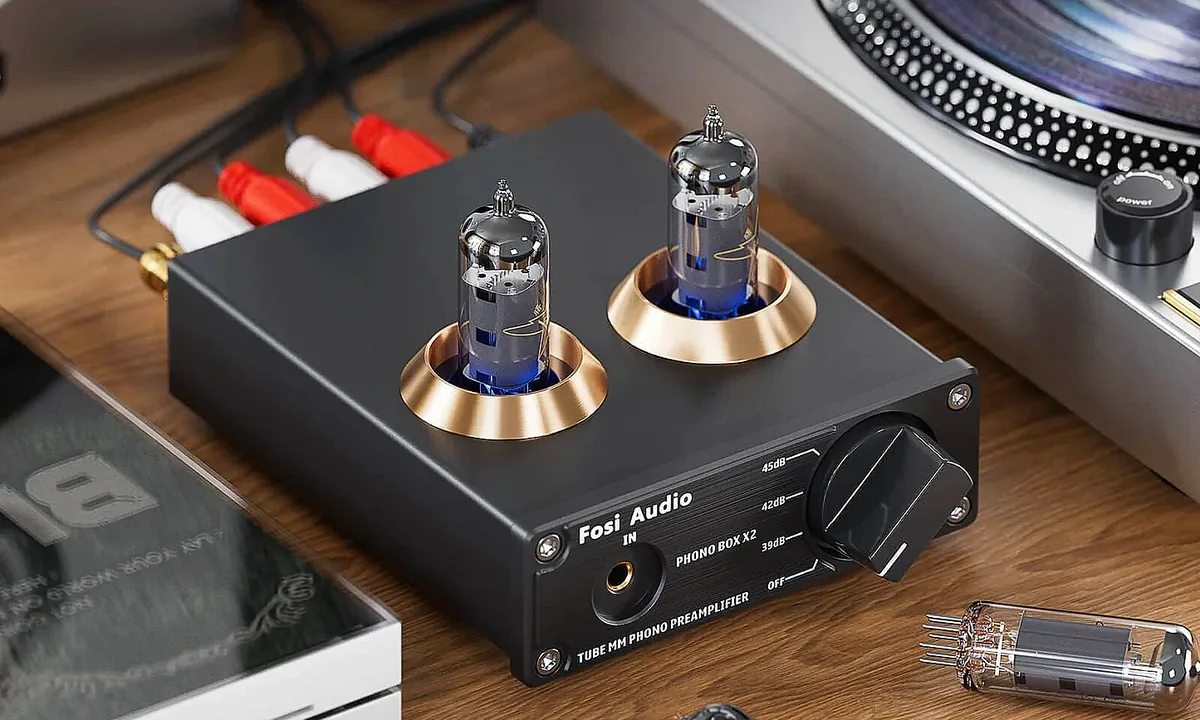
Up to €80 — Pro-Ject Phono Box E (~€75): the honest entry point. MM only, simple but clean circuit, solid build. Outperforms the built-in preamp of almost every entry-level turntable. The correct choice for anyone wanting to move beyond the integrated preamp without spending much.
Up to €100 — Rega Fono Mini A2D (~€95): MM only, includes USB output for digitising. Rega circuit quality, natural pairing with Rega Planar 1 and 2 turntables. The choice for existing Rega users or anyone wanting to digitise their collection.
Up to €150 — Pro-Ject Phono Box S3 (~€140): the mid-range reference. Supports both MM and standard MC. Adjustable impedance and load capacitance — useful when upgrading the cartridge. Separate external power supply to reduce noise. The preamp you will not feel the need to replace for years.
Up to €300 — Cambridge Audio Solo (~€180) or Rega Fono MM MK5 (~€220): the qualitative step up from the previous tier is clearly audible. Wider soundstage, better-controlled bass, superior micro-detail. For systems with turntables above €400 and cartridges above €100.
Above €300: the territory of serious audiophile preamps (Graham Slee, Lehmann Audio, Pro-Ject Phono Box DS3) belongs to systems with turntables above €800 and quality MC cartridges. It makes no sense to approach this range before the rest of the chain is at the required level.
Up to €80 — Pro-Ject Phono Box E (~€75): the honest entry point. MM only, simple but clean circuit, solid build. Outperforms the built-in preamp of almost every entry-level turntable. The correct choice for anyone wanting to move beyond the integrated preamp without spending much.
Up to €100 — Rega Fono Mini A2D (~€95): MM only, includes USB output for digitising. Rega circuit quality, natural pairing with Rega Planar 1 and 2 turntables. The choice for existing Rega users or anyone wanting to digitise their collection.
Up to €150 — Pro-Ject Phono Box S3 (~€140): the mid-range reference. Supports both MM and standard MC. Adjustable impedance and load capacitance — useful when upgrading the cartridge. Separate external power supply to reduce noise. The preamp you will not feel the need to replace for years.
Up to €300 — Cambridge Audio Solo (~€180) or Rega Fono MM MK5 (~€220): the qualitative step up from the previous tier is clearly audible. Wider soundstage, better-controlled bass, superior micro-detail. For systems with turntables above €400 and cartridges above €100.
Above €300: the territory of serious audiophile preamps (Graham Slee, Lehmann Audio, Pro-Ject Phono Box DS3) belongs to systems with turntables above €800 and quality MC cartridges. It makes no sense to approach this range before the rest of the chain is at the required level.
The phono preamp is not optional — it is part of the vinyl listening chain. If your amplifier already has a phono input, use it and don't overthink it. If it doesn't, or if you want to improve a mediocre built-in preamp, the Pro-Ject Phono Box E at €75 is the correct starting point. The qualitative improvement over no preamp, or over a budget integrated preamp, is real and immediately audible.
Can I connect a turntable directly to active speakers without a preamp?
It depends on the speakers. Some active speakers have a built-in phono input — in that case, direct connection is possible. If the speakers only have line inputs (RCA, 3.5mm jack, optical), you need a phono preamp between the turntable and the speakers, or a turntable with its built-in preamp switched on.
Is the built-in preamp in a turntable always worse than an external one?
Not by definition, but almost always in practice at the entry level. Built-in preamps in turntables under €300 use inexpensive components. From €400 upwards some turntables include decent integrated preamps. In general, a dedicated external preamp from €80–100 outperforms the built-in preamp of most turntables under €500.
I have an MC cartridge: which preamp should I buy?
A preamp with a dedicated MC stage, or an MM preamp paired with a step-up transformer (SUT). The Pro-Ject Phono Box S3 (~€140) handles both MM and standard MC and is the most sensible entry point for MC cartridges. For low-output MC cartridges (below 0.4 mV), more specialised preamps are required — Graham Slee, Lehmann Audio — with higher gain and better signal-to-noise handling.