New Hormones · 1977
The first self-released punk EP — the record that invented DIY. Made in Manchester on the band's own New Hormones, and the founding artefact of British independent music.
Some records change what music sounds like; this one changed who is allowed to make it. Spiral Scratch, released by Buzzcocks in January 1977, is the record that invented do-it-yourself — the first punk EP a band wrote, recorded, pressed and released entirely on its own, with no label, no permission and no gatekeeper. Its four songs matter, but its example matters more: after this, anyone with a few pounds and enough nerve could put out a record, and British music was never centralised again.
The story is pure Manchester myth. Two students, Howard Devoto and Pete Shelley, had been so galvanised by seeing the Sex Pistols at the Lesser Free Trade Hall in 1976 that they formed a band and, rather than wait to be discovered, borrowed the money, booked a quick session, and issued the results themselves on an imprint they invented for the purpose: New Hormones. It cost almost nothing and sounded like it — which was the point. Punk had promised that anyone could do it; Spiral Scratch was the first band to simply go ahead and prove it, without a record company anywhere in sight.
The music has a wiry, brainy energy distinct from the London bands. Breakdown and Time's Up are fast and jagged, but it's Boredom that became the manifesto — Shelley's deadpan two-note guitar solo a deliberate joke at virtuosity's expense, the song's flat affect capturing a generation's disaffection more precisely than any amount of shouting. Devoto's voice is arch and literate, already hinting at the art-punk he'd pursue when he left almost immediately to form Magazine, handing Buzzcocks to Shelley, who would turn them into one of punk's great pop bands.
There's a thread of Manchester history in the making, too: the EP was produced by a young local engineer credited as "Martin Zero" — Martin Hannett, who would soon become the defining producer of the city's sound with Joy Division and Factory. His presence here, at the very first DIY punk release, quietly links the two great chapters of Manchester music: the 1977 do-it-yourself explosion and the studio-art era that followed. The record is a hinge as much as a starting gun.
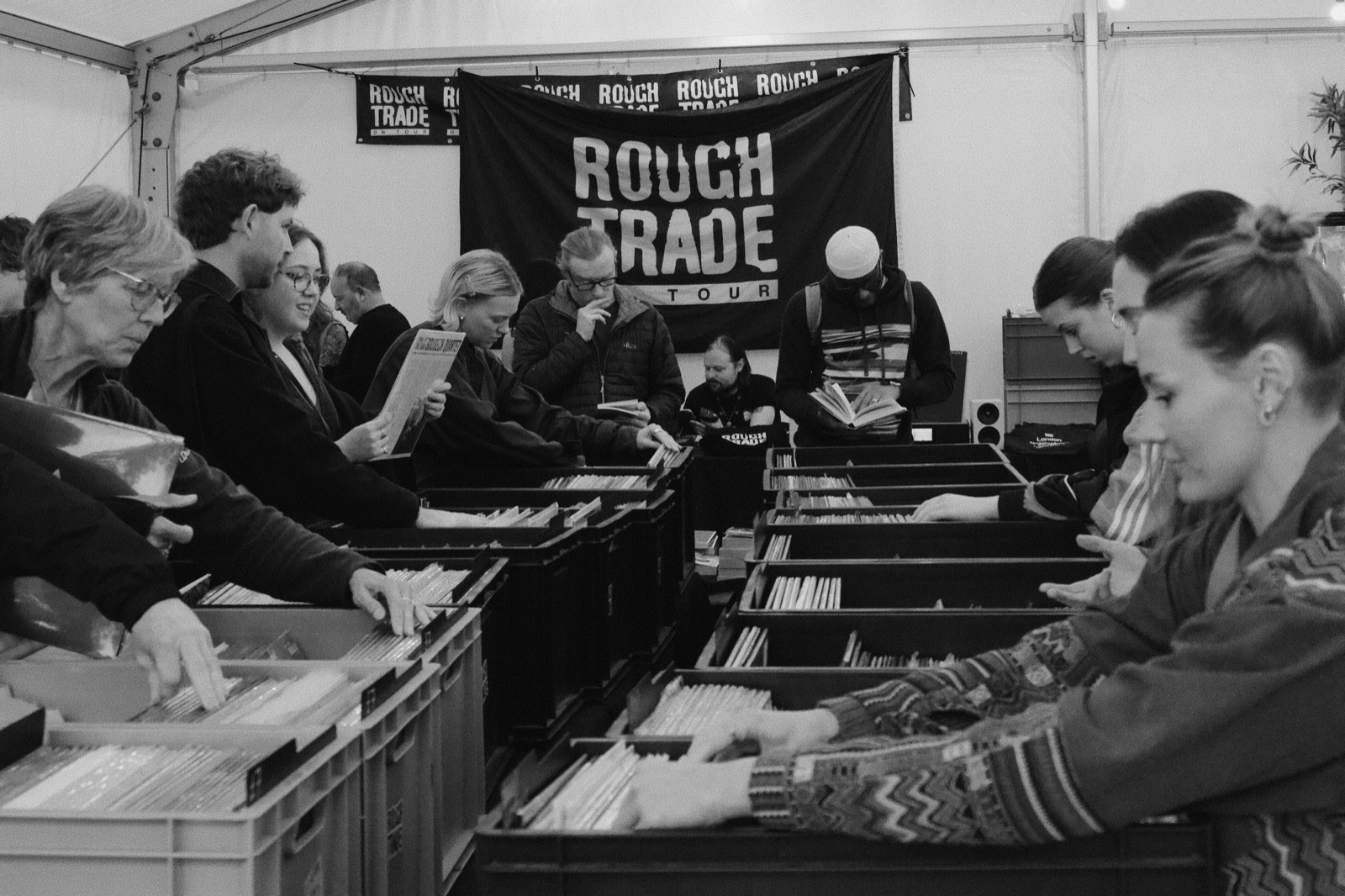
What makes Spiral Scratch a true landmark is that its method outran its music. Every independent label that followed — Rough Trade, Factory in the same city, Postcard, the entire post-punk and indie ecosystem — descends from the simple demonstration that a band did not need the industry's blessing. It handed the means of production to the musicians, and the shockwave ran for decades. Rough Trade's distribution, the whole "indie" idea, the C86 generation, the American DIY hardcore scene: all of it stands on this small Manchester seven-inch.
It helps that the record is genuinely good, not merely first — sharp, funny, urgent, and still thrilling to play. But even if it were slighter, it would matter, because it is less an EP than a permission slip issued to everyone who came after. Manchester would go on to define independent music twice over, with Factory and the sound of the eighties, and it all traces back to four students who decided not to ask.
Nearly fifty years on, Spiral Scratch remains the founding document of British independent music: the moment the industry's monopoly cracked, pressed onto vinyl in a bedroom-label sleeve, and the record every serious collector of the era wants first.
The first self-released punk EP and the birth of DIY — four sharp Manchester songs, but a method that rewired the whole music industry. The 1977 New Hormones ORG-1 original (no 'With Howard Devoto' on the sleeve, debossed label) is the founding grail of British independent music.
Spiral Scratch on Vinyl — Which Pressing?
cat. ORG-1 — the band's own label, invented to release it, which is half the record's meaning. Several tells separate a genuine first pressing from the later runs and reissues that followed once the EP became legendary
the clearest sleeve tell is an absence — the first pressing's cover does NOT carry the "With Howard Devoto" credit. Devoto left the band almost immediately, and later pressings added his name; an original front, from before that change, simply doesn't have it. Check the sleeve text first: its absence is the fastest first-press marker
the original has a debossed label (the lettering pressed into the paper rather than printed flat), and the run-out grooves are etched with "EAT THE BEAT" and "PULSE OUT", the marks of Delga Press, which cut and pressed the original. Confirm the debossed label and read the dead wax for those etchings
it is one of punk's most storied records, so it has been repressed and reissued repeatedly over the decades, and the differences are exactly these production details — the original-versus-reissue question turns on the sleeve credit, the debossed label and the Delga etchings rather than on the music, which is identical across versions. Don't trust the catalogue number alone; a reissue can share it
as a founding grail it commands real devotion, and prices reflect scarcity and status rather than the modest recording. Treat any figure as an order of magnitude — values for a record this mythologised move with condition, completeness and the market — and let the physical tells, not the asking price, decide whether a copy is a genuine 1977 first pressing
Groov-illa participates in the Amazon, eBay Partner Network and CDandLP affiliate programmes, among others. Purchasing through our links may earn us a small commission at no extra cost to you. The Discogs link is not an affiliate link: we earn nothing from it.
How do I identify a first pressing of Spiral Scratch?
Three things together: the sleeve does NOT carry the 'With Howard Devoto' credit (added on later pressings); the label is debossed (pressed into the paper); and the run-out grooves are etched 'EAT THE BEAT' / 'PULSE OUT' (Delga Press). With the New Hormones ORG-1 catalogue, those confirm a genuine 1977 original.
Why does the original not mention Howard Devoto?
Devoto left Buzzcocks almost immediately after the EP to form Magazine, and later pressings added a 'With Howard Devoto' credit to the sleeve. The very first pressing predates that change, so its cover doesn't carry his name — which is why the absence is a reliable first-press tell.
Why is this record so historically important?
It's the first punk EP a band wrote, recorded, pressed and released entirely on its own, on a label it invented (New Hormones). That DIY method — not the four songs — is what changed everything: every independent label that followed descends from the proof that a band didn't need the industry's permission.
Where might I find one in Manchester?
As the city's founding punk artefact, it surfaces in Manchester's specialist and second-hand record shops and at record fairs. Buying in person lets you check the sleeve for the missing Devoto credit, the debossed label and the Delga run-out etchings before you pay.