Berlin
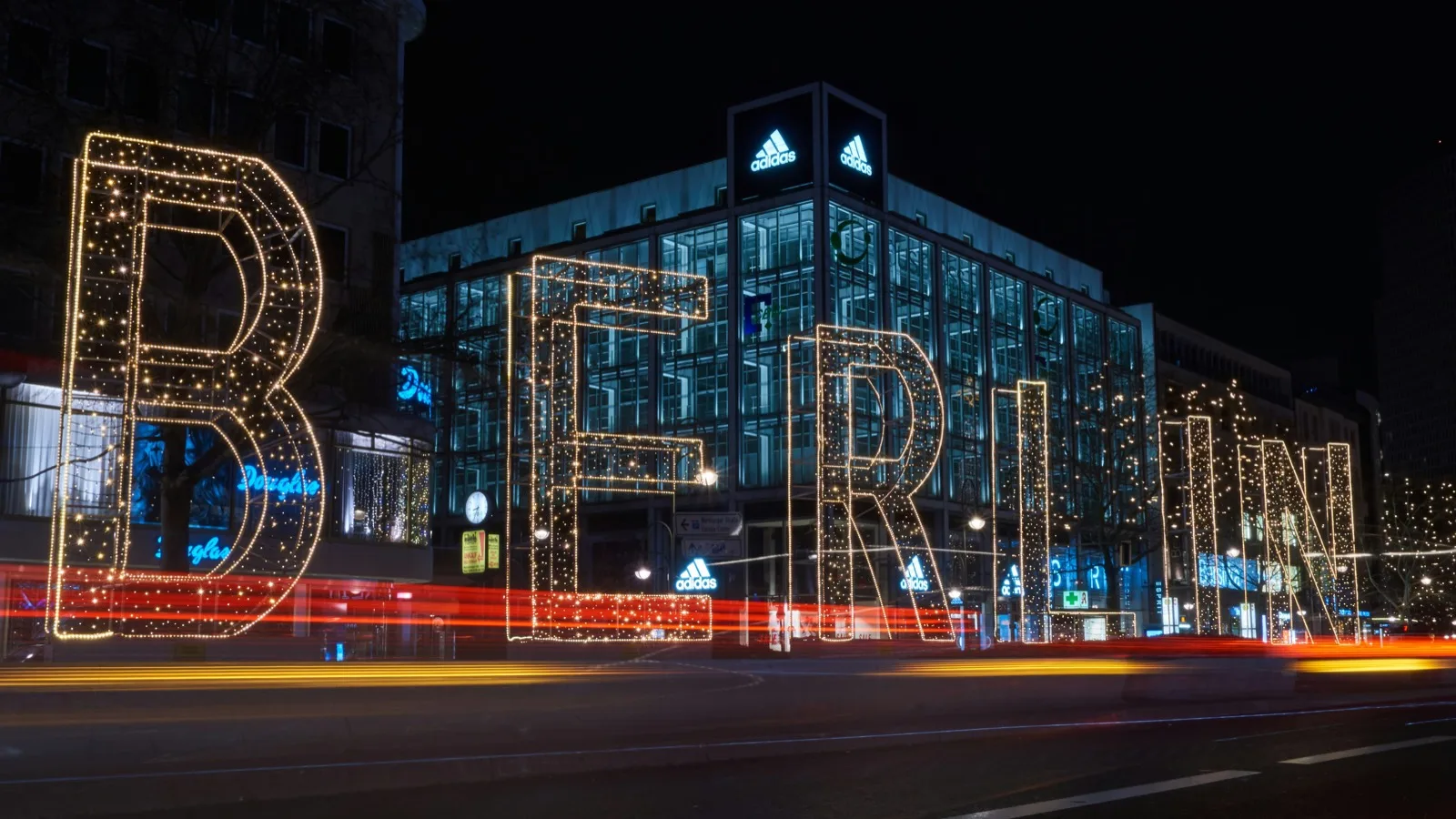
Berlin is the one city in this series where vinyl still has a job. Not a memory, not a Sunday ritual, not a collector's trophy under glass — a job. This is the record a DJ drops at four in the morning because it's the one that works, in a club scene that built its whole identity on wax and never let go. The collector who lands here doesn't find a scene to mourn. They find one that's still turning, at high RPM, in the shops as much as on the dancefloor.
A short history: how the scene was born
Berlin invented the record's future twice. The first time was in the 1970s, when West Berlin — a walled-in island where young West Germans moved to dodge military service — became the incubator for krautrock and its most electronic offshoot, the Berlin School. In the bedsits of Kreuzberg, through sessions at Roedelius and Conrad Schnitzler's Zodiak Free Arts Lab, an idea of sequenced, hypnotic music took shape that Tangerine Dream's Phaedra, in 1974, formalised for the world. Soon after came David Bowie and Iggy Pop, cutting their Berlin trilogy at Hansa Studios in the shadow of the Wall: "Heroes" was recorded there, the border guards visible from the studio window. Einstürzende Neubauten would later push that sound toward the industrial, hammering sheet metal in Kreuzberg cellars.
The second time came after 1989. With the Wall down, techno erupted in the industrial voids of the reunified city. Tresor, opened in 1991 in the vault of an abandoned bank, imported the producers of Detroit — Jeff Mills, Underground Resistance, Blake Baxter — and fused them with a Berlin metallic chill: the Berlin–Detroit axis was born, a constant exchange of musicians and records between the two cities. At the centre of it all was a shop. Hard Wax, opened that same year by Mark Ernestus and Moritz von Oswald, became the laboratory for a new sound: as Basic Channel, and through the Chain Reaction and Rhythm & Sound labels, the pair codified dub techno — minimal, deep, drenched in reverb — still the city's sonic signature. DJs who became legends worked that counter: Marcel Dettmann, DJ Hell, Modeselektor.
The rest is recent history. Through the 2000s, Berghain and its Ostgut Ton label crowned Berlin the techno capital of the world, and the shops followed: every district grew its own specialism, its own DJ clientele, its own corner of the scene. That double inheritance — kosmische and club, the Berlin School and dub techno — is why Berlin, of every city in this series, is the one where vinyl weighs most in the present. You don't buy it to remember. You buy it to play.
There's a third inheritance, too, less often told, that surfaces in the city's used racks: East Germany's. Until 1990, on the other side of the Wall, the only official record label was AMIGA, a state imprint that released everything — from Eastern rock, the Ostrock of Puhdys, City and Karat, to jazz, to Western licences repressed on local vinyl. Those East German pressings, with their controlled runs, spartan sleeves and a sound all their own, are a fascinating collector's niche today, and Berlin is the one place on earth where they turn up in quantity. Dig deep in the used bins, across Friedrichshain and the flea markets of the former East, and sooner or later you hit them: the slice of record history only this city can sell.
The geography today: where to go
Berlin's shops read by district, and each district has a character. The techno heart sits between Mitte and Kreuzberg; Neukölln and its Kreuzkölln fringe are soul-digging, used and experimental country; Prenzlauer Berg is curated house and disco; Friedrichshain mixes hip-hop, electronic and rare groove; and out west in Schöneberg the eclectic, krautrock soul survives. Here's where it's worth walking in.
Mitte and Kreuzberg: the techno heart
Hard Wax (Köpenicker Straße 70, Mitte) is the stop no electronic collector skips. Behind an austere metal counter it holds the most authoritative techno and dub selection on the planet — not the biggest, the sharpest. Its reputation for suffering no fools is part of the appeal: you enter with respect, leave with the records that matter, and keep the tight hours in mind — three to eight in the afternoon. A little south, over the Kreuzberg line, Space Hall (Zossener Straße 33 and 35) is the opposite in philosophy: three shops in one, unfolding into the building. The first room is soul and jazz, the second rock, post-punk, new wave and industrial, the third — at the back, for the electronic obsessives — a maze of dance. Give it half a day and come out blinking.
Kreuzberg keeps its rougher and its more hidden souls too. Coretex Records (Oranienstraße 3) has been Berlin's home port for punk and hardcore since 1990: vinyl, cassettes, merch, and one of the few places in town where the demo tape never disappeared. For the secret, go to Bikini Waxx (Manteuffelstraße 48): hidden in the courtyard of an ordinary building, a yellow buzzer, a room that feels like somebody's front room. The second-hand dance selection is filed under categories that only make sense here — "Rominimal Trippy Dubby", "Immortal Techno Tools" — and it's among the most affordable digs in the city; the hours wander, though, so message before you go. Rounding out the district, on Bergmannstraße, PhonoPhono (number 17) keeps vinyl and hi-fi together: records and turntables in the same space, for anyone buying the music and the machine to play it.
Neukölln and Kreuzkölln: soul, used and experimental
South of the canal the temperature changes, and techno gives way to groove and to search. Soultrade (Sanderstraße 29) has been an institution since 1989: soul, funk, jazz, disco and Afro, the warm counterweight to Berlin techno's chill. It's where the groove never went out of style. Steps away, the OYE Records Kreuzkölln outpost (Friedelstraße 49) brings one of the city's best-loved names south of the river: house, disco, jazz, electronic, and some of the finest UK and US imports in all of Berlin. For the far edge, head to Staalplaat (Kienitzer Straße 108), the Berlin branch of the Dutch institution: experimental music, underground electronic, cassette culture and sound objects you won't find elsewhere. A shop for brave ears.
Prenzlauer Berg: house and disco
North again, the original OYE Records (Oderberger Straße 4) is the headquarters of Berlin's analogue house scene. Run by Delfonic, the city's hardest-working DJ, and disco head Tinko, it stocks jazz to afro to house to techno, with a packed programme of in-stores. It sits in a corner of old Berlin the years haven't yet smoothed over, and it's one of the finest stops to lose an hour in. On the same Kastanienallee, Melting Point (number 55) has held its ground for over twenty years: spacious, ordered, open Monday to Saturday from noon to eight, a serious reference for house, disco and boogie diggers.
Friedrichshain: hip-hop, electronic, rare groove
East, HHV Records (Grünberger Straße 54) started in the 1990s for imported American hip-hop and now covers house, techno, reggae and much more, with nine listening stations and a streetwear floor. But the district's gem, for the digger, is Ghost Town Records (Holteistraße 12): soul, funk, jazz, hip-hop, downbeat, Afro, Brazil, disco, boogie — original rarities and reissues across every soul era, Monday to Saturday early afternoon. It's Berlin's rare-groove heaven. Close by, near Frankfurter Tor, Galactic Supermarket (Petersburger Straße 89) offers an out-of-the-ordinary electronic selection and strong used stock. And around Boxhagener Platz, Power Park Record Store (Boxhagener Straße 56) is the district's eclectic used shop: rock, electronic, oddities, the kind of place where the big find happens because nobody catalogued it all.
Schöneberg and the krautrock that remains
The scene has concentrated east and south, but a detour west to Schöneberg earns its keep at Dodo Beach (Vorbergstraße 8): over thirty thousand records new and used, an eclectic catalogue running from hip-hop to world to rock. It's also the right ground for Berlin's third soul, the one the techno shops don't sell: krautrock, and alongside it the AMIGA pressings of the former East. Originals of Tangerine Dream, Ash Ra Tempel, Cluster and the Berlin School aren't at Hard Wax — they surface here, in the used racks of Space Hall, Power Park and Dodo Beach, and above all at the flea markets, where luck is still possible. It's the side of Berlin vinyl that asks the most patience and pays back the most: no single shop concentrates it, there's a city to sift.
Club culture: why vinyl matters here
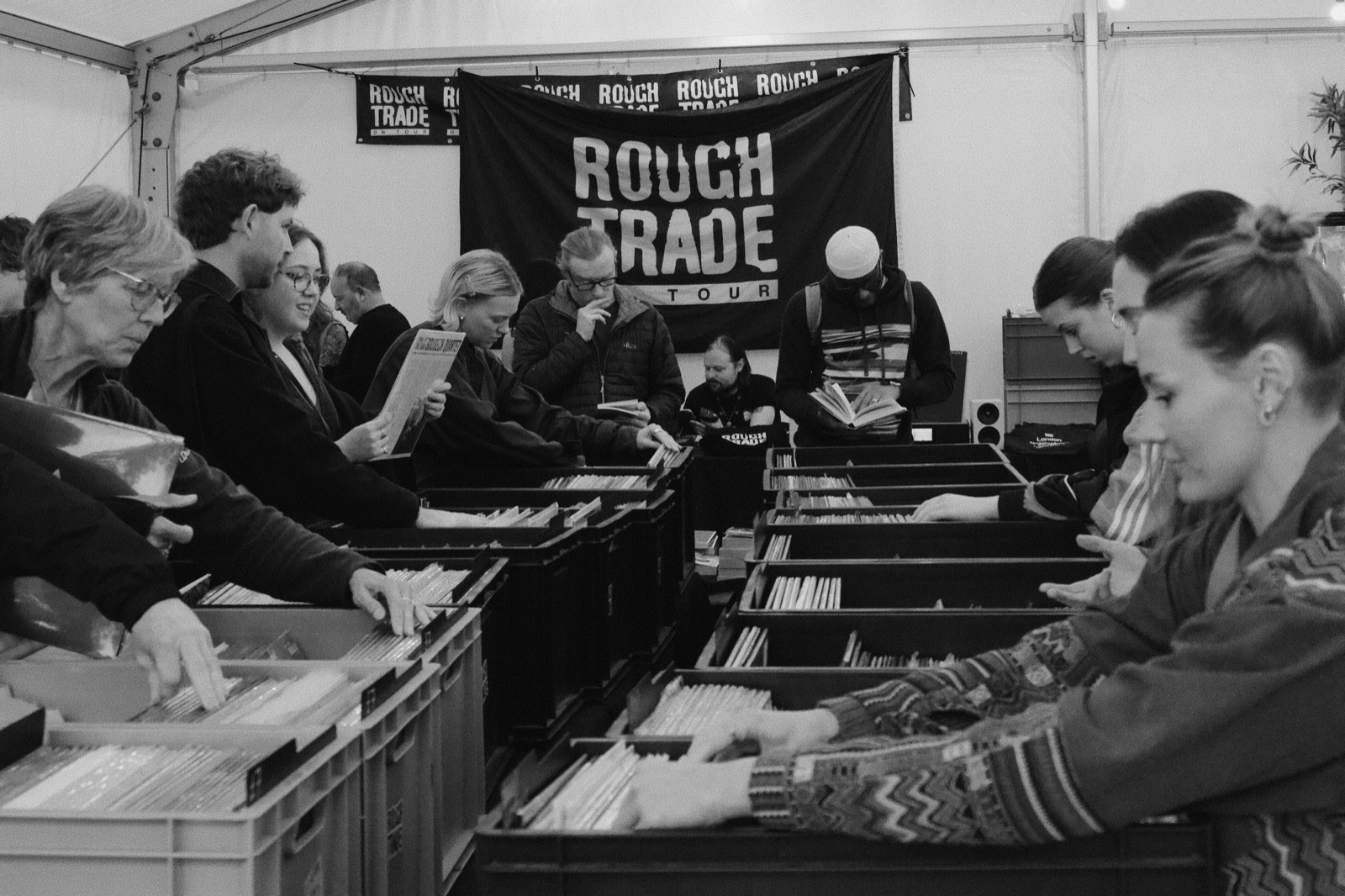
In Berlin you can't separate the shop from the club, and that's what makes its vinyl scene unlike any other. Here a record is bought to be played in front of a floor, and the shops know it: almost all have listening stations, many host in-stores where producers spin their own releases before anyone else, and the limited runs of local labels travel from the counter to a Berghain or Tresor turntable within a weekend. The person behind the till isn't a cashier: they're often a DJ who actually plays that record, and their advice is worth more than any review.
It's a culture of listening before buying. At Hard Wax you audition everything on the counter headphones, in an almost liturgical silence; at OYE the in-store is a small social event. For the collector that changes how you buy: you don't arrive with a checklist of titles, you arrive with your ears open and leave with what worked in the moment. It's why vinyl in Berlin never became a display piece — it stayed a tool, strung between the shop and the night.
Recommended routes
The techno heart, Mitte–Kreuzberg. The classic electronic round: start at Hard Wax on Köpenicker Straße (mind the hours — it opens at three), drop to Space Hall on Zossener Straße to get lost in the three rooms, and finish at Bikini Waxx on Manteuffelstraße for the cheap dig. If punk's your thing, add Coretex on Oranienstraße. All within a U-Bahn stop, a full day.
A Neukölln–Kreuzkölln afternoon. The groove-and-search round: Soultrade on Sanderstraße for soul and funk, OYE Kreuzkölln on Friedelstraße for house and disco, and Staalplaat on Kienitzer Straße for the experimental. This is the most alive, most walkable Berlin, between cafés and Spätis — ideal on foot in half a day.
Prenzlauer Berg and Friedrichshain in a day. Morning north — OYE on Oderberger Straße and Melting Point on Kastanienallee — then east to HHV, Ghost Town, Galactic Supermarket and Power Park. Two districts, the whole spectrum from house to rare groove.
Practice: what you need to know
Getting around. Berlin is vast and the shops are spread out, but the U-Bahn and S-Bahn link everything quickly. Think by district and don't zig-zag: Mitte–Kreuzberg, Neukölln, Prenzlauer Berg and Friedrichshain are each a walking round in themselves.
Cash. Berlin's golden rule: carry cash. Many shops — and nearly all the small ones — don't take cards, or only above a certain amount. It's the most cash-only city in Western Europe, and that goes double for records.
Opening hours. Berlin hours are tight and irregular: Hard Wax opens only from 3 to 8pm, many shops shut by 6 or 7, and the smallest (Bikini Waxx, Staalplaat) keep variable hours. Always check before crossing the city, and don't count on Sunday: as almost everywhere in Germany, the shops are closed.
The flea markets. The weekend opens Berlin's flea markets, and that's where krautrock originals and oddities surface: Mauerpark on Sunday, Boxhagener Platz in Friedrichshain on Sunday, and the record stalls inside the covered markets. There's also the long-running Berlin Record Fair at Postbahnhof, twice a year — check the dates before you plan.
Prices. Berlin isn't the cheapest city for vinyl — interesting used stock often starts at 8–10 euros — but the density is such that the hunt pays off. On new releases, the electronic shops keep small runs that vanish fast: if you see it, take it.
Frequently asked questions
What's the best record shop in Berlin? It depends what you're after. For techno and electronic, Hard Wax is the global reference; for soul, funk and jazz, Soultrade and Ghost Town; for house and disco, OYE. There's no single best — Berlin is a city of specialists.
Where can I buy techno vinyl in Berlin? Hard Wax, now on Köpenicker Straße in Mitte, is the unavoidable stop for techno and dub, followed by Space Hall's electronic room and Bikini Waxx for used dance. OYE and Galactic Supermarket round out the house-and-techno picture.
Where do I find soul and funk vinyl in Berlin? Soultrade in Neukölln, open since 1989, is the genre's institution, while Ghost Town in Friedrichshain is the rare-groove heaven. Space Hall's front room in Kreuzberg also keeps a good soul and jazz section.
Where do I find krautrock and Berlin School in Berlin? Not in the techno shops: originals of Tangerine Dream, Ash Ra Tempel and Cluster surface at Dodo Beach in Schöneberg, in the used racks of Space Hall and Power Park and, above all, at flea markets like Mauerpark. It takes patience and a bit of luck.
Are Berlin's record shops open on Sundays? Most shops are closed on Sundays, like nearly all shops in Germany. Sunday is the day of the flea markets, though — Mauerpark, Boxhagener Platz — so Berlin's weekend vinyl moves outdoors. Always check hours before visiting.
Do I need cash in Berlin's record shops? Yes, often essential. Many Berlin shops don't take cards, or only above a certain threshold. Carry enough cash — it's the rule that saves the day.
Where can I buy punk vinyl in Berlin? Coretex Records, on Oranienstraße in Kreuzberg, has been the reference for punk, hardcore and grindcore since 1990, new and used, cassettes included. Space Hall's middle room also covers post-punk and new wave well.
What are AMIGA records, and where do I find them in Berlin? AMIGA was East Germany's state label, the only one releasing music until 1990: Eastern rock, jazz, Western licences on local vinyl. Its pressings are a collector's niche, and Berlin is the best place to find them — in the used bins of Friedrichshain, at Dodo Beach in Schöneberg, and at former-East flea markets like Mauerpark.
A record to look for in Berlin
If Tokyo sends you home with city pop and London with a British pressing, Berlin sends you home with the record that fused the city's two souls — krautrock and techno — onto a single side.
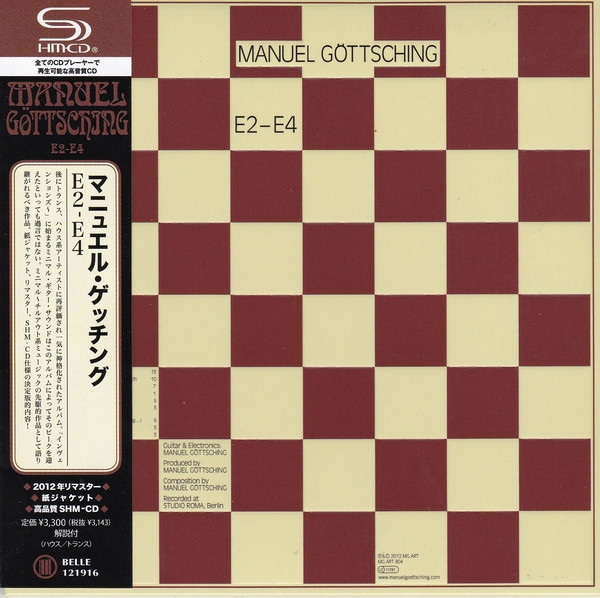
Manuel Göttsching recorded it in his Berlin studio one afternoon in December 1981, in a single take, to have something to hear on his Walkman on a flight the next day. He had no idea he'd just cut the blueprint for all the electronic dance music to come. Released in 1984 on Klaus Schulze's Inteam label in a thousand copies, dismissed at home as "muzak", E2-E4 was reborn in New York clubs when Larry Levan played it at the Paradise Garage, and later became Sueño Latino, the house anthem sampled across Europe. It's the surgical missing link between Göttsching's krautrock past in Ash Ra Tempel and the techno Berlin was about to become: an hour of hypnotic sequences and suspended guitar, cut a few kilometres from the clubs that would worship it. The Inteam original is now a pricey, scarce collector's piece; the reissue on the artist's own label keeps it in print. In Berlin you can hunt it where it was made — and it's the truest souvenir the city can hand you.