RCA · 1977
The album where Lucio Dalla became Lucio Dalla — the Bolognese songwriter finding his own voice in 1977, literary, leftist, warm and restless.
Some records are a beginning disguised as a mid-career album. Com'è Profondo il Mare, released in 1977, is the moment Lucio Dalla stopped being a gifted interpreter of other people's words and became one of Italy's great songwriters in his own right — the record where Dalla became Dalla. For anyone who wants to understand the songwriting tradition of Bologna, and of Italy, this is the hinge.
Dalla had spent years as a singer handed lyrics by others, most famously by the poet Roberto Roversi, with whom he'd made a trilogy of ambitious, difficult albums. When that partnership ended, Dalla faced a choice — find another lyricist or write the words himself. He chose himself, and Com'è Profondo il Mare is the astonishing result: an album he wrote almost entirely alone, and which revealed a lyrical imagination nobody had suspected. Freed to follow his own strange, warm, questioning mind, he produced songs of real depth and humour at once.
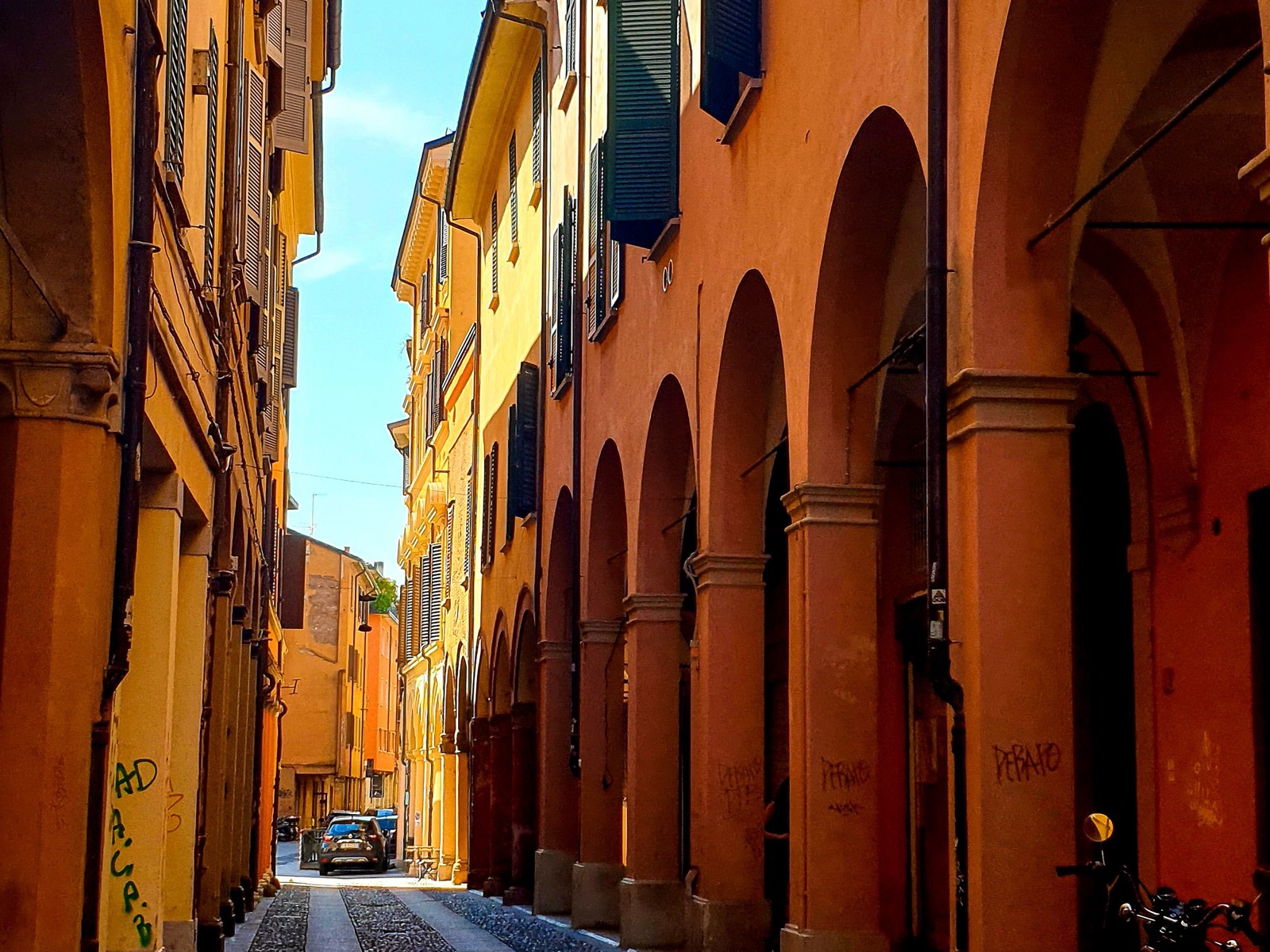
The record is unmistakably Bolognese — literary, politically engaged, restless, generous. Bologna, the old university city, red and intellectual, is all over it: the leftist sympathies, the love of language, the mix of high thought and human warmth. The title track is a meditation dressed as a pop song, turning the sea into an image of the crowd, the collective, the depths of ordinary people; Disperato Erotico Stomp is comic and tender and sad all at once, a late-night walk through the city set to a loping groove. Dalla sings in that inimitable voice — grainy, elastic, capable of swooping from a whisper to a cry — and you hear a man discovering he can say anything he wants.
Bologna in the seventies was a songwriter's city — home to Guccini, a university town thick with poetry, politics and jazz — and Dalla drank all of it in. You can hear the local jazz training in the phrasing, the political reading rooms in the lyrics, the Emilian warmth in the humour. Songs like Quale Allegria and the title track balance melancholy and mischief in a way that feels specifically of that place: serious without solemnity, playful without fluff.
Musically it's richer and more open than the austere Roversi albums, blending Italian songcraft with jazz colour, rock energy and a producer's ear for arrangement. It set the template for the extraordinary run that followed — including Lucio Dalla two years later, with "Caruso" still to come — and it re-established Dalla as a central figure in the Italian cantautore tradition, the peer of De André and Guccini (a fellow Bolognese). This is where the mature artist steps forward.
Play it now and what strikes you is the freedom — the sound of an artist who has stopped performing other people's visions and started trusting his own. It's warm, funny, moving and quietly radical, an album that treats the pop song as a vehicle for real ideas without ever becoming heavy. For Bologna, the city of songwriters, it's a cornerstone; for Dalla, it was the door into greatness.
Nearly fifty years on, Com'è Profondo il Mare remains one of the essential Italian singer-songwriter albums — the record where one of the country's most beloved artists found, at last, his own voice.
The album where Lucio Dalla became a great songwriter in his own right — written almost alone in 1977 after the Roversi years, literary and warm and unmistakably Bolognese. An affordable cornerstone of Italian song: the RCA PL 31321 original (orange label, SIAE) is the one to find.
Com'è Profondo il Mare on Vinyl — Which Pressing?
cat. PL 31321 — the tells are the standard, reliable markers of an Italian first pressing. Look for the original orange RCA label of the period: the colour and design that identify a genuine 1977 pressing rather than a later RCA reissue on a different label style. Confirm the catalogue PL 31321 on both the label and the sleeve
the disc should carry one — the mark of the Italian authors' and publishers' society, present on domestic Italian pressings and a quick confirmation that you're holding an Italian-made original rather than a foreign issue. Together, the orange RCA label, the PL 31321 catalogue and the SIAE stamp build a confident first pressing
Dalla remained hugely popular for decades and this is a beloved catalogue title, so it has been reissued repeatedly — later RCA and BMG pressings, and modern vinyl editions. The original-versus-reissue distinction rests on the period label colour and design, the catalogue number and the SIAE stamp rather than on the music, which is unchanged across editions. Check the label style directly: reissues can share the title and even elements of the artwork
a median around ~€25. That makes it another of the accessible cornerstones in this guide — a pivotal album in Italian songwriting that any collector can own without grail money. Its worth is its importance, not its scarcity, which is exactly the honest kind of value worth chasing. Treat the figure as an order of magnitude, and let condition guide the rest
Groov-illa participates in the Amazon, eBay Partner Network and CDandLP affiliate programmes, among others. Purchasing through our links may earn us a small commission at no extra cost to you. The Discogs link is not an affiliate link: we earn nothing from it.
How do I identify the 1977 RCA original?
Look for the original orange RCA label of the period, the catalogue number PL 31321 on the label and sleeve, and a SIAE stamp confirming an Italian-made pressing. Those together mark a genuine 1977 first pressing, as opposed to the later RCA/BMG reissues and modern editions that followed.
Why does this album matter so much in Dalla's career?
It's the record where he became a songwriter in his own right. After years singing lyrics written by others — notably the poet Roberto Roversi — Dalla wrote Com'è Profondo il Mare almost entirely himself, revealing a lyrical gift nobody expected and launching the great mature run that defined him.
What does an original cost?
Clean originals sit around a median of ~€25 — very affordable for such a pivotal album of Italian song. Its value is its importance, not its rarity, which makes it one of the most accessible cornerstones in this guide. Prices move, so treat that as an order of magnitude.
Where might I find one in Bologna?
Bologna's second-hand and specialist record shops, and Italian record fairs, are the natural place a copy surfaces — this is a hometown record for the city of songwriters. Buying in person lets you check the orange RCA label, the PL 31321 catalogue and the SIAE stamp before you pay.