Rogers LS3/5a
The Icons 05 — the BBC mini-monitor: where small size is fidelity, not a limit
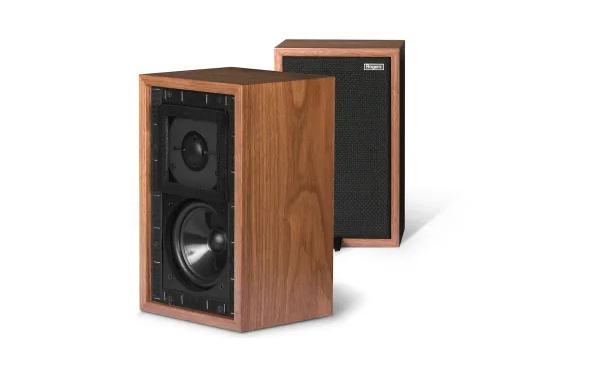
It is the most iconic name in British hi-fi collecting, and perhaps the most famous small speaker in history. You find a pair for sale, and the first thing to know is counterintuitive: the LS3/5a is not a Rogers product. It is a BBC standard, licensed to several manufacturers — "Rogers" is simply the most searched brand. This guide starts there, because it is the misconception that governs the whole market. As with the other icons, I speak as a buyer, not a technician, and the general method for judging used gear is in our restoration hub. Here is what concerns this speaker: what it really is, how to tell the versions apart, and why its small size — which on a new speaker would be a limit — is here the point.
Why it is a classic
The LS3/5a comes from a BBC project of the 1970s: a miniature studio monitor, meant for audio control in mobile units and cramped spaces, where a small speaker of absolute fidelity on the voice was needed. The result is a sealed box of about five litres, in birch plywood, with a 110 mm woofer and a dome tweeter — and a sound that became legend: natural, uncoloured, "true" on voice and acoustic instruments like very few others.
Here is the contrast with a speaker like the Wharfedale Diamond, new and generous: the Diamond aims to give more body and more bass for little money; the LS3/5a does the opposite, and on purpose. It is small because it must be, and it gives up deep bass to tell the truth in the midrange. Its size is not a compromise of price: it is its fidelity.
Not a Rogers exclusive: the BBC standard
The BBC never built the LS3/5a: it defined the specification and licensed it out. The manufacturers who made it are several — Rogers, Chartwell, Spendor, Audiomaster, Goodmans, RAM — and all of them, during the original production, used the same KEF drivers (the B110 woofer and the T27 tweeter). This is the key: under different brands, the heart is the same BBC design with the same drive units.
"Rogers" is the most famous and common name because it made the most — the majority of examples around carry that brand. But "most common" does not mean "the one best": as we will see, on the collector market some Chartwell versions and the early Rogers are worth more than many others. So when you search, search for "LS3/5a", not just "Rogers": the same speaker also reaches you under other brands, sometimes at better prices.
The versions, and what to check
The LS3/5a had two main impedance versions, and it is the first thing to check in a listing:
- 15 ohms: the early ones, from the 1970s to the mid-1980s. They are the ones the legend was built around, and the most sought-after by collectors. - 11 ohms: from the mid-1980s, after a crossover revision. Later a bi-wirable version also appeared. Enthusiasts argue over which sounds better; a listening test in 2001 on eleven different pairs concluded there wasn't a bad one in the group.
What to check before buying, because it is the most faked and "put back together" part of the vintage market:
- The originality of the drivers. They must be the original KEF units (B110 and T27). Replaced or reconed drivers lower the value: ask for photos and numbers. - The matched pair. The LS3/5a was sold in pairs selected to match: check that the serial numbers are close and consistent, not two mismatched pieces reunited. - The brand and impedance. Read the label on the back: it gives the maker and, usually, the impedance. It is what separates an entry pair from a collector's one. - The cabinet. The thin veneer marks easily; original, intact finishes are valued.
What it is, and what it is not
It must be said explicitly, because it avoids the one way to be disappointed. The LS3/5a is a nearfield monitor: it gives its best up close, at sensible volumes, on voice and acoustic instruments. On a vocal or small-group jazz record, its naturalness and its soundstage are still a reference today.
What it is not: it is not a speaker for large rooms, high volumes or deep bass. It is a sealed five-litre box: the low end reaches down little, and asking it to fill a hall or handle rock at high volume is asking it for what it was not born to do. It also wants good amplification and rigid stands, with the tweeter at ear height. Treated as the monitor it is, it has no rivals for the price; treated as a "normal" speaker, it disappoints. It is the same spirit as the precision chain we place it in.
Price and collecting: two tiers
The price spread is wide, and it is not random: it depends on the licensee, the production run and the condition. It is best thought of in two tiers.
Entry tier (~£600-800). The less-blazoned licensees — Goodmans, RAM, or the later Rogers production — in honest but not collector condition. It is the same speaker, with the same design and the same KEF drivers: it sounds like an LS3/5a because it is one. This is the tier that fits the £1500 chain: the LS3/5a "for use", not the display piece.
Collector tier (~£1000-1600 and up). The early Rogers 15 ohm production and the Chartwell, in museum condition, with original drivers and matched pairs. Here you pay not just for the sound — which is the same — but for rarity and historical value: a first-series Rogers pair in perfect condition is a collector's object, and the price reflects it (exceptional examples have sold at auction for very high figures). It is the further jump for the historic piece, not the only option for owning an LS3/5a.
The LS3/5a is the classic to hunt for anyone who wants the most famous miniature BBC studio monitor in history — provided you understand two things. First: it is not a Rogers exclusive, it is a licensed standard (Rogers, Chartwell, Spendor, Goodmans, RAM), all with the same KEF drivers; search for 'LS3/5a', not just 'Rogers'. Second: it is a nearfield monitor, not a speaker for large rooms or high volumes — its small size is fidelity, not a limit. Check the version (15 or 11 ohm), the originality of the drivers and the matched pair, because it is the most faked part of the market. For use, the entry tier (Goodmans, RAM or later Rogers, ~£600-800) gives all the substance; the early Rogers 15 ohm or the Chartwell, in museum condition, are the jump for those after the historic piece. Buy it for the voice and the truth, not for the muscle.
Affiliate link — no extra cost to you · How we review →
Is the LS3/5a a Rogers product?
No: it is a standard designed by the BBC and licensed to several makers — Rogers, Chartwell, Spendor, Audiomaster, Goodmans, RAM — all with the same KEF drivers. Rogers is the most famous and common brand, but not the only one, nor automatically the best. When you search, search for 'LS3/5a'.
What is the difference between the 15 and 11 ohm versions?
The 15 ohm are the early ones, from the 1970s to the mid-1980s, and it is around them that the legend grew; the 11 ohm arrive from the mid-1980s after a crossover revision. Enthusiasts argue over which sounds better, but a 2001 comparison found no bad version in the group.
Are they good for a large room?
No: the LS3/5a is a nearfield monitor with a sealed five-litre box, meant for fidelity up close at sensible volumes, not to fill a hall or handle high volumes. It wants good stands and good amplification. It is a speaker for voice and acoustic instruments, not for power and deep bass.
Why do the prices vary so much?
Because they depend on the brand, the production run and the condition. An entry pair — Goodmans, RAM or later Rogers in honest shape — sits around 600-800 euros; the early Rogers 15 ohm or the Chartwell in collector condition rise to 1000-1600 euros and beyond. It is the same speaker: in the top tier you pay for rarity and historical value, not a different sound.