The scene before the scene
Soho, 1958–1962. Modern jazz, American imports and the suit that invented a generation.
Before the scooters. Before the parkas and the bank holiday punch-ups and Pete Townshend smashing his first guitar. Before any of that: a boy in a Soho basement with an American record nobody in England has heard.
Soho, late 1958: the scene before the scene
Soho, late 1958. Half a square mile between Oxford Street and Shaftesbury Avenue. Italian delicatessens on Old Compton Street. Coffee bars with Gaggia machines that actually work, run by people who know what coffee is supposed to taste like.
Britain in 1958 is still convalescing. The Blitz left gaps in the East End streetscape — lots where houses stood, fenced off with corrugated iron. Food rationing ended in 1954 and the memory of it is in people's posture. Suez was two years ago, the humiliation still raw, the empire dissolving on cue. The BBC plays Joe Loss. The menswear shops sell grey, brown, navy — broad cut, padded shoulder, wide trouser. The lounge suit as declaration of surrender.
Soho doesn't get the memo.
The Flamingo Club and the music nobody was playing
Two hundred yards from the 2i's, in Wardour Street: the Flamingo Club. Midnight opening, dawn closing. The crowd is mixed in a way that 1958 London rarely manages. West Indian immigrants, American GIs, white jazz musicians, and a growing handful of working-class white kids who don't want what official culture is selling. The Flamingo doesn't play skiffle. It plays American R&B — Ray Charles, Jimmy Smith, Mose Allison — brought over from the States through channels that weren't always strictly legal.
The word "Mod" comes from "Modern." As in Modern Jazz. The first Mods don't call themselves anything: they're simply boys interested in modern jazz, in bebop, in cool — in the sound coming from America on records that cost twice the price of a British LP and had to be hunted down in the specialist shops of Soho.
Dobell's Jazz Record Shop. 77 Charing Cross Road. Doug Dobell opened it in 1946 for traditional jazz, but by the late Fifties the import section has no rival in London. To buy an American pressing at Dobell's means paying thirty-five to fifty shillings when the domestic equivalent costs twenty. On three pounds a week — working-class wages — this is a serious decision. You save. You sell records you already own. You swap pressings with the others who go to the same clubs.
The economics of the rare record create a hierarchy based on knowledge, not money. The Hackney boy who's spent six months tracking down an original Blue Note is at the top — well above the middle-class boy who can afford anything but doesn't know why that edition sounds different.
The DJ as the centre of gravity
No one embodies this ethic better than Guy Stevens, and almost no one talks about him enough. Born 1943. By seventeen he's already one of the most obsessive import hunters in the city. Not a musician — a listener, a curator, a fanatic in the best sense. He works the decks at the Scene Club in Ham Yard, a basement under a car park two minutes from Piccadilly Circus, Saturday nights, with a record collection that exists nowhere else in England.
The model of the DJ as the central figure of a subculture — the man who chooses the music, sets the pace, decides what's cool — starts here, in this basement, before the word "DJ" has acquired its modern meaning. Stevens doesn't mix. No mixer. He puts a 45 on the turntable, waits for it to end, puts on another. But the sequence is calibrated with a precision we'd now call curation.
Stevens would go on to produce London Calling in 1979. His real masterpiece was those Saturday nights at Ham Yard, teaching a generation of Mods how to listen.
The Italian cut and the logic of the collector
The music was the content. The suit was the form. To understand why a seventeen-year-old in 1959 spent four weeks' wages at a Soho tailor, you need to understand what getting dressed meant in England then. The British male wardrobe of the postwar period: the lounge suit — broad cut, padded shoulders, wide trousers. Deference made visible.
The Mods looked south. Italy. The Italian jacket: three buttons, narrow high lapel, clean unpadded shoulder, shorter length. A garment that allowed the body to move. The canonical Mod suit, 1959–62: three-button jacket, high gorge lapel, no back vent, high-waisted trousers tapered without turn-ups, mohair or worsted wool. Every element a deliberate choice. Knowledge, research, expenditure. Exactly like finding the right pressing of an American import. The logic was identical.
Around 1961, something crystallises
Around 1961, something crystallises. The boys going to the Flamingo and the Scene Club and buying imports at Dobell's start recognising each other on sight. No manifesto. No official figurehead. But the same cultural premises produce the same aesthetic choices. Whoever listens to modern jazz, seeks American pressings, drinks espresso — this person dresses in a specific way. The three-button suit is the logical consequence of a worldview.
To be Mod was to be modern. Not vaguely "with it" — precisely, almost technically, modern. Modern was Miles Davis against Louis Armstrong. Modern was the Italian cut against the Edwardian drape. Modern was espresso against tea. Every choice a position.
"And it all begins here: a boy in a Soho basement with an American record nobody in England has heard yet." — Groov-illa
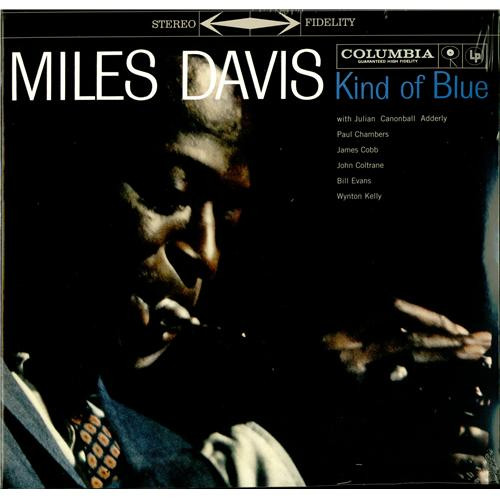
Miles Davis — Kind of Blue
- Pressing
- Original mono Columbia CL 1355 (matrix 1A/1A) — above £300 clean. MoFi 45RPM (MFSL 2-45011) for the modern alternative.
Which pressing? Check it on Discogs ↗
Jimmy Smith — The Sermon!
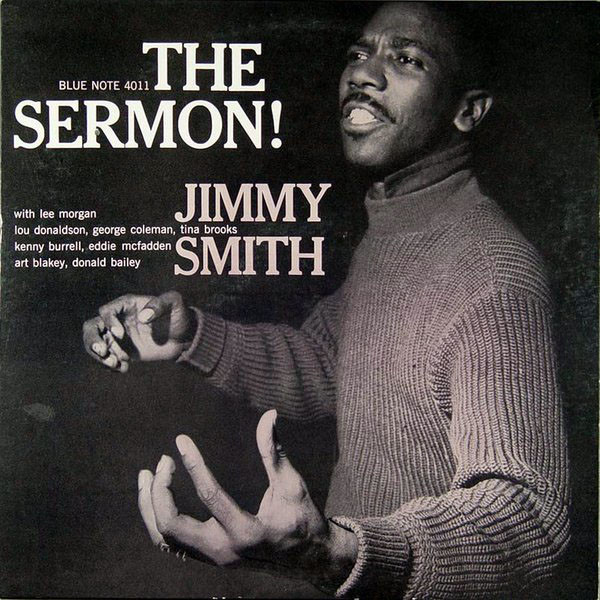
- Pressing
- Blue Note 4011 original New York pressing (RVG dead wax) above £280. Blue Note Classic Vinyl Series half-speed reissue for the modern alternative.
Which pressing? Check it on Discogs ↗
Mose Allison — Back Country Suite
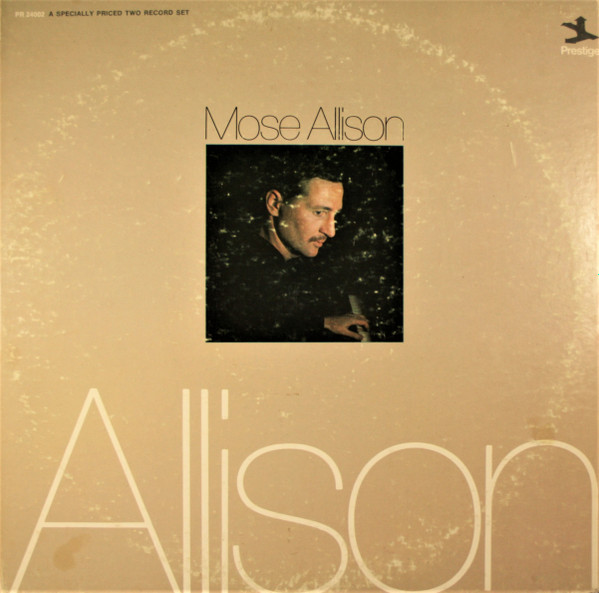
- Pressing
- Original Prestige mono (yellow label, RVG dead wax) £60–150. Original Jazz Classics reissue for the accessible alternative.
Which pressing? Check it on Discogs ↗
Oliver Nelson — The Blues and the Abstract Truth
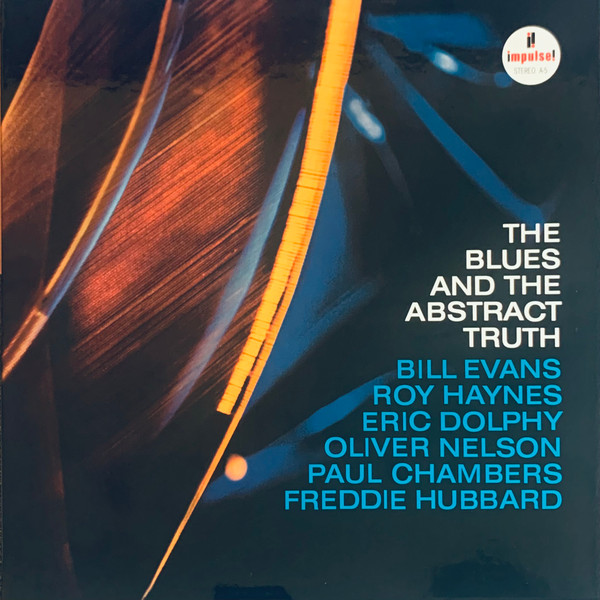
- Pressing
- Original Impulse! A-5 mono (orange/black gatefold) £80–200 VG+. Analogue Productions APP 005 (2019, 45RPM double LP) for the audiophile modern reference.
Which pressing? Check it on Discogs ↗
Mod gear
MOD STYLE · SELECTED ITEMS
This is how the Mod story begins: not with a movement, not with a manifesto, but with a group of working-class kids in Soho who decided that American jazz and the Italian suit were the only honest answers to postwar England. The next chapter follows the sound across the Atlantic — and the record that changes everything when it arrives.