The record that crossed the Atlantic
James Brown, the Flamingo Club and the long-player revolution.
Spring 1963. A Wardour Street basement. The Flamingo Club at three in the morning. A DJ puts on an American import that's been in London for a fortnight. Six months later, what it means to be a Mod has changed.
Not the clothes. Not the scooters. The records — and how to listen to them.
This is what the spring of 1963 does to London Mod culture. It moves the centre of gravity from the single to the long-player. From the three-minute floor-filler to the thirty-minute experience. From collecting tracks to documenting nights. The shift is invisible to anyone who isn't paying attention. To the people in the room, it's everything.
The record that does it is Live at the Apollo by James Brown.
October 1962. Harlem.
253 West 125th Street. The Apollo Theatre is a difficult room. Built 1914 as a vaudeville house. Converted 1934 to serve the Black audience of Manhattan. By the early 1960s it's the global reference for rhythm and blues. The crowd at the Apollo has heard everything. They've watched Ella Fitzgerald win the Wednesday amateur night. They've watched Sam Cooke take his first steps. They are not easily impressed.
James Brown is twenty-nine. He's been touring eight months a year for a decade. The King Records singles have made him famous in Black America — Try Me, Think, Night Train — but the white crossover hasn't happened yet. King thinks of him as a singles artist. Brown wants a live album. King says no. Brown writes the cheque himself: $5,700 in 1962 dollars, roughly $50,000 today.
24 October 1962. King engineers set up microphones for two consecutive shows. Brown takes the stage at ten in the evening with the Famous Flames and a ten-piece horn section. The second show — recorded from 11:30 onward — is the one that goes on the record.
He opens with I'll Go Crazy. Tactical choice. It starts low. Leaves room. By Try Me, the room is at its peak. By Think, every word is being sung back at him. Brown isn't a singer in any conventional sense. He uses sound as percussion. He treats syllables as snare hits. He sings with the urgency of a man who has thirty seconds to convince you before you turn away.
The Apollo doesn't turn away. It follows him for thirty-one uninterrupted minutes.
How it gets to Soho
Live at the Apollo releases in May 1963. No radio promotion. No mainstream reviews. It becomes one of the year's best-selling records purely through Black word of mouth, then through white listeners who start to notice. It reaches London the way American soul records always reach London in 1963 — importers, American servicemen on weekend leave, DJs with stateside contacts. By summer 1963, it's the reference record for Georgie Fame and through him for the entire London Mod scene.
Why this record, and not the others? Brown was already known. The King singles had been circulating in London for years. The difference isn't the music. The difference is the form. Live at the Apollo is recorded as continuity — one song bleeds into the next, the audience never disappears, the energy of one track transfers to the next. It is a temporal experience. Thirty-one minutes. Not a collection of tracks.
For 1963 London Mods, raised on the fragmented listening of the 45 RPM single, this is structural revelation. The record isn't the song. The record is the night. And the night can be documented.
Georgie Fame studies it
Clive Powell. Twenty years old in 1963. A Lancashire pianist from Leigh, son of a miner. Resident keyboard player at the Flamingo for two years. Live at the Apollo arrives in his hands. He studies it. He doesn't copy it — he studies it. The distinction matters.
What Fame is trying to absorb isn't Brown's voice. He knows he can't replicate that. What he's trying to absorb is the use of the body in performance. Brown communicates with his audience through physical movement — he uses the body as extension of the sound. A white pianist from Lancashire, raised on records, has never seen this. He can only hear it on a thirty-one-minute LP recorded in a Harlem theatre.
The Blue Flames begin reproducing the quality in their Flamingo sets. Not through physical imitation — they don't leap from the stage, don't drop to their knees. Through continuity. They start building sets as temporal units. One song bleeds into the next. The accumulated energy transfers. The audience stops applauding between songs because there are no longer clear moments where one ends and another begins.
This is the moment when the Flamingo all-nighter becomes what it lives as in Mod memory: a six-hour continuous experience, eleven-thirty to six in the morning, the music never stopping. Before 1963 it wasn't this. After Live at the Apollo it becomes this. — Groov-illa, The Mod Story Ch. II
January 1964. Columbia sends engineers to the Flamingo for two nights. Rhythm and Blues at the Flamingo releases six months after Live at the Apollo and follows the model exactly — continuity between tracks, audience present in the gaps, energy transferred forward. It is the British counter-document to the American one. The two records belong together.
What changes after 1963
Until 1963, Mod meant the collection of singles. Mod knowledge meant knowing which Stax single came out last week, which Atlantic single was charting in Cincinnati, which Tamla single hadn't yet reached the British charts. The serious Mod measured himself in singles owned.
After Live at the Apollo, the serious Mod also needs the long-player. Also needs the live document. The cultural practice acquires a new layer: the record as temporal testimony.
This shift has consequences that take years to play out. When Otis Redding releases Otis Blue in 1965, the British Mod market is ready to hear it the way it should be heard. When the Who release Live at Leeds in 1970, the idea that a live record can be art rather than a touring by-product is an idea built in Soho seven years before. Built on a record James Brown paid for himself because his label didn't believe in it.
The lesson of 1962–63: culture doesn't transform by editorial decision. It transforms when a small group of people in a specific room listens carefully to the right thing at the right moment. Live at the Apollo is the right thing. The Flamingo is the room. Spring 1963 is the moment.
James Brown — Live at the Apollo
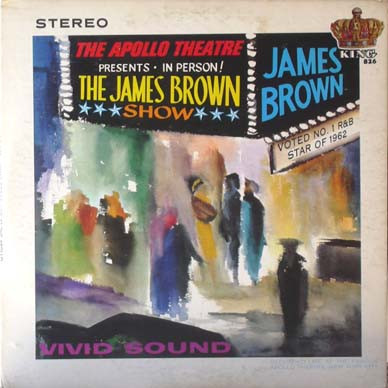
Georgie Fame — Rhythm and Blues at the Flamingo
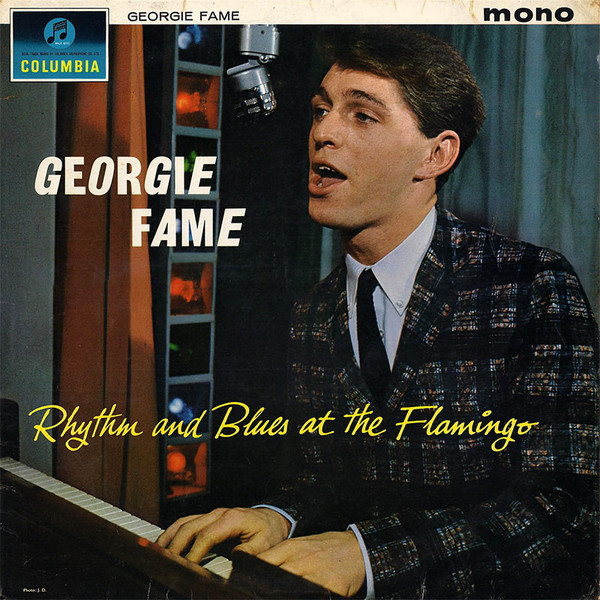
Live at the Apollo and Rhythm and Blues at the Flamingo — two records that changed what Mod listening meant between 1962 and 1964. The next chapter shifts the focus: London Mods stop looking toward America. Five boys from Shepherd's Bush take American R&B, add Marshall volume and working-class fury, and produce something that hadn't existed before.