Tokyo and its record shops
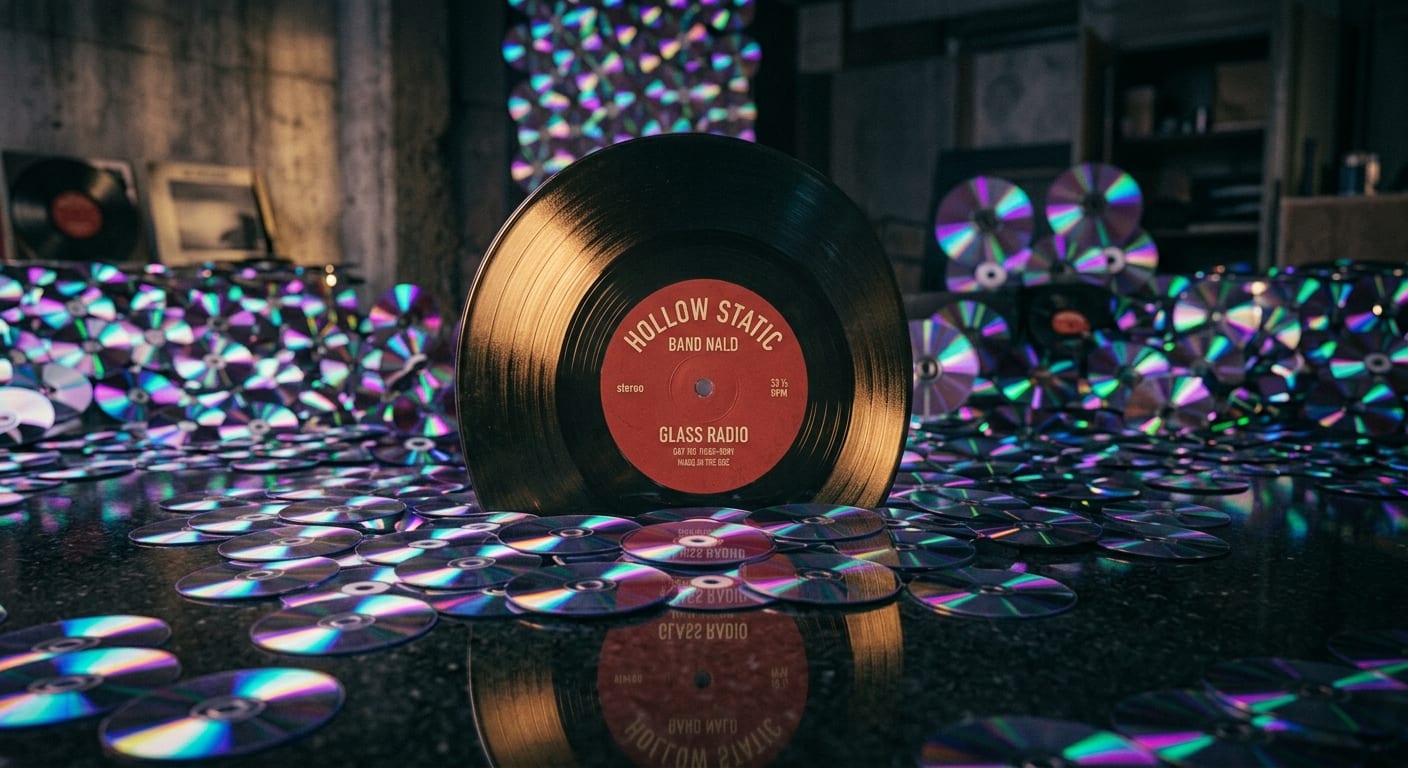
The obi strip. A narrow band of paper wrapped around the spine of every Japanese record — title, original price, a line of text. In London or New York it went straight in the bin the moment you opened the sleeve. In Tokyo it is part of the record, and an original pressing without its obi is worth a fraction of the same pressing with the obi intact. Everything about this city's relationship with vinyl is in that strip of paper.
Tokyo has more record shops than any city on earth, and it never had a vinyl crisis, because the crisis never reached it.
While Europe and America were pulping unsold stock through the 1980s and 90s, Tokyo kept pressing, kept selling, kept treating the record as an object to be preserved in the condition it left the factory. The Japanese audiophile industry — Technics, Pioneer, Denon, the cartridges, the high-grade pressing plants — held an idea of listening as a serious practice. Japanese pressings became a category of their own: quiet vinyl, clean cuts, JVC running its "SuperVinyl" formula in the seventies and eighties while costs were being cut everywhere else. The record never stopped being sacred here.
This is that culture. And then the map of where to touch it today.
The city and the record
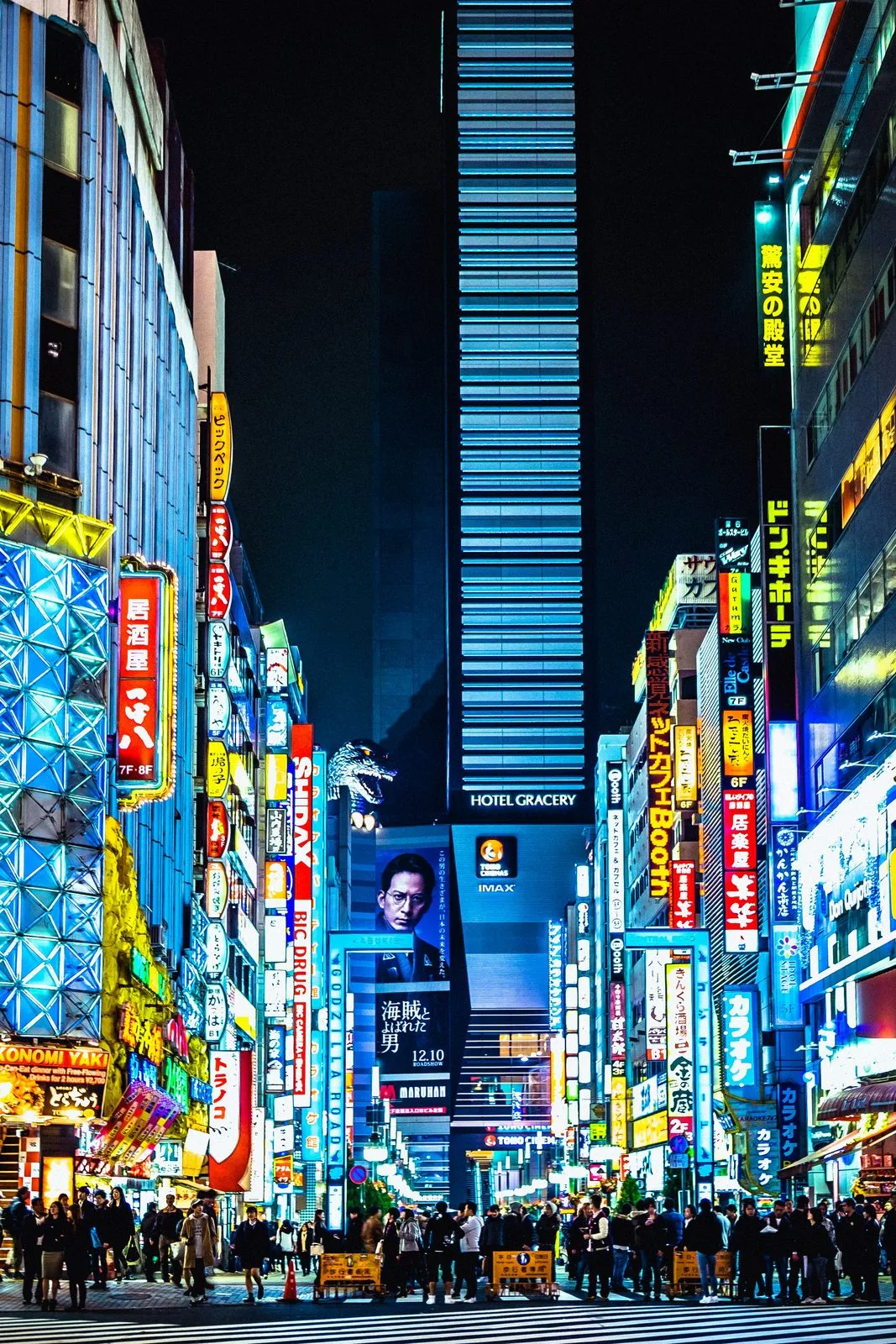
You don't cross Tokyo, you mine it. The shops are not at street level. They are on the third floor, the seventh, at the end of a tight lift, behind a door that opens onto a quiet room full of shelves. The city does not display vinyl. It keeps it, vertically.
The geography is dispersed but dense, and it reads better by family than by address. There are the big names, which tell you the scale: Shinjuku for the volume and the depth of catalogue, Shibuya — Udagawacho in particular, once the "mecca of records" — for the big shops and the rare groove. There is Shimokitazawa, the bohemian neighbourhood to the west, where the digging turns romantic: narrow streets, iron staircases, second floors. And there is the axis around Harajuku, more indie and more import-driven, made of third-floor shops with no giant sign. Nobody does Tokyo in a day. You do one family at a time, in comfortable shoes, with a list of which lifts to take.
There is a historical reason for all of this, and it has nothing to do with shops. It has to do with how Japan learned to listen. In the 1920s, as Western culture arrived in waves, audio equipment and imported records were prohibitively expensive — almost nobody could own them at home. So the listening café was born: a place where, for the price of a coffee, you could hear music you would never possess. Everything descends from that. The idea that playing a record is a deliberate act, done in silence and with attention, not background noise. That reverence never dispersed. It became the nervous system of a city that, eighty years on, still treats an LP as something owed respect.
The shops that matter
One day? Start with the big names, then drop down to Shimokitazawa. Three days? Follow the families below in the order you meet them. No list is complete in Tokyo — this is the one we'd use.
The big names
Disk Union is not a shop, it is an institution with an operating system. The chain runs dozens of Tokyo branches, and the principle never changes: divide by genre to the point of obsession. The hub is in Shinjuku, around Shinjuku-sanchome — a multi-floor complex where every floor is a world, from the Japanese rock and indie in the basement up through prog, latin and punk. You take the lift the way you take a subway line, and at the bottom of the racks there is always the 100-yen bin where you dig for the pleasure of digging. In Shibuya, around Udagawacho, Disk Union splits into several themed branches: this is where the jazz, the rare groove and the club music concentrate, and it is the digger's face of the chain — for people chasing the groove, not the record of the week.
A few steps away, HMV record shop Shibuya (in the Noah Shibuya Building, in Udagawacho) is the place collectors call "heaven", and not out of politeness. Eighty thousand records over two floors, specialising in used stock from the sixties to the nineties, with a particular reputation for city pop. The strength is the condition: the buyer sources directly in Europe and the UK, and original pressings arrive in shape you normally only see from specialist dealers, often with the obi still attached. You walk in with no record in mind and leave with a stack.
Shimokitazawa, the real dig
West of the centre the temperature changes. Shimokitazawa is where vinyl is dug in the most physical sense of the word, and it is the section every collector waits for.
Disk Union Shimokitazawa (1-40-6 Kitazawa, opposite Setagaya City Hall) is the chain's more manageable but no less serious branch: bright, spacious, with jazz, soul and rock sections and a mountain of Japanese pressings. Decent records start at around 400 yen, the interesting bulk sits between 800 and 2,000, and collectable originals run well past 10,000. A short walk away, Flash Disc Ranch — on the second floor of the Misuzu Building — is the antithesis of Disk Union's mania for order: records in piles, prices in tiers, American vintage, soul, jazz and rock turning over constantly. It is where the real discovery happens, the one you weren't looking for.
On the club side, JET SET Tokyo keeps the neighbourhood's DJ soul alive — house, techno, hip-hop, modern indie, 12-inches to put on the platter — with a selection that speaks to people who play, not photograph. And when the legs give out but the ear doesn't, two stops are half an experience in themselves: City Country City, café and shop together on the fourth floor (2-12-13 Kitazawa), where you order a plate of pasta while a jazz or experimental LP turns; and Pianola Records, a newer space in the Bonus Track development, with a small, curatorial selection for anyone after the off-format thing — the record they didn't know they wanted.
Harajuku and the indie axis
Further east, Tokyo's other soul: indie, underground, import, shops that don't shout. Big Love Records (Houei Building, 3F-A, in Jingumae, Harajuku) is import only — contemporary indie and underground from the US, UK and Europe — with its own label and a counter that pours craft beer. It is a sanctuary for small-label followers, running since 2008, and you treat it with the respect the owner asks for. Face Records, now inside the Miyashita Park complex (South, third floor), is the history of Japanese rare groove turned into a shop: it started as mail order in Yokohama in 1994 and opened in Shibuya in 1996, an editorial selection of jazz, jazz-funk, fusion, Brazilian, soul and a wall of 7-inch singles that is gold for sampling source. Quieter, out in Nishihara, Ella Records is the neighbourhood gem: small, wooden interior, listening spaces by the window, a cross-genre run of rock, jazz, soul and Japanese oldies. European and American pressings cost more than the Japanese ones — but the care in the selection earns it.
Once you've done the classics
Two shops are left for the nerds, to keep for when the big names are already beaten. Coco-isle Music Market, in Shibuya, is a monograph: all reggae, dub and ska, no compromise, for digging one genre to the bottom. And Lighthouse Records, one of the most respected shops for house and techno: it has left Shibuya for Ochanomizu, which makes it a pilgrimage of its own — but for anyone who plays club records it is worth the trip.
Where to listen
Tokyo doesn't just sell you the records. It teaches you to listen to them — and that is where the jazz kissa, the Japanese listening café, and its classical cousin, the meikyoku kissa, come in.
The most famous is Meikyoku Kissa Lion, in Shibuya, on the slope of Dogenzaka among the love hotels and neon. Founded in 1926 and rebuilt in 1950 after the air raids, it is a theatre for listening: red velvet seats arranged like church pews, all facing a pair of custom-built wooden speakers three metres high, a collection of more than five thousand classical records, and one iron rule — no talking. You order a dark coffee and let the sound hit you with your whole body. It is worth the trip as much as any shop.
For jazz, Eagle in Yotsuya — founded by Masahiro Goto in 1967 — keeps the classic kissa discipline: silence until six in the evening, after which the owner allows low conversation. These are temples, not bars. You go for the ritual. For something smaller, Shibuya has JBS — short for Jazz, Blues, Soul — a tiny room, a wall of vinyl, an owner who decides what goes on the platter, and a system fussed over down to the last detail. It is the kissa stripped to essentials: one man, one collection, the conviction that music should be heard well. A perfect stop between two shops.
The record to take home
From London you come back with a sixties British pressing. From Tokyo you come back with city pop.
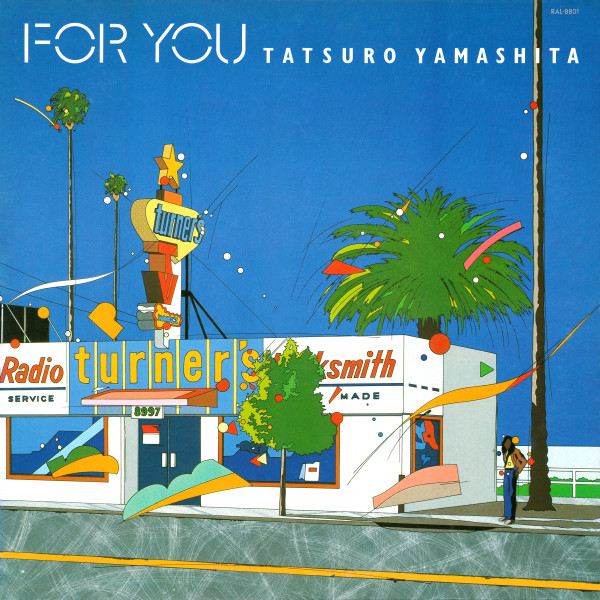
It is the genre the world rediscovered on YouTube — that polished, jazz-inflected, immaculately produced pop made in Tokyo from the late seventies to the mid-eighties — and the physical epicentre of that rediscovery is here. The record to chase is Tatsuro Yamashita's For You (1982), cut at CBS/SONY's Roppongi Studio and pressed by JVC on its SuperVinyl formula: the original came with no obi, and it is now a cult object. A clean copy runs between roughly £90 and £180 on the secondary market — Yamashita refuses streaming, so vinyl or CD is the only way to hear it properly. Beside it, the other patron saint of the genre: Mariya Takeuchi's Variety (1984, Moon label), the album that holds Plastic Love, the single that sold ten thousand copies on release and has since gathered more than twenty-four million YouTube views before it was pulled for copyright.
Why buy it here rather than anywhere else? Because these records were born in Tokyo, and this is where original Japanese copies still surface — with the obi, in condition that is a mirage elsewhere — at prices the international market has already inflated. A city pop record bought at Disk Union or HMV Shibuya is not just a record. It is the pressing made in the country that invented the sound, by the people who built that sound in the studio.
A practical note for anyone who doesn't want to bleed money. The YouTube revival sent original prices through the roof, and since 2023 Sony and RCA have run a reissue campaign of Yamashita's catalogue — the first time on vinyl in forty years. So the choice is clean: the original Japanese pressing, with obi, is the trophy, and you pay for it; the recent reissue is back in print, sounds good, and costs a fraction. There is no right answer. There is only what you're after — the historical object or the music. In Tokyo, for once, you can have both on the same shelf and decide on the spot.
Which pressing? Check it on Discogs ↗
Itineraries
Three ways to fit all this into a real day, depending on how much time you have and how far you'll walk.
Half a day, Shibuya–Harajuku. Start at HMV record shop Shibuya in Udagawacho for the first immersion, drop into Disk Union Shibuya for the jazz and rare groove, cross to Face Records inside Miyashita Park, then climb toward Harajuku for Big Love. Finish — if you have an hour of silence in you — at Meikyoku Kissa Lion on the Dogenzaka slope. It is the densest loop and the easiest: all on foot, no trains.
An afternoon in Shimokitazawa. The romantic dig. Disk Union Shimokitazawa to set the pace, Flash Disc Ranch on the second floor of the Misuzu Building for the pile-digging, JET SET for the club side. When the legs go, coffee and an LP on the platter at City Country City on the fourth floor, and a last curatorial look at Pianola in Bonus Track. A small neighbourhood, all walkable from the station.
A full day, the complete version. Morning in Shinjuku: the Disk Union complex at Shinjuku-sanchome takes a couple of hours on its own. Lunch on the train west. Afternoon split between Shibuya and Harajuku (HMV, Disk Union, Face, Big Love) or, if you prefer chaos to volume, all of Shimokitazawa. Evening in the kissa: Eagle in Yotsuya for jazz, or the Lion again if you haven't seen it. For nerds with a spare day: Ella Records in Nishihara, Coco-isle for reggae, Lighthouse in Ochanomizu — three detours that separate the tourist from the collector.
You won't do them all in a day. Pick three shops and one kissa, and leave the rest for the next trip.
Frequently asked questions
Where can I buy jazz vinyl in Tokyo? Tokyo is one of the world's capitals of jazz on vinyl. The references are Disk Union Shibuya, with dedicated jazz and rare-groove stores, and Face Records (Miyashita Park, Shibuya), a specialist in Japanese pressings with obi — strong on city pop and wa-fusion, but also jazz-funk, fusion and rare groove. Ella Records, a neighbourhood shop in Nishihara, pairs jazz, soul and rare groove with listening space. For the full experience, Tokyo is also the city of jazz kissa, cafés devoted to high-fidelity listening.
Where can I buy reggae and dub in Tokyo? Coco-isle Music Market, in Shibuya, is the monographic specialist: entirely devoted to reggae, dub, ska and related Jamaican genres, for anyone who wants to dig deep into a single genre. It's the reference for the Jamaican-music collector in Tokyo.
Where can I buy house and techno vinyl in Tokyo? Lighthouse Records, in the Ochanomizu area, is one of the most respected shops for club music: house, disco and Balearic, with a DJ-shop feel. In Shibuya, Disk Union Club Music covers techno, house and hip-hop, while Shimokitazawa has other spots dedicated to the dance 12-inch and new releases, curated more for DJs than tourists.
How does Disk Union work in Tokyo? Disk Union is the encyclopaedic chain of Japanese vinyl. The Shinjuku branch is a multi-floor building with one floor per genre — rock, jazz, prog, latin, punk, indie — where you go in for an hour and come out at closing time. In Shibuya the stores lean more toward the digger (jazz, rare groove, club), while Shimokitazawa is more second-hand and Japanese pressings. It's the starting point for anyone serious.
Which districts of Tokyo have record shops? The three main hubs are Shinjuku (the encyclopaedic Disk Union complex), Shibuya (the digger side: Disk Union jazz, Face Records, Big Love, Coco-isle) and Shimokitazawa (second-hand, club and neighbourhood feel: Flash Disc Ranch, City Country City). Tokyo doesn't display vinyl at street level — many shops are on upper floors, behind a narrow lift.
What is an obi and why does it matter for Japanese vinyl? The obi is the vertical paper strip wrapping the spine of Japanese records, carrying the title, price and text. In Japan it's an integral part of the record: an original pressing without its obi is worth a fraction of the same pressing with the obi intact. For collectors it's a decisive detail, and it's why Japanese pressings are among the most sought-after in the world.
Practical notes
Getting around is simple: Shinjuku, Shibuya, Harajuku and Shimokitazawa all sit on the JR and Keio lines, minutes apart; Nishihara and Ochanomizu ask for a detour, but they earn it. Three collector's rules. One: the obi matters — an original with its obi has value, one without is a different record, so always check. Two: many shops offer tax-free for tourists, so carry your passport. Three: hours change and floors move, Disk Union especially — a record isn't there today and arrives tomorrow, because the turnover is daily.
Tokyo doesn't hand you the nostalgia of a scene that ended. It hands you a scene that never stopped — still pressing, shelf after shelf, as if the death of vinyl had never been announced.
The next episode of Vinyl Cities publishes on the first Thursday of August. Subject: Berlin. Hard Wax, the techno shops of Kreuzberg, and the city where vinyl is still the currency of the club.
Subscribe to the Groov-illa newsletter so you don't miss future episodes.
If you live in Tokyo and have corrections, additions or shops that deserve a mention, write to hello@groovilla.com. We update periodically.