Bologna and its record shops
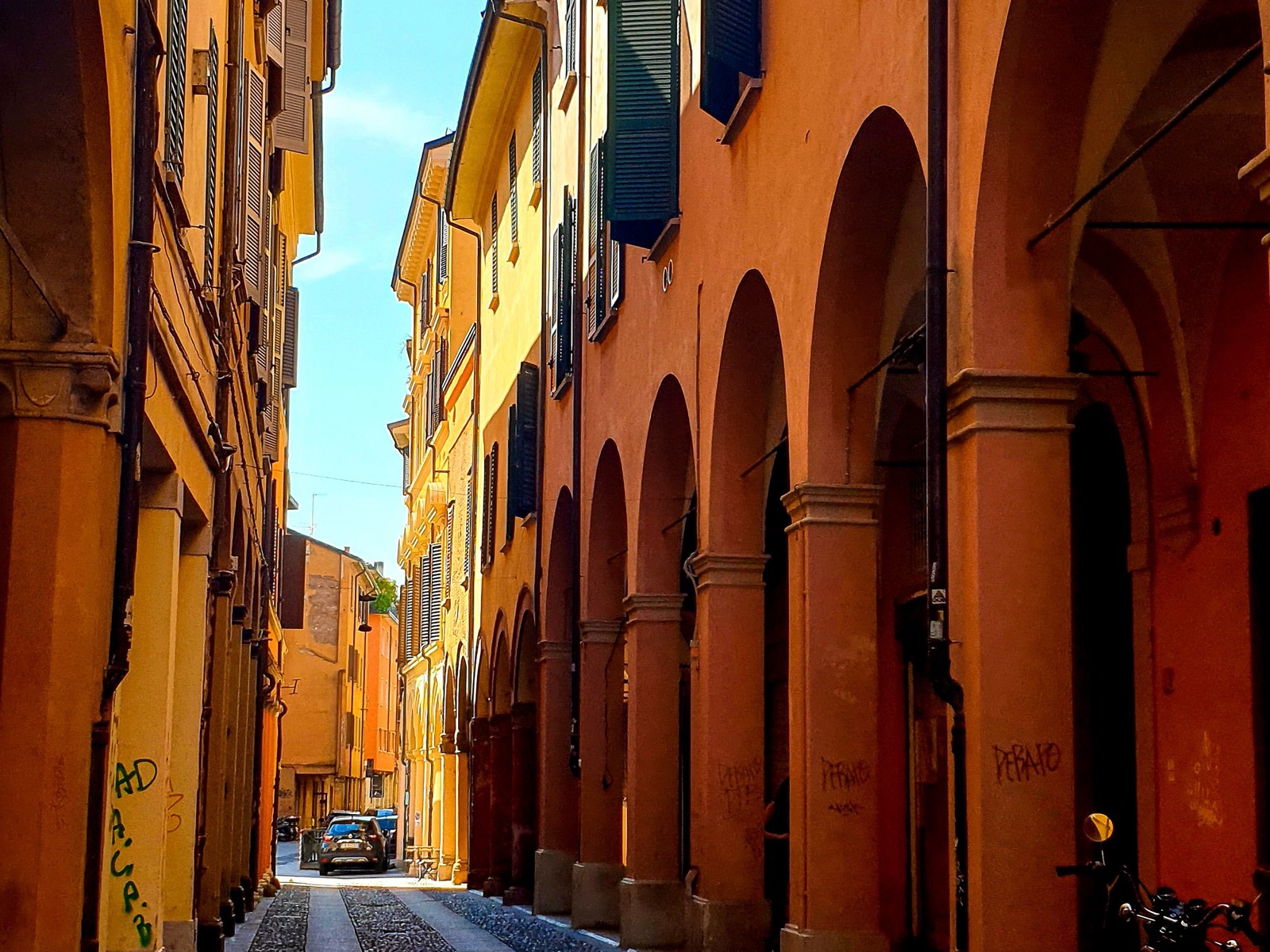
Bologna is a city you hear before you see it. Sound runs under the porticoes — kilometres of vaulted walkways that shelter footsteps and notes alike from the rain and the August heat. A thousand-year-old university keeps the streets stocked with twenty-year-olds and arguments, and 1977 is still in the walls: the year the student movement found its radio station and its noise here. Red, learned, well-fed Bologna — and loud. Italy's first UNESCO City of Music did not earn the title by accident.
There's a reason Lucio Dalla was born here, that Guccini sang for years at the Osteria delle Dame, that Italian punk found one of its capitals in Bologna. This is a city that produces music the way it produces graduates and tortellini: in quantity, with method, and with a taste for subversion that sits, without effort, beside the tradition.
Vinyl in Bologna lives inside that double nature. On one side the learned, long-lived city — the classical, the opera, the sheet music, the shops that have stood for generations. On the other the underground — the punk, the no wave, the metal, the subcultures, the shops that began as meeting points before they were businesses. The two Bolognas don't ignore each other. They brush past constantly, sometimes on the same block.
There's no single record street. There's a compact, walkable centre where most of it concentrates, and then a handful of scattered addresses — toward the university, east along Massarenti, west toward Saragozza, out into the artisan district — that the serious collector learns to reach one at a time. This episode is the map.
A Brief History of the Bologna Scene
To understand Bologna's shops, start with the university. The oldest in the Western world has kept the city full of students for nine hundred years, and from the 1970s — with the birth of DAMS, the degree course in the arts, music and performance where Umberto Eco taught and Andrea Pazienza studied — that population found a language of its own. Bologna's 1977, with Radio Alice and the movement, was also a matter of sound: a city telling its own story through music, free radio, the record as a political object as much as an aesthetic one.
Out of that came a punk and new wave scene few other Italian cities can claim. Skiantos and their deadpan comic rock, Gaznevada, the Italian Records label putting Bologna's new wave on vinyl at the end of the seventies: a flowering that made the city a laboratory, not a province. At the same time Bologna stayed the city of the singer-songwriters — Dalla above all, Bolognese to the core, and the generation of the Osteria delle Dame — and later of Stadio, Luca Carboni, on to Cremonini. A city that never chose between high and popular, and was right not to.
The shops grew inside that history. Disco d'Oro opened in 1976 and became, for the city's musical generation, a name spoken like a landmark: the home of the underground, the punk and the no wave, with a collector's instinct that in Bologna was never separate from a certain militancy. Bongiovanni, from the other side of the city's character, is one of its longest-standing music houses — classical, opera, sheet music, rarities — an institution more than a shop. Between them, over the years, came the addresses for serious used and new, the genre specialists, the hybrids with a bar and events, down to the most recent generation. The result is a density that, per head of population, holds up against any Italian city.
And, as everywhere, there's the layer Google Maps doesn't show: the private collectors, the trades between students clearing out rooms at the end of term, the record fairs passing through. In a university city, used vinyl circulates more than elsewhere, because every June someone leaves and sells. It's one of the reasons Bologna is a good city to dig in.
Opening hours checked in October 2026: before you go, check the shop's website or social media.
The Centre: From Ugo Bassi to Piazza Maggiore
The heart of Bologna is walked on foot, under the porticoes, and within a few blocks of Piazza Maggiore the densest part of the map concentrates. This is where the pillars are — the shops nobody skips.
Bongiovanni — Via Ugo Bassi 31/F
Bongiovanni is the institution. On the Ugo Bassi axis, steps from the exact centre of the city, it's one of Bologna's longest-standing music houses and the absolute reference for classical: opera, baroque, symphonic, a catalogue that runs past the record itself into sheet music, magazines, editorial rarities. It isn't a shop for punk or jazz. It's a shop for the person hunting a specific recording of a specific work — and knowing there's a real chance of finding it here. The kind of place where the expertise behind the counter runs as deep as the stockroom, and where walking in means leaving better informed than you arrived.
Website: bongiovanni70.it
SEMM Music Store — Via Guglielmo Oberdan 24/F
Opened in 2009 near the Two Towers, SEMM is the central store and the cultural hub of today's vinyl Bologna. New and used, a wide catalogue holding current releases alongside the second-hand stock — but above all a programme of events and in-stores that make it more than a retailer. Touring artists pass through; the city gathers. It's the shop to start from: the easiest to reach and the warmest for anyone arriving from out of town.
Website: semmstore.com
Gallery16 — Via Nazario Sauro 16/A
Just west of the central axis, Gallery16 is the hybrid in the most Bolognese sense: a cultural hub with vinyl, a bar and events, where the record is part of a wider experience that includes the drinking and the staying. It's the shop-plus-venue model that works here because it catches the young, student audience that never separated listening from company. The shop opens Tuesday to Saturday, and in the evening it turns into a vinyl bar as well. Worth the stop both for the crates and for a read on where the scene is heading.
The Galliera Axis
North of Piazza Maggiore, Via Galliera and its side streets form a small district of their own — home to the city's landmark shop and its next-door neighbours.
Disco d'Oro — Via Galliera 23
Since 1976, Disco d'Oro is the name every Bolognese collector says with a certain tone. A reference for underground, punk and no wave, with a strong collector's soul, it's one of those shops that has crossed the decades without abandoning a line. You go for the difficult records, the pressings that aren't anywhere else, and for the increasingly rare sensation of entering a place with a memory and not just a stockroom. For the city's musical generation it's less a shop than a piece of shared autobiography.
Website: discodoro.it
Discorama — Via de' Monari 1/A
A few metres off Galliera, on Via de' Monari, Discorama keeps CDs and vinyl, new and used, with the instincts of a neighbourhood shop that knows what's on its shelves. It lacks the sharp specialisation of the others, and that's the appeal: it's the shop you stop into without looking for anything and leave with something. Pair it with Disco d'Oro, a couple of minutes' walk away.
Website: discoramabo.com
Vinili Backtobeauty — Via de' Monari 1
The shop you'll tell your friends about: a beauty salon that sells vinyl, or a record shop inside a beauty salon, depending on which door you think you came in by. A small selection, well kept, low prices. It's in the same building as Discorama, so it costs not a minute extra on the Galliera round.
Hours: Tue–Fri 10:30–19:30; Sat 10:30–14:30; closed Mon and Sun.
Used and Collectible
Four shops far apart on the map — one east, two west, one north — but close in spirit: this is where you come for serious used, for rarities, and for the eye of people who know how to read a record.
Discobolandia — Via Filippo Beroaldo 26/B
East, toward Massarenti, Discobolandia is the shop every collector should know for one precise, technical reason. Since 2004 it has worked selected used vinyl with a method few in Italy apply this rigorously: professional machine washing, grading stated on the British scale, and close attention to matrices and pressings — reading the runout, identifying the pressing, separating first editions from repressings. In a market where "used" can mean anything, here the record arrives clean, graded, and described for what it actually is. They buy collections too, so the stock keeps turning over with records coming out of Bolognese homes. For the serious buyer, it's the difference between hoping and knowing.
Website: discobolandia.it
Lupus Records — Via Frassinago 4/A
West, toward Saragozza, Lupus is the shop for used vinyl, rarities and first editions, with a vintage hi-fi section that makes it a double address: you come in for a record and leave talking turntables and cartridges. It's the place for the collector who wants the rare piece and also the right rig to play it on — a combination that makes perfect sense in Bologna, a city of exacting listeners.
Dj's Paradise — Via Andrea Costa 117/a
Out of the centre, toward the stadium, and the shop more than one visiting digger calls the best in Bologna. It's run by Riccardo, who sings along to the records as he plays them and stays open late if you're still digging. Almost all used: Italo, funk, disco, soul, and a stock of Italian 12-inches that makes it the key address if you're coming down from Milan; Cramps originals turn up here.
Hours: Mon–Wed and Fri–Sat 9:30–13 and 16–19:30; Thu mornings only; closed Sun.
Il Covo della Musica — Via di Saliceto 9/D
In the Bolognina, a fifteen-minute walk north of the station, a small and careful shop run by Stefano, who also turns up at the city's record fairs. New and used in good condition, niches and classics: nothing spectacular in volume, but obvious care for the state of the records.
Hours: Mon 6-8pm; Tue-Thu 4-7:30pm; Fri closed; Sat 10am-1pm and 4-7pm; Sun closed.
The Underground and the Niches
Bologna as a capital of punk isn't a figure of speech, and it's a scene that still has its shops. Scattered — two in the university quarter, one in the artisan district, one to the east — but unmistakable in their identity.
Metal Factory — Via Irnerio 19/D
On Via Irnerio, at the edge of the university quarter, Metal Factory is the specialist in metal and hard rock: the shop for the right pressing, the limited edition, the deep stock the generalists don't carry. Small, vertical, expert on its own ground — exactly the kind of shop a city with a living scene deserves.
MEGASTORE Sonic Belligeranza — Via Mascarella 17b/17c
The most Bolognese shop of all: a small, crammed space run by a collective tied to an experimental label — people who press records and sell them in the same room. Experimental, electronic, noise, local self-releases: records that don't exist anywhere else. It opens only in the evening, Sundays included, ten minutes' walk from the Two Towers.
Hours: daily 17–22, Sundays included.
Ostia Records — Via dell'Artigiano 17/D
Out toward the artisan district on the east side, Ostia Records is the temple of punk and Oi!, with a selection that spreads from its hardcore core across genres. It's off the pedestrian centre, and that makes it a destination: you go on purpose, because you know what you're after. For anyone living the scene, the detour is the point.
Hellnation — Via Zampieri 2/2C
East, Hellnation is record store and bookshop at once, devoted to subcultures: records and print, the music and the books that tell its story, under one roof. It's the shop that holds the vinyl together with its context — the fanzines, the memory, the culture those records came from. A place for people who never separate listening from reading.
Recommended Itineraries
Three ways to cross vinyl Bologna, depending on time and target.
The centre loop (half a day). All on foot, under the porticoes. Bongiovanni on Ugo Bassi, SEMM toward the Two Towers, Gallery16 on Sauro, then up Via Galliera to Disco d'Oro and Discorama. It's the densest stretch of the map, and it closes naturally with an aperitivo in the Quadrilatero or on Piazza Maggiore.
The underground run. Punk Bologna, for those who want it: Metal Factory in the university quarter for metal, then the detour to Ostia Records in the artisan district for punk and Oi!, and Hellnation to the east for the records and books of the subcultures. It isn't a convenient route, and that's the point: it's a run for people who already know what they want.
The collector's run. A targeted hunt for used and rarities: Discobolandia east for records washed, graded and read in the matrices, Lupus west for first editions and hi-fi, Disco d'Oro in the centre for the collector's soul. Want-list in your pocket, cash, and the patience of someone who knows the right record sometimes isn't there, and you come back.
Bologna Practicalities
A few useful things to know before a day of Bologna crate digging.
The centre is walked on foot. Bologna has one of the most compact historic centres in Italy, and almost all of it is porticoed: you can move from shop to shop in any weather without getting wet. It's a real advantage in a city that rains more than its reputation suggests.
Hours. Several shops — especially the older and smaller ones — keep a lunch break and open on reduced hours; some of the niche addresses run particular schedules or afternoon openings. Always verify before setting out — for many, the Instagram feed is more current than the website.
Transport. The centre is almost entirely pedestrian, with a wide limited-traffic zone (ZTL): if you arrive by car, leave it in the car parks outside the walls. Bologna Centrale station is minutes from the centre. For the outer addresses — Ostia in the artisan district, the eastern shops — a bus or a car helps.
Payments and negotiation. The more structured shops take cards; with the smaller ones and on used stock, cash is sometimes preferred, especially on minor pieces. Bologna prices are generally honest; on higher-end collectible items it's always worth asking, but don't expect wide margins.
The university city. Used vinyl circulates more here than elsewhere, because every end of the academic year someone clears a room and sells. It's when the second-hand stock renews itself: if you pass through between spring and early summer, the used bins are often at their best.
Frequently Asked Questions
Where can I buy punk and underground vinyl in Bologna? Bologna is one of Italy's capitals of punk, and the scene still has its shops. The historic reference is Disco d'Oro, on Via Galliera, since 1976 a point for underground, punk and no wave. For punk and Oi! there's Ostia Records out toward the artisan district; for metal and hard rock, Metal Factory in the university quarter; for the records and books of the subcultures, Hellnation to the east.
Where can I buy classical and opera vinyl in Bologna? Bongiovanni, on Via Ugo Bassi, is Bologna's reference for classical: opera, baroque, symphonic, with records but also sheet music, magazines and editorial rarities. It's one of the city's longest-standing music houses and the obvious starting point for anyone after a specific recording.
Where can I buy used and collectible vinyl in Bologna? For serious used, the reference is Discobolandia, on Via Beroaldo, which works with professional record cleaning, stated grading, and attention to matrices and pressings. Lupus Records, toward Saragozza, is strong on rarities and first editions (with vintage hi-fi). Disco d'Oro combines underground and collecting.
Which areas of Bologna have record shops? Most are in the porticoed historic centre: Bongiovanni, SEMM and Gallery16 between Ugo Bassi, Oberdan and Sauro; Disco d'Oro and Discorama on the Via Galliera axis. Beyond the core: Discobolandia and Hellnation east toward Massarenti, Metal Factory in the university quarter, Lupus west toward Saragozza, Ostia in the artisan district.
Which is the most historic record shop in Bologna? Among the longest-standing are Bongiovanni, the historic house of classical and opera, and Disco d'Oro, active since 1976 as a reference for the underground and for collecting. Two different institutions in audience and catalogue, both part of the city's musical memory.
Is Bologna really a "City of Music"? Yes: Bologna was the first Italian city designated a UNESCO City of Music, in 2006. The title reflects the university and DAMS, the punk and new wave scene of the late 1970s, the singer-songwriter tradition, and the fact that it gave birth to Lucio Dalla — alongside a concert and recording life that is still very active.
A Record to Hunt for in Bologna
For each episode of this series we close with a record to look for in that city — a pressing that exists better there than elsewhere, for reasons of original distribution, scene specialisation, or local production.
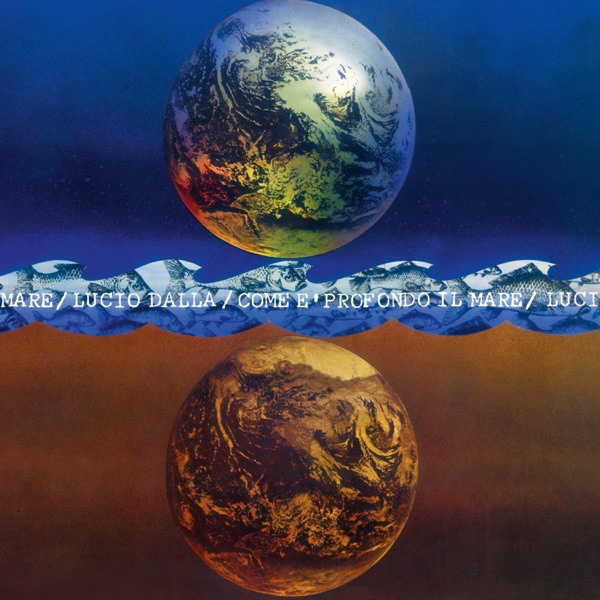
For Bologna the choice is almost obligatory, and it carries one name: Lucio Dalla. Bolognese to the core, and with Com'è profondo il mare (1977) the author of a turning point. It's the first album on which Dalla writes both words and music alone: after the run of records written with the poet Roberto Roversi, he takes up the pen himself and finds the voice that will carry him for the rest of his career. A record of transition and of maturity, and one of the central documents of Italian songwriting.
Which pressing? Check it on Discogs ↗
The first Italian pressing is the RCA Italiana PL 31321 from 1977, non-gatefold sleeve and blue label: the press to hunt, the one that carries the original sound of the studio. Later repressings and the 180-gram edition make the record easy to hear today, but for the collector it's the first RCA run that makes the difference — in the groove, in the grain of the sleeve, in the detail of the label.
In Bologna, Com'è profondo il mare in first pressing realistically turns up at Discobolandia, where the copy arrives washed and graded in the matrices, and is worth hunting at Disco d'Oro and Lupus. It's one of those records where the geographical origin of the pressing coincides with the origin of the voice that sings it: a Bolognese record, hunted in its own city.
The Vinyl Cities series continues with more Italian cities. Subscribe to the Groov-illa newsletter for upcoming episodes.
If you live in Bologna and have corrections, suggestions, or shop recommendations, write to hello@groovilla.com. The guide is updated periodically.