Factory Records · 1979
Its cover is a dead star's pulse, its sound an empty room: how Factory and Martin Hannett turned a debut into an object of devotion.
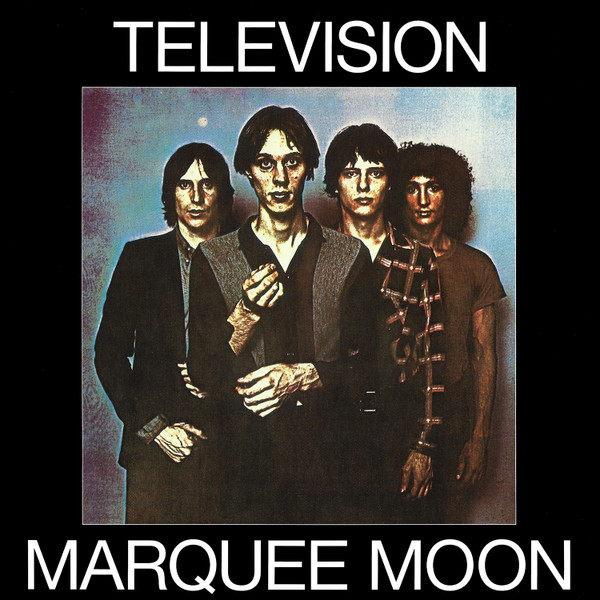
Martin Hannett took a loud band and filled their record with silence. In April 1979, at Strawberry Studios in Stockport, he was handed an aggressive live group and did the opposite of what they asked: he added space. He recorded Stephen Morris's drums piece by piece, drowned everything in reverb and the new AMS digital delay, and pushed the instruments apart into a cold, three-dimensional room. Peter Hook's bass carries the melody up front; Bernard Sumner's guitar is a distant filigree; Ian Curtis's baritone hangs in the middle distance. Where Television had made guitars ring like architecture on Marquee Moon, Hannett made Joy Division echo like an empty building. You hear it in Disorder, all forward motion; in New Dawn Fades, rising by inches; in She's Lost Control, where the treated rhythm sounds like a machine.
That sound arrived inside one of the most radical sleeves in rock. A hundred white lines stacked on black, like the crests of a fading wave — no title, no band name, just the graph. It's the radio signal of a dead star: pulsar CP 1919, the first ever detected, in 1967, which Peter Saville lifted from the Cambridge Encyclopaedia of Astronomy and flipped to white on black. A cover that says everything and names nothing — the Factory aesthetic as manifesto, the record treated as an artefact rather than a product.
Because Unknown Pleasures is, before it is a debut, an object of Tony Wilson's Factory Records — the Manchester label that gave a catalogue number to everything, and thought about a sleeve the way a designer thinks about a poster. Post-punk grew out of the same Manchester the Sex Pistols had detonated in 1976, the story Jon Savage tells in England's Dreaming. But the point here isn't the band's biography; it's what Factory did with the sound.
On vinyl, the original is a rising grail, and identifying one is half the game. The first FACT 10 of 1979 has the textured black Garrod & Lofthouse sleeve, no text on front or spine, and a rounded-corner inner. Etched in the dead wax is A PORKY PRIME CUT — George Peckham's cut — with THIS IS THE WAY and STEP. One disorienting detail: the metalworker swapped Outside and Inside between the labels and the runouts — a hallmark of the original, not a fault. Tony Wilson claimed the first 2000 copies came on translucent red vinyl; it remains debated among collectors — black (Garrod & Lofthouse) and translucent-red Tranco copies coexist among the earliest editions, perhaps pressed at different plants. Prices have soared: a clean first now runs roughly €500–1,200 and up. For sound alone, purists rate the UK 1979, the US FACTUS 1 (1980) and the German pressing as the best analog cuts; if you want something in print, the 2015 reissue (FACT 10R) is a faithful replica of the original. Avoid, most agree, the 2007 remaster: brightened, with added reverb that betrays the Porky cuts.
Few covers and few sounds are this inseparable from their physical object. Unknown Pleasures is a dead star's pulse printed on rough card, and an empty room cut into the groove — proof that Factory, when it believed, didn't make records. It made artefacts.
The debut that founded post-punk: Hannett's cathedral production, Saville's pulsar cover, the Factory aesthetic as manifesto. The 1979 FACT 10 original (Porky cut, textured sleeve) is a rising grail; to listen, the 2015 FACT 10R reissue is the honest choice — avoid the 2007 remaster.
Unknown Pleasures on Vinyl — Which Pressing?
textured black Garrod & Lofthouse sleeve, no text on front or spine, rounded-corner inner. Runout etched "A PORKY PRIME CUT" (George Peckham's cut), with "THIS IS THE WAY"/"STEP". Black and translucent-red Tranco copies coexist among the earliest editions: the red is a Tony Wilson claim, still debated. Clean ~€500–1,200 and up
purists rate, alongside the UK 1979, the US FACTUS 1 (1980) and the German pressing — all analog, often preferred. Prices vary
faithful replica of the 1979 original (Warner 90), with a download code. The sensible in-print choice
the 2007 remaster, criticised by collectors for a brightened sound and added reverb versus the original Porky cuts
Groov-illa participates in Amazon and CDandLP affiliate programmes. Purchases via our links may earn us a small commission at no extra cost to you.
How do I identify a first pressing of Unknown Pleasures (FACT 10)?
The 1979 first edition has the textured black sleeve printed by Garrod & Lofthouse, with no text at all on the front or spine, and a rounded-corner inner sleeve. Etched in the runout is 'A PORKY PRIME CUT' (George Peckham's cut), with the words 'THIS IS THE WAY' and 'STEP'. A quirk: the metalworker swapped 'Outside' and 'Inside' between the labels and the runouts — a typical trait of the original, not a defect. On the very first copies Tony Wilson claimed translucent red vinyl (the Tranco pressing): it remains debated among collectors — black and translucent-red copies coexist among the earliest editions.
What is a FACT 10 original worth?
Prices have risen sharply in recent years: a clean 1979 first pressing now sits roughly at €500–1,200 and up, with a premium for the (debated) 'Tranco red' copies. It has become one of post-punk's grails. Beware later reissues (smooth sleeves, barcodes, different catalogue numbers such as FACT 10R): they aren't the same thing.
Which version is best for listening?
For the original analog sound, purists point to the UK 1979, the US FACTUS 1 (1980) and the German pressing. If you want something in print, the 2015 reissue (FACT 10R, Warner 90) is a faithful replica of the 1979 original. Most collectors advise avoiding the 2007 remaster: it sounds brighter and more reverberant than the period Porky cuts.