The First Serious System
All second-hand bar the cartridge: four boxes that play above their price
This is not the minimum needed to get started. It is the point at which second-hand beats new, and not by a little: under a thousand euros spent well on the used market buys a build, a tonearm and a phono stage that, at this money, do not exist new. Four boxes rather than five, because the amplifier already has the phono stage inside it. The character is declared up front, so you know what you are buying: generous mids, modest bass, no pretence of extreme dynamics. It is built around the midrange of the NAD 3020, and that is a choice rather than a compromise. As with every system in this strand, it is reasoned against the criteria in the method hub, not auditioned in our own living room: the numbers are checkable, and the listening judgements I report are credited to the people who made them.
1. The four boxes
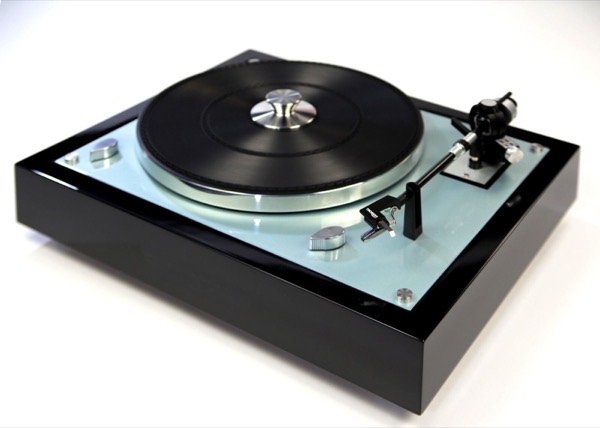 Thorens TD 160 · turntableRead the guide →
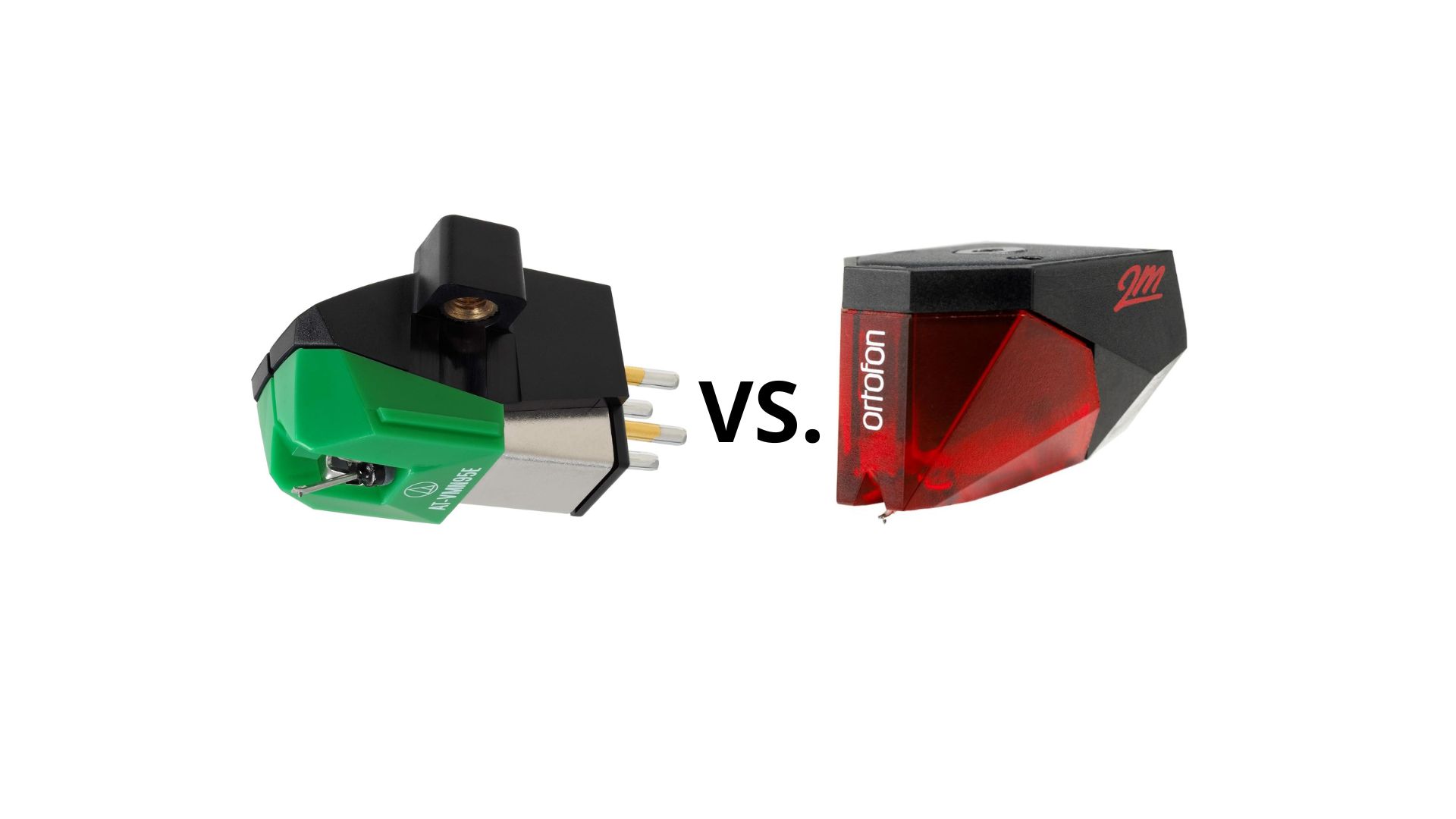 Cartridge · by the arm massCompare the cartridges →
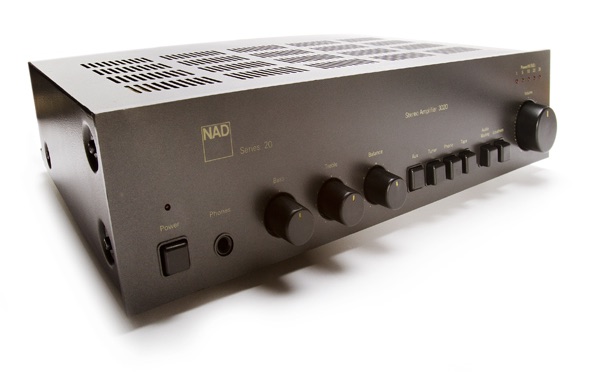 NAD 3020 · amplifierRead the guide →
 Wharfedale Diamond · speakersCompare new models →
Turntable — Thorens TD 160 (used, ~£250-400) It is here because at this money nothing else offers the same seriousness of construction: a sprung sub-chassis, a synchronous belt-drive motor, and the TP16 tonearm, which shares its thinking with far dearer Thorens decks. One thing has to be known before buying, though, because it decides the next box: the TP16 exists in two very different masses — around 16.5 grams in its original form, around 7.5 from the MkII onward. Anyone buying used often does not know which one is coming until it is in their hands. A working example typically sits in the low-to-mid hundreds; below that, expect to spend on it.
Cartridge — new, chosen to suit the arm (~£100-120) The only box we buy new, for an obvious reason: it wears out. It is also the only choice in the system governed by a number rather than an opinion — the arm-cartridge resonance has to land between 8 and 12 Hz.
- With the original TP16 (~16.5 g) you want a low-compliance cartridge: the Nagaoka MP-110 or the Audio-Technica VM95E. Either lands the resonance around 10 Hz, mid-window.
- With the TP16 from the MkII on (~7.5 g) you want the opposite, a compliant cartridge: the Ortofon 2M Red, or an Ortofon OM series. The 2M Red lands around 9 Hz.
Swapping them is the classic mistake: the 2M Red on the heavy arm drops toward 7 Hz, the VM95E on the light one climbs past 13. One honest caveat: manufacturers quote compliance at different frequencies, so cross-brand comparison is approximate — treat these as orders of magnitude, not decimals.
Amplification — NAD 3020 (used, ~£120-280) The heart of the system, and the reason there are four boxes rather than five: it has an MM phono stage built in, so the turntable plugs straight into it with no separate preamp. Its history lives in its own piece and there is no point repeating it here; what matters for the pairing is that its twenty watts carry a real dynamic reserve, and that its character sets the tone of everything downstream.
Speakers — Wharfedale Diamond, early series (used, ~£80-150) The definitive British budget choice, and contemporary with the NAD. Small, well proportioned, with a stereo image that set a standard in its day.
2. Why these four together
All three rules from the hub are at work here, and they pull in one direction.
The NAD's built-in phono stage removes a box, a cable and a decision. On an eight-hundred-pound total, saving the cost of a preamp and moving it to the source is the move that pays most: the heavy-front-end school applied to the letter.
On the speakers something precise needs saying, because this is where received wisdom gets it wrong. The early Diamonds are not sensitive: the spec sheet says 86 dB, and Hi-Fi News's lab measurements come in around 85. They do not ask for little power — if anything they ask for an amplifier that will not flinch. What makes them right for the NAD is something else: they are a benign load, nominally 8 ohms with a minimum around 6.6, without the dips that undo a small amplifier. And the pairing is not our invention: Hi-Fi News, retracing that speaker's history, lists the NAD 3020 among the amplifiers that could get considerably more than a squeak out of it.
Character, finally, adds up in the right direction instead of doubling a flaw. The NAD's generous midrange meets a speaker that essentially withdraws below 80 Hz: the result is a system centred on the middle of the band, where voices and the body of instruments live. It is not a system that delivers the last kick drum. It is a system that keeps you in the chair.
3. What to play on it
Every system has music it does best, and pretending otherwise is the quickest route to disappointment. This one is built for voice and texture, not for power. Three records demonstrate it better than any spec sheet.
Love — Forever Changes. The record that tests whether a system can hold a complicated construction together: acoustic guitars, strings, horns, arrangements layered without ever turning orchestral. It needs a tidy midrange, which is exactly what this system does best. The strings stay strings, friction and all, instead of becoming a glossy wash at the back.
Van Morrison — Astral Weeks. There is no production to unpick here, just a group of jazz musicians playing almost live around a voice. This is the system's record: Richard Davis's double bass has body without needing to descend into the cellar, the voice has air and breath, and the way the songs open out and pull back sits entirely in the midrange. If this system has a manifesto, it is side one.
Joy Division — Unknown Pleasures. The most interesting case, because it looks like the wrong record and is not. Martin Hannett built that sound entirely out of space and reverb: the instruments are placed in an artificial room, and the record does not ask how loud your system plays, it asks whether you can hear where things are. This system, short on spectacular dynamics but clean in the mids and orderly in its imaging, delivers that work. Peter Hook's bass, sitting higher in the register than memory suggests, arrives whole.
And where it falls short. Honesty here is worth more than ten paragraphs. Do not expect the organ of Journey in Satchidananda: those deep foundations, below 80 Hz, this system simply does not have. Do not expect full orchestral dynamics, or the contrasts of a well-recorded percussion record: with twenty watts and 85 dB speakers, crescendos compress. And on a crowded, heavily compressed modern master, it stiffens sooner than more capable systems.
None of that is a hidden fault. It is the declared price of what this system does superbly.
4. The total
In bands rather than firm figures, because on the used market price depends on condition, version, and how much work has already been done.
| Component | Band — used |
|---|---|
| Thorens TD 160 in working order | ~£250-400 |
| New cartridge (Nagaoka / Audio-Technica / Ortofon, to suit the arm) | ~£100-120 |
| NAD 3020 | ~£120-280 |
| Wharfedale Diamond, early series | ~£80-150 |
| Total | ~£550-950 · near £800 |
On the NAD, a British repair specialist publishes a 2026 guide range of exactly that, the upper end for immaculate boxed examples.
The gap between bottom and top is not luck: it is how much servicing the two vintage boxes have already had. A TD 160 and a NAD both needing attention sit at the bottom of the range and will charge you the difference later, at the workshop — the full reasoning on how to do that sum is in the restoration hub, and it is the piece to read before answering any advert.
5. The extras (outside the budget, and said so)
These three do not sit inside the four boxes. They belong here because the first, in particular, changes the result more than a two-hundred-euro upgrade would. If your spend landed in the lower half of the band there is room for them; if you went towards the ceiling, they push you over — and that is worth knowing before you buy.
Stands. The most underrated accessory in hi-fi. A bookshelf speaker sitting on a sideboard sounds bad, and it is not the speaker's fault: the furniture resonates, the height is wrong, and the stereo image — the Diamonds' strongest suit — collapses. Put them on rigid stands with the tweeter at ear height and you have made the single best-value intervention in the whole system. One further detail about these speakers: they were designed to work close to the rear wall, which gives back some of the bass. Stands, then, but not marooned in the middle of the room.
Record cleaning. On a system with mids this clean you hear surface noise, and buying used brings home plenty of well-travelled records. A good carbon-fibre antistatic brush before every play is the bare minimum; flea-market finds need a proper wet clean, and the full method is in our guide to cleaning vinyl.
Cables. An honest position, without hedging: you want decent, well-screened cables, above all on the turntable, which carries a very weak signal and is sensitive to interference. You do not need to spend seriously. A reputable cable at a normal price does everything this system requires; money saved here does far more work on the cartridge or on a service. No links, because there is nothing to recommend beyond that.
Under a thousand euros on the used market buys a build, a tonearm and a phono stage that do not exist new at the price. The NAD 3020 removes the preamp and sets the character: generous mids, modest bass, orderly imaging. The Wharfedale Diamonds are not sensitive but they are an easy load, and this is the amplifier they grew up with. The one choice governed by a number is the cartridge: find out which TP16 you have before you buy it. The rest is music for voices and texture rather than power — declared up front, so nobody ends up disappointed.
Why is the cartridge the only new item?
Because it is the one component that genuinely wears out: a stylus has a finite life and on a used example you cannot know how many hours it has done. Buying the cartridge new costs little against the total and removes the one unknown that would spoil everything else.
How do I know which TP16 I have?
Ask the seller for a photograph of the arm and the deck, and know that the MkII is the dividing line: the original has an effective mass of around 16.5 grams, from the MkII it drops to roughly 7.5. Which cartridge to buy depends on that mass, so settle it before the purchase rather than after.
Are twenty watts enough with 85 dB speakers?
In an ordinary room at ordinary levels, yes — not least because the NAD carries a real dynamic reserve and the Diamonds are an easy load. In a large room, or if you play dynamic music loudly, no: that is this system's declared limit, not a surprise.