The revival and the legacy
The Jam, Secret Affair, 2-Tone, Paul Weller. How Mod returned — and why it keeps returning.
Some subcultures die and stay dead. The Teddy Boy, the classic Rocker, Glam — phenomena of an era, finished when the era ended. And then there is Mod, which dies and rises, dies and rises, in a cycle that has now lasted sixty years. In 1966 it was over. In 1979 it was back. In the Nineties it would return again with Britpop. Today, in 2026, there are twenty-year-olds who dress Mod, buy Vespa and Lambretta scooters, hunt for original soul 45s in record fairs. Why does Mod, unlike almost every other subculture, never stop returning?
The Jam: the bridge
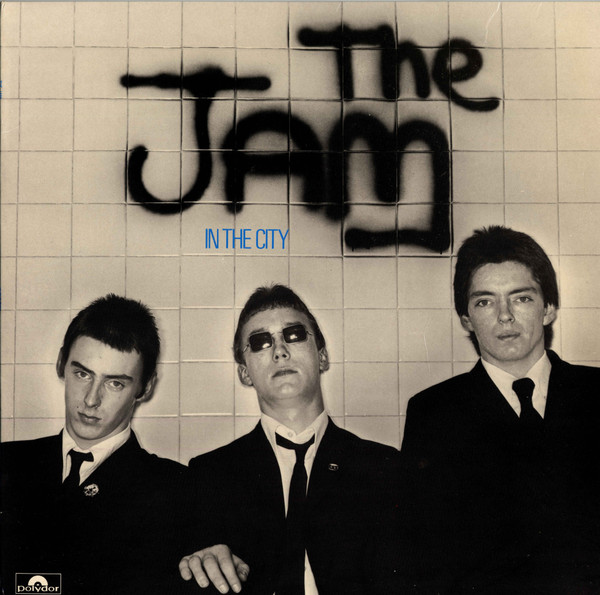
The answer begins with a name: Paul Weller. In 1977, while punk was setting Britain ablaze, a band from Woking led by an eighteen-year-old obsessed with the 1965 Who released their first album. They were called The Jam, the album was In the City, and amid the punk fury of the moment they did something nobody else did: they played Mod. Narrow jackets, button-down shirts, polished shoes, Rickenbackers, and a sound that came straight from My Generation.
Weller was eighteen in 1977 but his heart was in 1965. He had grown up listening to the Who and Small Faces records his father kept in the house. When punk arrived, Weller took its energy and attitude — the DIY, the anger, the speed — but grafted it onto Mod roots instead of the Fifties rock'n'roll the Sex Pistols drew on. The Jam were punk in energy and Mod in aesthetic and musical roots. They were the bridge between two generations.
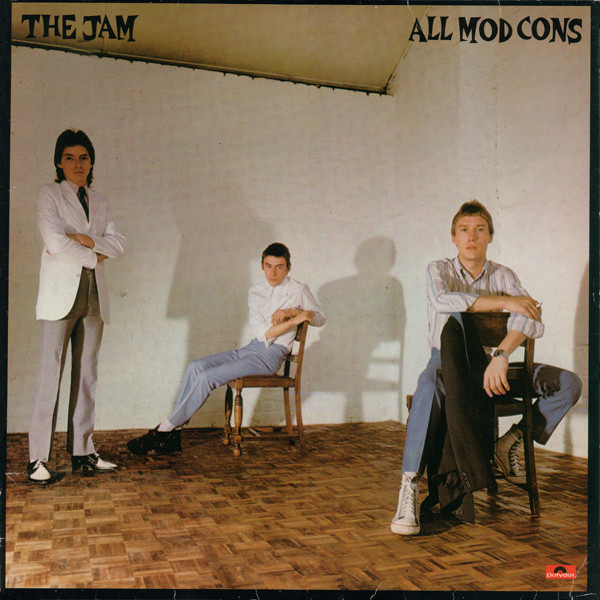
All Mod Cons from 1978 — the title is a play on "Mod" and the English estate-agent phrase "all modern conveniences" — is their masterpiece and one of the best Mod records ever made, despite being recorded twelve years after the end of original Mod. Tracks like 'A' Bomb in Wardour Street and Down in the Tube Station at Midnight proved that Mod could still produce new music — urgent, contemporary, not merely nostalgic.
"I didn't want to bring the Sixties back to life. I wanted to take what was true about the Sixties and use it to talk about 1978."
— Paul Weller
The 1979 revival
The Jam opened the way, but the real Mod revival exploded in 1979, triggered by two near-simultaneous events: the release of the Quadrophenia film and the growing success of The Jam. Suddenly, all over Britain, thousands of kids born in the early Sixties — too young for original Mod — adopted the Mod style. They bought scooters, green parkas, Fred Perry and Ben Sherman shirts, and above all records.
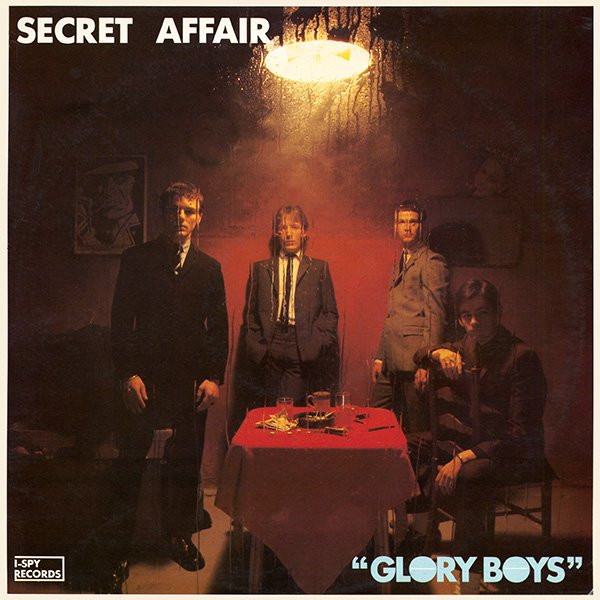
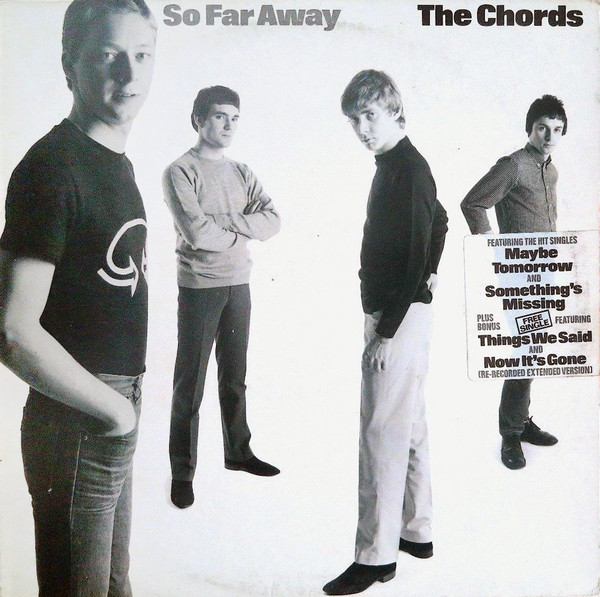
Dozens of Mod revival bands appeared. Secret Affair, with their album Glory Boys (1979), even coined a slogan — "Glory Boys" — to identify the new Mod generation. The Chords, considered by many the best band of the revival after The Jam, released So Far Away (1980), a high-quality Mod power-pop record. The Lambrettas, The Purple Hearts, and The Merton Parkas completed the scene.
The 1979-1981 revival was a significant but short-lived commercial phenomenon. Most of the revival bands had broken up by 1982. But it left something permanent: a new network of collectors, specialist shops, fanzines, and clubs that kept Mod culture alive even after the fashion had passed.
2-Tone: a cousin, not a child
Parallel to the Mod revival, in the same 1979, another phenomenon exploded in Coventry: 2-Tone, the ska revival led by Jerry Dammers' Specials. The two scenes were distinct but intertwined. 2-Tone was not Mod in the strict sense, but it shared with Mod the audience, some of the venues, and above all the love for the Black music of the Sixties. Many kids in 1979 moved fluidly between the two scenes.
From Weller to Britpop
Paul Weller broke up The Jam at the height of their success, in 1982, and founded The Style Council. In the Nineties, Weller began a solo career that transformed him into the "Modfather" — the father of Mod, the reference figure for all subsequent Mod generations. It was precisely his influence that generated the next Mod revival: the Britpop of the Nineties. Oasis, Blur, Ocean Colour Scene brought the Mod aesthetic back to the centre of British pop culture. The Britpop of the Nineties was, to a large extent, a third Mod revival disguised as a new phenomenon.
Why Mod keeps returning
We arrive at the fundamental question. Why does Mod, unlike almost every other subculture of the twentieth century, keep rising again generation after generation?
My answer — after six chapters of this story — is that Mod is not really a fashion. It is an aesthetic of precision applied to daily life. The Mod of the Sixties was not defined by a specific sound or a specific garment, but by an attitude: the obsessive care for detail, the pursuit of quality, the refusal of mediocrity, the conviction that how you dress, what you listen to, how you move are choices that matter.
This is why Mod still speaks to a twenty-year-old in 2026. Not because they want to live in the Sixties, but because the Mod idea — that care, knowledge, and taste are a form of dignity accessible to anyone, regardless of social class — is an idea that does not age. It is the same idea that animates serious vinyl collecting: the conviction that knowing something deeply, choosing it with care, owning it in its best form, is a value in itself.
Mod, ultimately, is a collector's philosophy applied to all of life. And collecting, in turn, is Mod applied to objects. The two things were born together, in those Soho basements of 1958, and they continue to travel together. Every time someone patiently hunts for the original pressing of a soul record, chooses a jacket for how it is cut rather than its brand, listens to a record with attention rather than as background — that person is doing, without knowing it, something profoundly Mod.
The movement's family album is Richard Barnes's Mods!: the photos, the haircuts, the parkas, the scooters shot the way you'd shoot relics.

The pressing record
For the collector, the records of the Mod revival occupy an interesting market position. Original Jam records on Polydor from 1977-1982 are accessible and well-pressed — Polydor was a major with good pressing standards, and the runs were large. An original of All Mod Cons or In the City in good condition doesn't cost prohibitive figures, which makes them excellent entry points for those beginning to collect.
The records of the minor revival bands — Secret Affair on I-Spy, The Chords on Polydor, The Purple Hearts — are more variable. Some singles and albums of the 1979-1981 revival have become sought-after precisely because the runs were smaller. For the collector wanting to build a Mod revival collection, the general rule applies: always verify the original period pressing, check condition, and use Popsike for real prices.
And so the Mod Story closes. Six chapters, sixty years, from a Soho basement in 1958 to a twenty-year-old today hunting for a soul 45 in a record fair. Mod was born as a way of listening to music, of dressing, of being in the world with precision and care. It has died and risen countless times because that idea — dignity through taste and knowledge — never dies. Every record you hunt, every pressing you learn to recognise, every listen you give with real attention: it is the same flame lit in Soho seventy years ago, still passing from hand to hand.
↑ READ THE MOD STORY FROM THE BEGINNING