Quadrophenia, the posthumous opera
The Who tell the story of 1965 Mod from an already-nostalgic distance. The rock opera that turned a subculture into myth.
By 1973 Mod had been over for years. The subculture that set London ablaze between 1962 and 1966 had dissolved into psychedelia, progressive rock, the fashions that followed it. The kids who danced at the Marquee at eighteen were now twenty-eight, working, raising children. And yet it is precisely in 1973 that the most important document ever dedicated to Mod appears: Quadrophenia by The Who. Not a record of the Mod period, but a record about the Mod period, written by someone who had lived it and now looked back from a distance, with the melancholy clarity of one who knows that something irreplaceable has passed.
Pete Townshend looks back
In 1973 Pete Townshend is twenty-eight and The Who are one of the biggest bands in the world. Tommy (1969) had transformed them from a Mod group into a global phenomenon, the rock opera par excellence, taken to the stage and later to cinema. Who's Next (1971) gave them some of their most celebrated songs. Townshend could continue down that road, making albums of majestic symphonic rock. Instead he goes back. Back to 1965, the year The Who were a Mod band playing the Marquee for kids dressed immaculately and full of amphetamines.
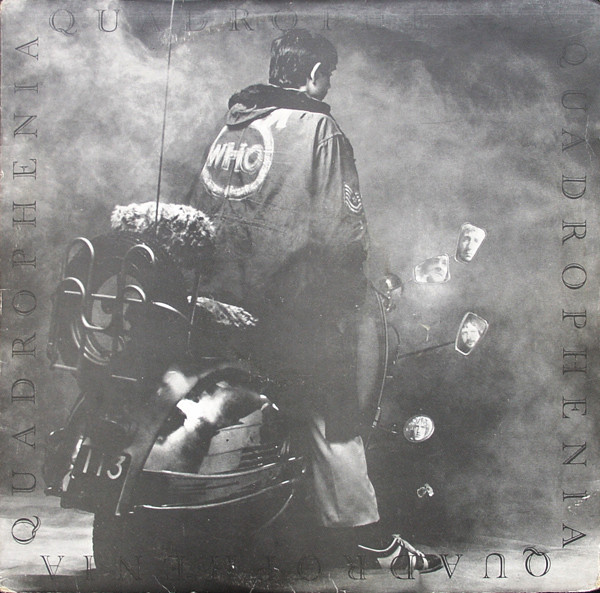
Quadrophenia is a double album released in October 1973 on Track Records, The Who's label. It tells a precise story: Jimmy, a young London Mod of 1965, works in a post office, lives with parents who don't understand him, takes pills, rides a Lambretta, buys soul records, dresses impeccably. His life is a series of disappointments — work is alienating, his girlfriend leaves him, his friends prove false, the Mod hero he admired turns out to be a hotel bellboy. Jimmy goes to Brighton, where he had lived the highest moment of his life — the Mods versus Rockers clashes of 1964 — and discovers that you cannot go back.
The title is wordplay: quadrophenia, a "schizophrenia in four parts." Jimmy has four personalities, and each of the four corresponds to one of the four members of The Who — a musical theme for each, woven throughout the record. It is an ambitious compositional idea, almost Wagnerian: leitmotifs representing the parts of the soul of a 1965 Mod kid.
"Quadrophenia was about a boy whose life made no sense, who looked to a subculture for the meaning life wasn't giving him. It's the story of all of us."
— Pete Townshend
Brighton, 1964: the founding myth
At the heart of Quadrophenia is a real event: the clashes between Mods and Rockers on the beaches of Brighton during the bank holiday weekend of May 1964. For two days, hundreds of young Mods on scooters and Rockers on motorcycles confronted each other on England's south coast, in clashes the British press inflated into a national moral panic. The papers spoke of "invasion," of "thugs," of a "threat to civilisation." In reality the clashes were more spectacle than genuine violence — few serious injuries, many arrests for breach of the peace — but the image of the Mods as an urban tribe at ritual war entered the British collective imagination and never left it.
Townshend takes that event and transforms it into the mythic moment of Jimmy's life. At Brighton, during the clashes, Jimmy had felt part of something, alive, important. To return there in the record's finale — and find the beach empty, the hero fallen, the myth deflated — is the emotional core of Quadrophenia. The record does not celebrate Mod: it makes an elegy of it. It tells what happens to a subculture when it ends, and what happens to the kids who believed in it.
The sonic dimension
Musically, Quadrophenia is The Who's most ambitious record. Townshend uses synthesizers, recordings of sea waves and rain, horn sections, complex overdubs. It is symphonic rock, far removed from the spartan fury of My Generation in 1965. And yet the subject is precisely that fury, that spartan Mod simplicity. There is a powerful productive tension in the record: the form is that of the majestic rock of the 1970s, the content is nostalgia for the minimalist Mod of the 1960s.
Pieces like The Real Me, 5:15, Love, Reign o'er Me, I've Had Enough are among Townshend's most complex and powerful compositions. Love, Reign o'er Me in particular, with its vocal explosion from Roger Daltrey, is one of the highest moments in all of 1970s rock. It is the moment when Jimmy, on the cliff at Brighton, in the rain, hits bottom and perhaps — the record leaves the ending ambiguous — finds a form of redemption.
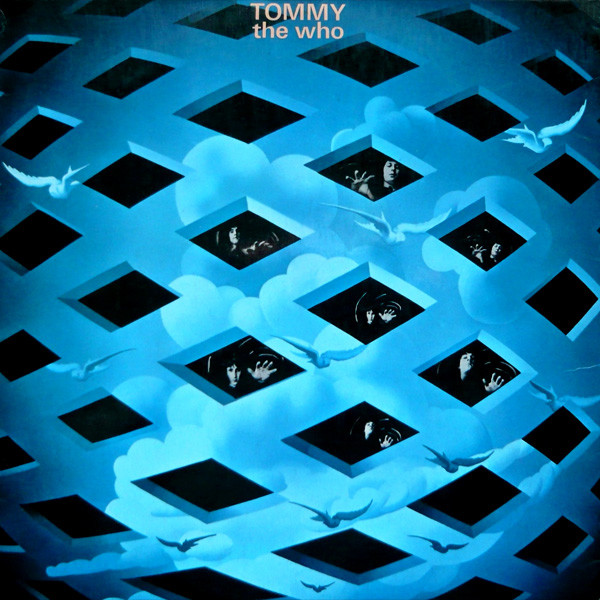
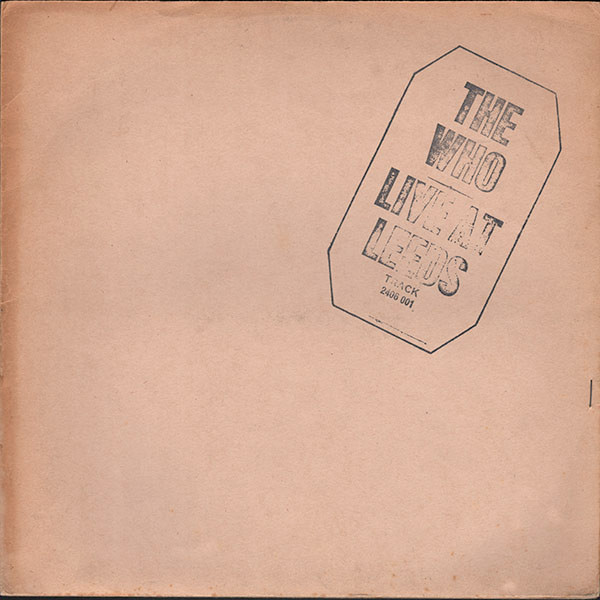
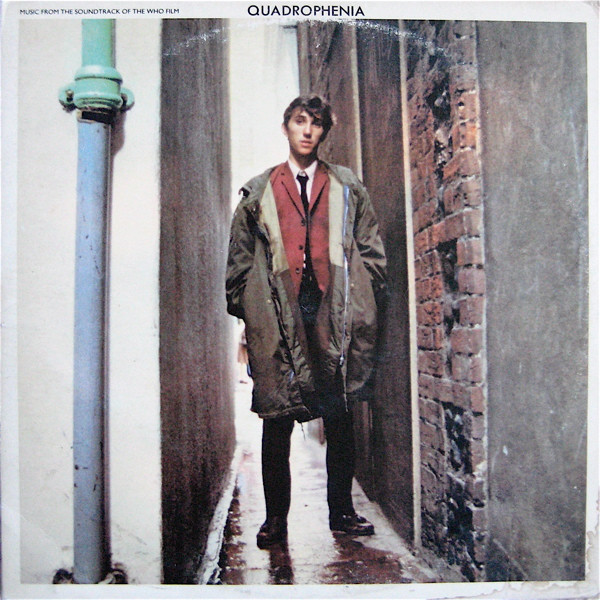
The 1979 film and the second Mod
In 1979, Quadrophenia becomes a film, directed by Franc Roddam, with Phil Daniels as Jimmy and a young Sting as the Ace Face, the Mod hero who turns out to be a bellboy. The film arrives at a perfect moment: Britain is living through a Mod revival, and Quadrophenia becomes its visual manifesto. An entire new generation of British kids discovers Mod through the 1979 film — not having lived the Sixties, they reinvent it on the basis of what they see on screen.
This is an important point for understanding Mod as a recurring phenomenon: most of the "Mods" in history did not live the original Mod of the Sixties. They discovered it afterwards, through documents — records, films, photographs, books. Mod is a subculture transmitted through mediation, through cultural objects. Quadrophenia, the 1973 record and the 1979 film, is the foremost of these objects. It is the document that taught Mod to those who weren't there.
The film's soundtrack, released in 1979 on Polydor, is a double album combining Who tracks with soul and R&B classics of the original Mod period — James Brown, the Ronettes, the Chiffons, Booker T & the MG's. For many kids in 1979, that soundtrack was the first introduction to the Black American music that had fed original Mod. A 1979 record teaching the music of 1964. Cultural transmission in action.
The pressing record
For the collector, Quadrophenia exists in numerous editions. The original 1973 UK pressing on Track Records (2657 013) is a double LP with a gatefold sleeve and an internal black-and-white photographic booklet telling Jimmy's story in images — an element that makes complete copies with intact booklet particularly sought-after.
The booklet is the critical point for the collector: many surviving copies have the booklet damaged, missing, or detached. An original 1973 Track copy complete with booklet in good condition is worth significantly more than a copy without. Always verify the presence and condition of the booklet before purchase.
There are also contemporary American pressings (MCA), later pressings, and numerous modern reissues — including audiophile heavyweight vinyl editions in the 2010s and 2020s. In general the complete original UK pressing is one of the most sought-after Who records alongside Tommy and Live at Leeds.
Quadrophenia is the elegy of Mod, but elegies have a curious effect: instead of closing a story, they sometimes reopen it. The 1979 film didn't celebrate a dead Mod — it ignited a new one. All over Britain, kids born too late for the Sixties started buying scooters, parkas, soul records. Mod was about to return. And with it would come a new generation of bands — The Jam, Secret Affair, The Chords — who would rewrite the story once again.