Go! Beat · 1994
Bristol's trip-hop masterpiece — Beth Gibbons' voice like film noir, the deep bass, a city's melancholy turned into a record.
Dummy is the soundtrack of my London years, in the late nineties. It's the music that went with me through the streets of London, at the wheel of my car, the deep bass and that seductive voice in the background. I didn't listen to it as a record to be analysed: I lived it as the air of a city at a certain moment in my life. So I find it hard to be cold about it — but I'll try.
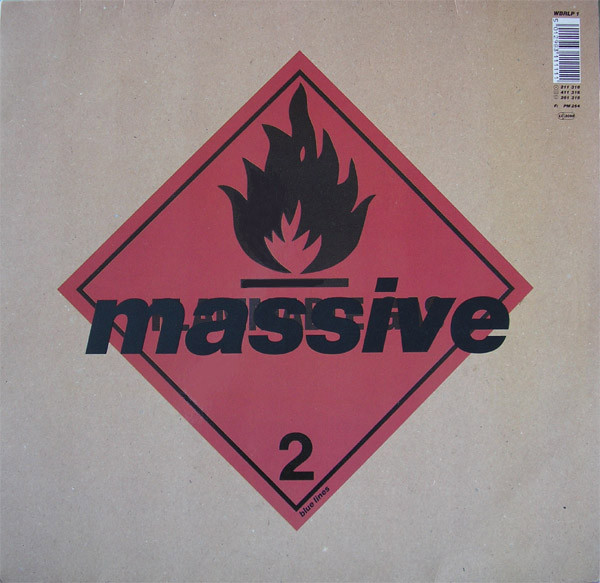
Released in 1994, Dummy is Portishead's debut and, alongside Massive Attack's Blue Lines, the record that defined trip-hop and the "Bristol sound." Geoff Barrow builds the beats like a hip-hop producer raised on film soundtracks; Adrian Utley adds a spy-movie guitar, all tremolo and tension; and over it all is Beth Gibbons, one of the most harrowing voices of the decade, cracked and bare, a torch singer fallen into a nightmare. The result is cinema for the ears: noir, slow, drugged with melancholy.
Its construction is the magic. Barrow didn't sample other people's records the way almost everyone did: he cut his own instrumentals to acetate, aged them, scratched them and then sampled those, so the vinyl crackle you hear is put there on purpose — a patina of false age over brand-new music. It's a record obsessed with the past and completely modern at once, and that tension, between the retro scratch and the icy electronics, is exactly what makes it unforgettable.
Nearly every track lands. "Sour Times," with its Lalo Schifrin sample, was the single that carried them everywhere; "Glory Box" closes the album on a bass riff that became legend; "Roads" and "Wandering Star" are the melancholy heart, Gibbons' voice forever on the edge of breaking. In 1995 Dummy won the Mercury Prize, and with it trip-hop stopped being a Bristol-club affair and became a global sound — soon everywhere, from adverts to café tables, though none of the thousand imitators ever had this class.
Set beside Blue Lines, Dummy is the other half of the Bristol sound: if Massive Attack were the sound-system groove, Portishead were the chamber noir, darker, more theatrical, more desperate. Two faces of the same city at the end of the millennium, two records that rewrote what pop could be when it slowed down.
Today it's an undisputed classic, and hearing it carries me back to those streets every time. But even setting my memories aside it remains what it was: one of the essential albums of the nineties, the moment a band from Bristol turned melancholy into architecture.
This page is part of The Grail Hunt's Bristol map: for the city's context see the Bristol page, and the dedicated chapter in the book The Grail Hunt: Europe.
Portishead's trip-hop masterpiece: Beth Gibbons' voice, Geoff Barrow's film-noir beats, Adrian Utley's guitar — Bristol turned into a record, and a Mercury Prize winner. An undisputed classic; the vinyl first pressing (Go! Beat 828 522-1) is the original to hunt.
Dummy on Vinyl — Which Pressing?
I don't own this copy. The pressing score and the guidance below rest on sources — Discogs and pressing documentation — not on an example I've handled. The original is the 1994 European pressing on **Go! Beat, catalogue 828 522-1** (the DFI pressing, made in France), recorded in Bristol. But there's a subtlety here that separates serious collectors: there are two 1994 pressings, and the **true first run** (Discogs calls it "First Press," release r13239116, 22 August 1994) is identified by an **error in the sample credits**, corrected on every later issue: "Biscuit" credited to Warner Chappell/Philips, and "Glory Box" credited to "Isaac Moods" instead of "Ike's Rap II." That error is the decisive tell: if the credits are correct, you don't have the very first run but the October 1994 version (release r22840), far more common. The other first-press markers: in the dead wax **828-522-1-A-1 DFI 94 6** and **828-522-1-B-1 DFI 94 6**; a semi-gloss sleeve with the central image varnished glossy; typographic quotes around "Dummy" on the label; a spine reading **"GO! BEAT"** (not "GO!! BEAT"); a card inner sleeve with a thumb cut-out; and the label note "Marketed in France by Barclay and in Germany by Metronome." The trap is the same catalogue, 828 522-1, reappearing on copies that aren't the first pressing. The **2017 official reissues** give themselves away in the run-out (Pallas "…-2348- Rc," Abbey Road "MILES. ABBEY ROAD. ROOM 30."). And **at least five bootlegs** circulate, including a 2020 blue-marbled vinyl and a copy with a matte sleeve lacking the glossy image and a white inner. The catalogue alone isn't enough: it's the credits error and the physical signs that count. On price, the Discogs sales history of the true first press (r13239116) shows a median around **£130**, ranging from roughly £37 to £215 depending on condition; the most recent sale was on 1 October 2026, a sign that — unlike some grails — this first run changes hands regularly. It remains attainable for what it is: the genuine First Press of a nineties classic.
Groov-illa participates in the Amazon and eBay Partner Network affiliate programmes. Purchasing through our links may earn us a small commission at no extra cost to you. The Discogs link is not an affiliate link: we earn nothing from it. How we review →
Why is the vinyl first pressing sought after if the album sold millions?
Because those millions were almost all CDs: Dummy is a compact-disc-era record, and the original vinyl run (Go! Beat 828 522-1, 1994) was far smaller. It's the vinyl, not the album itself, that's scarce — which is why the first pressing is the object collectors chase.
How do I tell the first pressing from the reissues?
The true first run (Discogs "First Press," r13239116, August 1994) is identified by an error in the sample credits: 'Biscuit' credited to Warner Chappell/Philips and 'Glory Box' to 'Isaac Moods' instead of 'Ike's Rap II.' If the credits are correct, it's the October 1994 version (r22840), far more common. Other signs: run-out '828-522-1-A-1 DFI 94 6,' a semi-gloss sleeve with a glossy central image, a 'GO! BEAT' spine, and a card inner with a thumb cut-out. Our pressing verdict rests on sources, not ownership.
What is the 'Bristol sound'?
It's the trip-hop that grew in Bristol across the late eighties and nineties: slowed-down hip-hop, dub bass, soul and a nocturnal mood. Dummy and Massive Attack's Blue Lines are its two pillars — the first more noir and theatrical, the second more sound-system groove.
What's an original worth?
The Discogs sales history of the true first press (r13239116) shows a median around £130, from roughly £37 to £215 depending on condition (last sold 1 October 2026). Be careful not to confuse the true 1994 first run with the corrected 1994 version, with the 2017 official reissues (same catalogue) or with the bootlegs: all carry, or may carry, 828 522-1.