The record that made Italian prog exportable: the sound of Impressioni di Settembre, and why collectors chase the 1972 Numero Uno first pressing.
Ninety seconds into Impressioni di Settembre, a Moog synthesizer plays a melody a good part of Italy can still hum by heart. That single line — riding over Mauro Pagani's flute and violin, over a rhythm section that pushes like a British rock band — is as good a summary as any of what Italian prog was about to become: folk tradition and conservatory music and rock, fused into something none of the English bands had quite managed. In January 1972 Premiata Forneria Marconi released their debut, and a week later Storia di un Minuto sat at the top of the Italian album chart — the first record ever to do so in Italy.
The album keeps the promise of that opening. The Introduzione begins with a classical-guitar arpeggio from Franco Mussida that could belong to a nocturne, before the band enters and turns it into rock; È festa is the one everyone knows, a peasant waltz that breaks into a gallop, and the song that would soon reach American radio under another name. But the real heart is in the longer stretches — the tempo shifts of La carrozza di Hans, the suspended close of Grazie davvero. These were five players who had listened hard to King Crimson, ELP and Genesis, and who, instead of copying them, brought something those bands didn't have: an Italian melodic instinct, the song living inside the suite. This isn't English prog sung in Italian. It's a different language, and it starts here.
Impressioni di Settembre is worth pausing on, because a small myth has grown around that ending. The synthesizer is a Moog, and the record is often named among the first to use one so prominently in Italian rock. Take the claim with care: it's attributed more than proven, and the album's own credits list the Moog under two different hands — Flavio Premoli's and drummer Franz Di Cioccio's. Who exactly played that melody is, strictly, an open question. What isn't in doubt is that in 1972, in Italy, almost nobody else had a sound like it.
Then there is the record's second life, and this is the part collectors need to get right. Storia di un Minuto came out on Numero Uno, the label of Mogol and Battisti. When Emerson, Lake & Palmer toured Italy, Greg Lake noticed the band and brought them to Manticore, ELP's London label; former King Crimson lyricist Pete Sinfield wrote the English words and produced. But beware a common mistake: the 1973 international album, Photos of Ghosts, is not the English version of Storia di un Minuto. It draws mainly from the second album, Per un Amico, and takes just one song from the debut — È festa, re-recorded as Celebration — plus a new instrumental, Old Rain. In other words, the songs of Storia di un Minuto don't exist in English: their only home is the 1972 Italian pressing. That's why, with this record, the Numero Uno original has no real export substitute — and why it's a piece worth hunting.
How to identify the 1972 Numero Uno first pressing. The catalogue number is ZSLN 55055. The first run has the gatefold sleeve (Marco Damiani's day/night artwork) and, the decisive tell, the date "1/72" printed at the lower left of the back cover, alongside the printer's line "Campi Grafica – Foligno". First-press labels carry a wide deep groove. The runouts are etched AKAY 26380 / 26381. Gatefolds dated 2/72, 2/74 or 1/75 are later runs; any single (non-gatefold) sleeve is a reissue from 1976 onward. To line the versions up side by side, the Discogs master page is the best tool — we earn nothing by linking it, which is exactly why it's here.
To simply listen, there are good modern reissues — the 2014 Sony 180g and the 2017 De Agostini ("Prog Rock Italiano" series, with booklet) — quiet and enjoyable. On original prices we deal in orders of magnitude, since grail figures move: a clean Numero Uno first, gatefold intact and dated 1/72, sits in the mid-to-upper range of Italian collecting, with the best copies well above. Completeness makes the difference, as always.
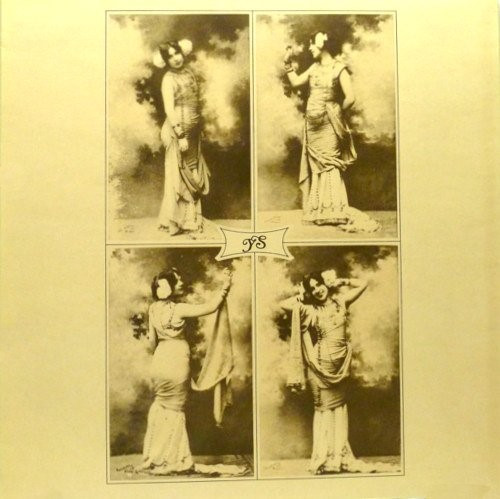
Storia di un Minuto is the first door into the Italian prog island: you enter here, then move on to the harsher grails — Il Balletto di Bronzo's Ys, also among our records of the month in August, and later Semiramis's Dedicato a Frazz and Banco's Darwin!. PFM are also among the bands interviewed in Francesco Mirenzi's Rock progressivo italiano. But the first step is this record: forty minutes that, in 1972, taught Italy that progressive could speak its own language — and told the world it was worth hearing.
The record that made Italian prog exportable: melody, virtuosity and a Moog line that set a standard, with PFM first to top the Italian chart. The 1972 Numero Uno original (ZSLN 55055, gatefold, dated 1/72) is these songs' only home — Photos of Ghosts is not their English version.
Storia di un Minuto on Vinyl — Which Pressing?
cat. ZSLN 55055, gatefold sleeve (Marco Damiani artwork), date "1/72" at the lower left of the back cover, printer "Campi Grafica – Foligno". First-press labels with a wide deep groove. Runouts AKAY 26380 / 26381
gatefolds dated 2/72, 2/74, 1/75 are not the first pressing. Any single (non-gatefold) sleeve is a reissue from 1976 on
Sony 180g (2014) and De Agostini (2017, "Prog Rock Italiano" series, with booklet): modern and quiet, affordable next to an original but not an impulse buy. Always compare versions on the Discogs master page before buying
orders of magnitude, not fixed figures — a clean, complete Numero Uno first sits in the mid-to-upper range of Italian collecting, with the best copies above. An intact gatefold and the 1/72 date make the difference
Which pressing? Check it on Discogs ↗
Groov-illa participates in the Amazon and eBay Partner Network affiliate programmes. Purchasing through my links may earn me a small commission at no extra cost to you. The Discogs link is not an affiliate link: I earn nothing from it. How we review →
How do I identify the 1972 Numero Uno first pressing of Storia di un Minuto?
The catalogue number is ZSLN 55055. The first run has the gatefold sleeve (Marco Damiani's artwork) and, the decisive tell, the date '1/72' printed at the lower left of the back cover, with the printer line 'Campi Grafica – Foligno'. The labels carry a wide deep groove, and the runouts read AKAY 26380 / 26381. Gatefolds dated 2/72, 2/74 or 1/75 are later runs; any single (non-gatefold) sleeve is a reissue from 1976 onward.
Is Photos of Ghosts the English version of Storia di un Minuto?
No — and it's a common mix-up. The 1973 Manticore album draws mainly from the second record, Per un Amico; from Storia di un Minuto it takes only one song, È festa, re-recorded in English as Celebration, plus the new instrumental Old Rain, with lyrics by Pete Sinfield. The songs of Storia di un Minuto therefore have no English-language version: their only home is the 1972 Italian Numero Uno pressing.
Who plays the Moog on Impressioni di Settembre, and is it really the first in Italian rock?
The synthesizer is a Moog, and on the album it's credited to two musicians: Flavio Premoli and drummer Franz Di Cioccio. Who exactly played the famous closing line remains an open question. The claim that it's the 'first prominent Moog in Italian rock' should also be taken with care: it's attributed more than proven. What's certain is that in 1972, in Italy, that sound was a rarity.