Numero Uno · 1972
PFM's peak and one of the high points of Italian prog — melody, Mellotron and Pagani's flute, the 1972 that took Italy into the progressive world.
I came to prog through Genesis, whom I loved. Then, reading the Italian magazine Ciao 2001, I found my way to PFM: I started with Storia di un Minuto and kept going. For me that sound is bound up with the 1980s and my youth — even though the record is older — and the tie comes back intact every time I put it on.
Per un Amico, released in 1972, is PFM's second album and, for many, their peak: the record where the Milan band brings into focus everything the debut had promised. There's the formal ambition of progressive rock — long pieces built like suites, shifting scene after scene — but above all there's an Italian melody, warm and singable, that no English group had. Flavio Premoli's Mellotron builds cathedrals of sound; Mauro Pagani's flute and violin open Mediterranean windows; Franco Mussida on guitar, Franz Di Cioccio on drums and Giorgio Piazza on bass hold virtuosity and song together.
"Appena un po'" alone, opening the record, tells you everything: a theme that rises, pauses, sets off again, leading the listener by the hand through five minutes that feel like a journey. "Il banchetto" is perhaps the most fully realised piece, a small instrumental drama; "Geranio" closes on an aching note. It's prog, but neither cold nor cerebral: it's prog that sings, and that is Italy's invention within the genre.
Its importance runs beyond the music. It was thanks to records like this that PFM became the only Italian band to truly break through abroad: the material of Per un Amico was largely re-recorded in English, with lyrics by Pete Sinfield, in 1973 as Photos of Ghosts, released on Emerson, Lake & Palmer's Manticore label. For once the flow reversed: not Italy importing English prog, but Italy exporting it.
Set in its island — beside Storia di un Minuto, Il Balletto di Bronzo, Banco — Per un Amico is the melodic, luminous wing of Italian prog, the most accessible and perhaps the best loved. Hearing it now, for me, is to return to that teenage excitement: the discovery that progressive rock didn't only speak English.
This page is part of The Grail Hunt's Milan map: for the city's context see the Milan page, and the dedicated chapter in the book The Grail Hunt: Europe.
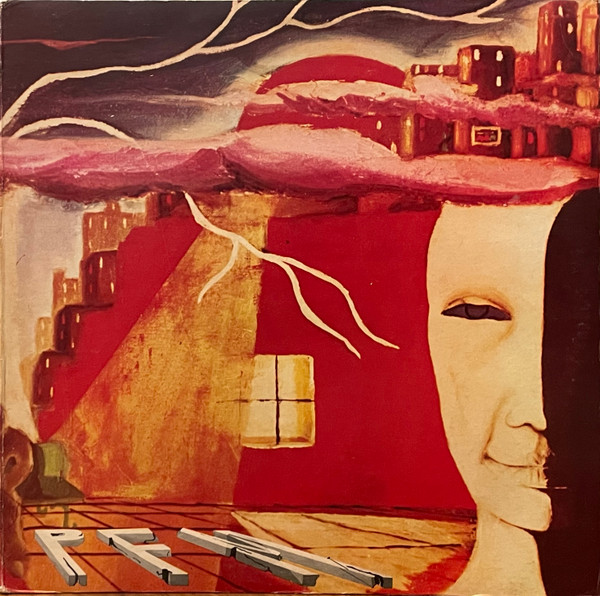
PFM's peak and one of the high points of Italian prog: melody, Mellotron and Pagani's flute, the 1972 that took Italy into the progressive world. The Italian first pressing (Numero Uno DZSLN 55155, gatefold) is the original to hunt — not to be confused with the English Photos of Ghosts.
Per un Amico on Vinyl — Which Pressing?
A preface: I don't own this copy. The pressing score and the guidance below rest on sources — Discogs and pressing documentation — not on an example I've handled.
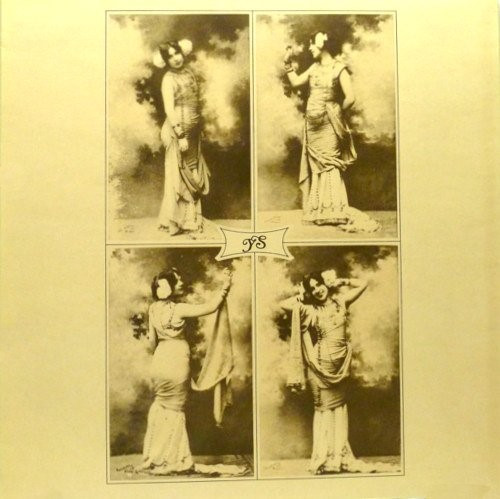
The original is the Italian pressing of November 1972 on Numero Uno, catalogue DZSLN 55155, in a gatefold sleeve (Discogs r1450195, the same release the Grail Hunt links). The decisive tell is a date: bottom-right on the back cover it reads "Campi Grafica – Foligno 11/72." Later runs carry later dates, so that "11/72" is the quickest way to spot the first. The labels have a deep groove on both sides (the deep ring near the spindle hole), and the dead wax runs the matrices BKAY 26942 / BKAY 26943 (there are seven run-out variants, almost all with the "P △" mark).
Even within 1972 there are variants to know: one dated 11/72 but without deep groove (r20448301), one with deep groove but without the printer and date on the cover (r8222485), and a promo copy marked "Campione non Commerciabile" (r14539650).
The real traps come later. A copy with "10/73" on the back is the 1973 second run (still gatefold), not the first. The catalogue ZSLN 55155 without the "D" marks the single-sleeve reissues from 1976 on. Then the modern reissues (Numero Uno 1988, UK 1990, Korea 1994, RCA 2018, Sony 2021 and 2022 numbered). Photos of Ghosts, finally, is the English-language album for abroad: a different record.
On price, the Discogs sales history of the first press (r1450195) shows a median of £55, from roughly £13 to £155 depending on condition; the most recent sale was on 27 September 2026. An attainable grail that changes hands regularly, for one of the best-loved records in Italian prog.
Groov-illa participates in the Amazon and eBay Partner Network affiliate programmes. Purchasing through our links may earn us a small commission at no extra cost to you. The Discogs link is not an affiliate link: we earn nothing from it. How we review →
What is the original Per un Amico?
The Italian pressing of November 1972 on Numero Uno, catalogue DZSLN 55155, in a gatefold sleeve (Discogs r1450195). The decisive tell is the date 'Campi Grafica – Foligno 11/72' bottom-right on the back: later runs carry later dates. Also: a deep groove on both labels and matrices BKAY 26942 / BKAY 26943 (with the 'P △' mark). Beware '10/73' (the 1973 second run) and the catalogue ZSLN 55155 without the 'D' (single-sleeve reissues from 1976). Our pressing verdict rests on sources, not ownership.
Are Per un Amico and Photos of Ghosts the same record?
No. Photos of Ghosts (1973, Manticore) is the English-language version, with lyrics by Pete Sinfield, which reworks much of Per un Amico's material but is a different and later record. The collectible original is the 1972 Italian pressing, Numero Uno DZSLN 55155, not the English edition.
Why does Per un Amico matter so much?
Because it's one of the peaks of Italian prog and the record with which PFM became the only Italian band to truly break abroad. It joins the formal ambition of progressive rock to a warm, singable Italian melody: it's prog that sings, Italy's invention within the genre, alongside Storia di un Minuto, Il Balletto di Bronzo and Banco.
What's an original worth?
The Discogs sales history of the first press (r1450195) shows a median of £55, from roughly £13 to £155 depending on condition (last sold 27 September 2026). Be careful not to confuse the Italian first pressing (dated 11/72, deep groove) with the 1973 second run (10/73), the ZSLN 55155 reissues without the 'D,' or the English Photos of Ghosts.