Manchester and its record shops
Episode 7 of the Vinyl Cities series
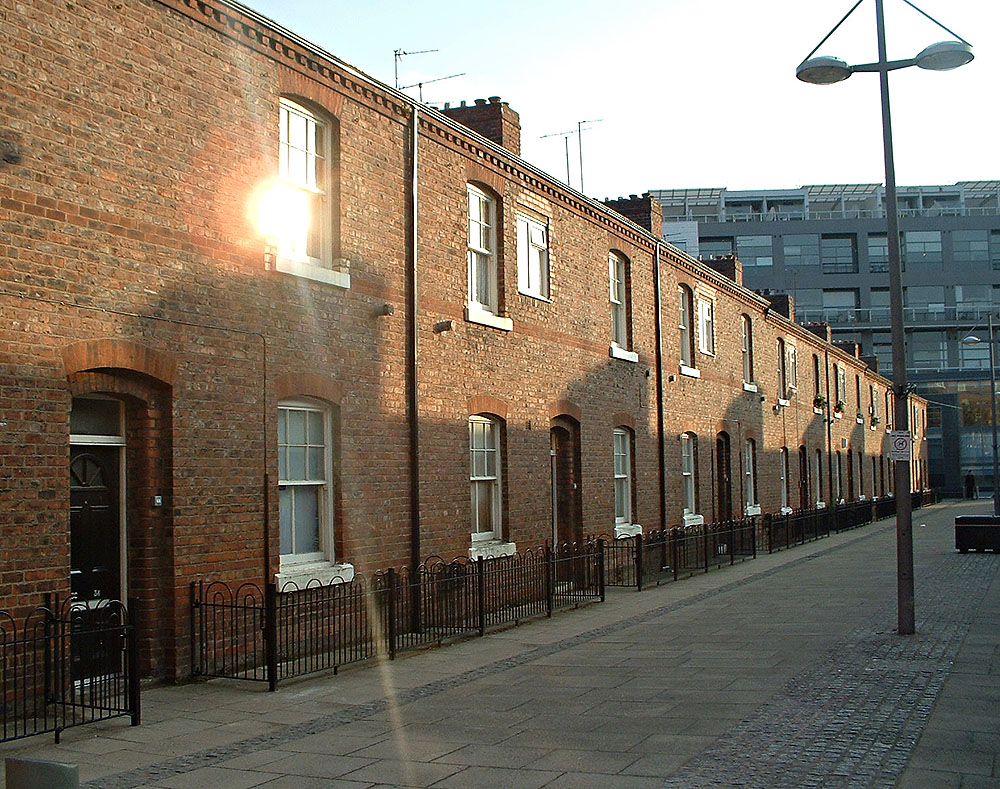
The warehouses came first. Walk the Northern Quarter and you are walking the old rag trade — dark brick, tall windows, iron stairs bolted to the outside of buildings designed to hold cloth by the tonne. Manchester filled those rooms with labels, studios, clubs and record shops, and it did so with the same industrial logic it once applied to cotton. Independence here was never a pose. It was a supply chain.
There is a lazy way to write about this city, and it is the roll call: Joy Division, the Smiths, the Happy Mondays, Oasis, as though Manchester were simply a town with unusually good luck in bands. It wasn't luck. What separates Manchester from every other British city is not the groups. It is the machinery that produced them on site.
At a time when the British record industry meant a few streets in London and nothing else, something unusual happened up here. Instead of taking the train south to be signed, a section of the city built its own labels, its own studios, its own rehearsal rooms, its own music press and its own shops. Not out of civic pride — out of arithmetic. If the centre is two hundred miles away and won't return your calls, you build a centre.
That thread is still walkable. The Northern Quarter is where the layers remain legible: the self-released punk of 1977, the post-punk that followed, the rave and Madchester years, and the crate-digging of now, all compressed into a handful of streets you can cross in fifteen minutes. Then there is the city beyond the centre — Chorlton, Prestwich — and there is Stockport, which is not Manchester, but which has quietly become a stop the serious digger builds into the trip.
We are not retelling the Factory story here. It has its own space in our reportage on design as manifesto, and it deserves the room. This is the map of the shops.
A Brief History of the Scene
The date everyone cites is 4 June 1976, when the Sex Pistols played the Lesser Free Trade Hall to an audience that was absurdly small and extraordinarily well chosen. But for our purposes the gig is not the point. Who booked it is. Two students from Bolton, Howard Devoto and Pete Shelley, wanted to see the band, found nobody in Manchester willing to put them on, and hired the room themselves. Shortly afterwards they became Buzzcocks.
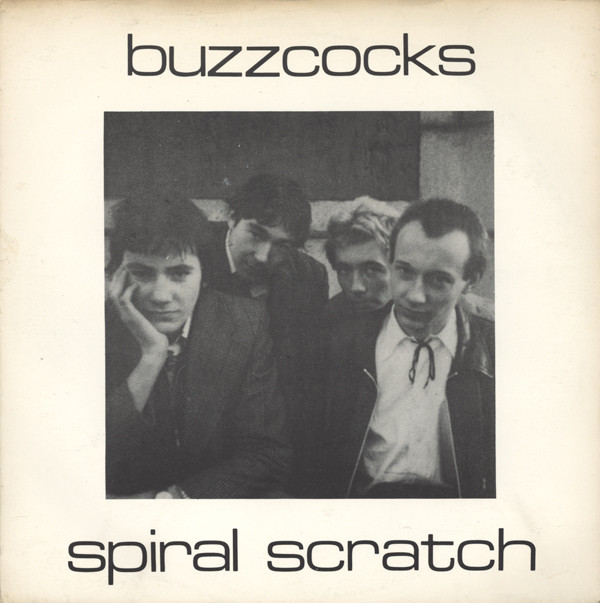
Seven months later, in January 1977, those same Buzzcocks released Spiral Scratch on borrowed money, on a label invented for the occasion — New Hormones, run by their manager Richard Boon. It was cut in a few hours at Indigo Sound Studios in Manchester, with Martin Hannett behind the desk under the name Martin Zero. It was not the first British punk record, but it was something more useful: practical, repeatable proof that you could do the whole thing yourself. Record it, press it, distribute it, sell it. The sleeve said as much before the needle dropped — a black-and-white snapshot and artwork made at the kitchen table.
From there Manchester built a system. Rabid Records, Factory, the T.J. Davidson rehearsal rooms where half the city's bands worked, the studios — Strawberry in Stockport, where Unknown Pleasures took its shape — the fanzines, the musicians' collectives, the local radio. Every link in the chain was in the city, and every link was run by someone who had come up through the scene. That is what we mean by industrialised independence: not the craft of one band pressing its own single, but an entire alternative apparatus, built in the provinces because the provinces were the only place it could be built.
The shops grew inside that apparatus, and some were part of it outright. Eastern Bloc, opened in the mid-eighties, was never only a retailer: it was the point where the electronic music arriving from Detroit and Chicago entered the city, and people who passed through it went on to make that music rather than just sell it. Piccadilly Records, trading since the late seventies, has crossed punk, acid house, Madchester and everything since while remaining the city's compass. These are shops with a position in the local history, not merely an address.
Then there are the ruins, which Manchester carries well. The Haçienda closed in 1997 and was demolished; flats now stand on the site on Whitworth Street West and have taken the name. It is not a stop. It is a headstone with an entryphone. Strawberry Studios in Stockport is no longer a studio but a building the town recognises as heritage. Manchester has stopped pretending those places still exist, and it is the healthier for it — what is still alive is elsewhere, and it has a shopfront.
The Geography Today: Where to Go
Manchester has the advantage of compactness. The bulk of the shops sit in a small grid of streets north-east of Piccadilly Gardens, and the lot can be walked in a full morning. The rest — the part that separates the tourist from the digger — needs a tram or a train, and repays the effort.
Opening hours checked in October 2026: before you go, check the shop's website or social media.
The Northern Quarter, a vinyl district
The Northern Quarter is the old garment district and it looks it: converted Victorian warehouses, external iron staircases, hand-painted signage above the doors. In the nineties much of it was still half-empty, which is precisely why the record shops, tattoo studios and cafés ended up here — cheap rent, the usual story. Today it is Manchester's vinyl district in the most literal sense: four or five serious shopfronts within three hundred metres, with specialisms that barely overlap.
Piccadilly Records (53 Oldham Street, M1 1JR) is the compulsory first stop, and for a good number of people it is simply the best record shop in Britain outside London. New releases and reissues, with curation you can feel: indie, electronica, contemporary jazz, catalogue reissues chosen one at a time. The handwritten cards tucked under the sleeves — a few lines of staff comment — are a local institution and the reason you always leave with something you did not come in for. This is the shop that takes the city's pulse.
Vinyl Exchange (18 Oldham Street, M1 1JN), a few doors along, is the other half of the sky: the largest second-hand shop in the North West, across two floors, with stock running from two-pound pop to rarities and promos. It rewards time and punishes rigid expectations, because the turnover is high and what is there today will not be there in a fortnight. Ground floor for the bulk, downstairs for the material that needs patience. If you have one day in Manchester and one shop to dig, dig this one.
Eastern Bloc (5A Stevenson Square, M1 1DN) carries the heaviest pedigree in the city on the electronic side. Dance, house, techno, drum'n'bass, a counter that knows what it is talking about, and a history braided into forty years of British club music. It is now café and bar as well, which means you can spend an hour in the racks and stay for a coffee while someone plays — a format Manchester took to earlier than most.
Empire Exchange (1 Newton Street, M1 1HW, open daily 10am-6pm) is not really a record shop, which is exactly why it is worth an hour. Memorabilia, print, posters, objects, and among them a substantial quantity of second-hand vinyl. It is a disordered time capsule of the kind where the value lies in volume and chance rather than selection. Do not arrive with a want-list. Arrive with time and a willingness to rummage.
Within the same few streets, two more addresses worth having. Vinyl Revival (5 Hilton Street, M4 1LP) leans hard into Mancunian heritage — the place to look for the city's own pressings. Clampdown Records (9-11 Paton Street, M1 2BA), on the edge of the quarter, is pure crate-digging: plenty of out-of-print stock and the attitude of a workshop rather than a boutique.
And then there's the shop almost everyone walks straight past: Vinyl Resting Place, on the third floor of Afflecks (52 Church Street), which you have to go looking for inside the maze. Every genre and format, cassettes included, at prices below the street-level shops, with a Japanese city pop section. The 7-inch crates tucked under the racks are the ones nobody looks at, and that's where the finds hide (Mon-Fri 10:30-6, Sat 10-6).
Beyond the centre: Chorlton, Burnage, Prestwich, Bury, Stretford, Stockport
A geographical clarification the travel sites always skip. Stockport, Prestwich and Altrincham are not Manchester. They are separate towns within the wider conurbation, with their own councils and their own character. They are easy to reach, but listing them alongside the Northern Quarter as though they were neighbourhoods produces itineraries that cannot be walked. Treat them as what they are: half-day trips.
Kingbee Records (519 Wilbraham Road, M21 0UF, Chorlton) is the digger's shop. Chorlton is south, reachable by tram, and Kingbee is the sort of place where time behaves oddly: Northern Soul, funk, rock, boxes under the racks, prices that reward anyone who knows what they are looking at. It is closed on Sundays, which is the first thing to establish before booking the trip. For anyone chasing American soul on period British pressings, it is not optional.
Beatin' Rhythm (Bank House Studios, Warwick Street, Prestwich, M25 3HN) is specialism taken to its limit: Northern Soul and rare soul, for buyers who know exactly what they want. Prestwich is north, on the Bury tram line. Contact them before travelling — this is not a shop to stumble into, and it is better to arrive knowing the door is open.
Further south, in Burnage on the Didsbury border, Sifters Records (177 Fog Lane) is Manchester's most famous record shop: Pete Howard has run it since April 1977, and he is the "Mr Sifter" of Oasis's Shakermaker — the Gallaghers bought records here as teenagers. Affordable second-hand in every genre, more for browsing and nostalgia than for grails, with the shortest hours in the city: 1-5:30pm, closed Wednesday and Sunday.
On the tram line past Prestwich, in Bury, Wax and Beans (16 Market Street) is a record shop and café in a listed building, with in-store gigs: well-chosen new and used stock, and the way to turn the Prestwich soul trip into a full day. It's open on Sundays too (10-4).
West, in Stretford, Fountain Records (7 King Street) opened in 2015 as Reel Around the Fountain Records, named after a Smiths song, inside the Stretford Arndale; it later moved to King Street and shortened the name. Indie and guitars, first pressings, and a strong section of Manchester bands.
In Stockport, ten minutes by train from Piccadilly, there are two reasons to get off. All Night Flight (10 Mealhouse Brow, SK1 1JP) is devoted to left-field and experimental music, with a selection that resembles nothing else in the area; it opens Tuesday to Saturday, 11am to 5pm. SK1 Records (17 Little Underbank, SK1 1LA) combines shop and café in the old, steeply stacked part of the town centre. That two shops of this standard sit outside Manchester says something about city-centre rents — and indeed Tasty Records in Altrincham closed its shopfront in 2026 and moved to online trading only. Read it as a market signal, not a destination.
| Shop | Area | Specialism |
|---|---|---|
| Piccadilly Records | Northern Quarter | New releases and reissues, curated |
| Vinyl Exchange | Northern Quarter | Deep used stock, rarities, promos |
| Eastern Bloc | Northern Quarter | Dance and electronic, café |
| Empire Exchange | City centre | Memorabilia and bulk second-hand |
| Vinyl Revival | Northern Quarter | Mancunian musical heritage |
| Clampdown Records | City centre | Crate-digging, out-of-print |
| Kingbee Records | Chorlton (south) | Northern Soul, funk, rock |
| Beatin' Rhythm | Prestwich (out of town) | Northern Soul and rare soul |
| All Night Flight | Stockport (out of town) | Left-field and experimental |
| SK1 Records | Stockport (out of town) | Shop and café |
| Vinyl Resting Place | Northern Quarter (Afflecks) | Cheap used, 7-inches, city pop | | Sifters Records | Burnage (south) | Affordable used, the Oasis shop | | Wax and Beans | Bury (out of town) | Shop and café, gigs | | Fountain Records | Stretford (out of town) | Indie, first pressings, Manchester bands |
Recommended Itineraries
The Northern Quarter loop (half a day). All on foot, all within three hundred metres. Start at Piccadilly Records to hear what the city is playing now, drop into Vinyl Exchange and give it the time it needs, call at Eastern Bloc and stay at the counter. Empire Exchange if there is an hour and an appetite for rummaging. On the same street, Night & Day Café (26 Oldham Street) is the room that kept the quarter's live circuit standing and remains the right place to break, and Band on the Wall (25 Swan Street) is two minutes away: one of the city's historic venues, fully operational, with programming that ranges far beyond rock.
The digger's day. Morning in the Northern Quarter, tram south to Chorlton for Kingbee in the afternoon, back into town for the evening. This is the route that alternates the curated and the chaotic, and it works best with a want-list in your pocket. Avoid Sundays, when Kingbee is shut.
The Stockport detour (half a day). Train from Manchester Piccadilly, ten minutes. All Night Flight and SK1 Records both sit in the old part of the centre, walkable from one another, among climbing alleys and staircases you do not expect in a North West town. It is the half-day the curious collector does not skip, not least because the Strawberry Studios building stands in the same few streets — no longer a studio, now a piece of the town's heritage, but for anyone who knows how Unknown Pleasures was made it is worth two minutes in front of the façade.
A note for those after places rather than records. Salford Lads Club (Coronation Street, Salford, M5 3SA) opens to visitors on Wednesdays and Saturdays, 11am to 2pm. One correction the internet gets wrong with remarkable consistency: the photograph of the Smiths outside the entrance is not the cover of The Queen Is Dead — the cover is a still of Alain Delon. The Lads Club shot is in the inner gatefold. Salford, incidentally, is a city in its own right: minutes from the centre, but not Manchester.
Practicalities
The centre walks, the rest doesn't. The Northern Quarter, Piccadilly and Stevenson Square are all within walking distance of each other. Chorlton and Prestwich need the Metrolink tram, with zonal fares best bought through the app. Stockport needs a train from Piccadilly, not a tram: this is the most common confusion and the one that costs half an hour on the wrong platform.
Hours are the variable. The larger Northern Quarter shops keep regular, generous hours. The small and the specialist do not. Several of the addresses above run reduced opening, a midweek closing day, or work better by prior contact. Instagram is almost always more current than the website. Kingbee is closed Sundays; All Night Flight runs Tuesday to Saturday, 11am to 5pm.
Record Store Day and weekends. Manchester is one of the British cities where Record Store Day is felt hardest, with serious queues outside Piccadilly Records from early. If the aim is to dig properly, an ordinary Tuesday returns far more than a Saturday in April.
Prices and cash. On second-hand stock Manchester remains cheaper than London for comparable material — one reason London diggers come north. Shops take cards, but at fairs and in some off-shelf negotiations cash still carries its own leverage. On rarities, check Discogs before you ask rather than after.
Rain is a logistical factor. This is not folklore: it rains often, and records are made of cardboard. A stiff carrier or a flat-backed rucksack is minimum equipment for a day of shops. Most places will double-bag, but not all of them.
Frequently Asked Questions
Which area of Manchester has the record shops? The Northern Quarter, the former textile district north-east of Piccadilly Gardens. Within a few hundred metres, between Oldham Street and Stevenson Square, you will find Piccadilly Records, Vinyl Exchange, Eastern Bloc and Vinyl Revival, with Empire Exchange and Clampdown Records on the edges. It is the densest area in the city and entirely walkable.
Where can I buy second-hand and rare vinyl in Manchester? Vinyl Exchange on Oldham Street is the largest second-hand shop in the North West: two floors, running from cheap pop to rarities and promos. Empire Exchange on Newton Street adds memorabilia and a disordered stock worth rummaging. Clampdown Records is the choice for crate-digging and out-of-print material. Second-hand prices in Manchester remain lower than London.
Where can I buy Northern Soul in Manchester? Kingbee Records in Chorlton is the main stop for Northern Soul, funk and rock, and is closed on Sundays. Beatin' Rhythm in Prestwich is the pure Northern Soul and rare soul specialist; contact them before travelling. Both sit outside the city centre and are reached by tram.
Can you visit the Haçienda? No. The Haçienda closed in 1997 and was demolished; flats now occupy the site on Whitworth Street West and have taken its name. It remains a symbolic location in the city's musical history, but it is not a visitable stop and there is nothing to see beyond a residential building.
Can you visit Salford Lads Club? Yes. Salford Lads Club, on Coronation Street in Salford, welcomes visitors on Wednesdays and Saturdays from 11am to 2pm. A useful correction: the famous photograph of the Smiths outside the entrance is not the cover of The Queen Is Dead but an image from the inner gatefold; the cover reproduces a still of Alain Delon.
Is it worth leaving Manchester for records? Yes, given half a day. Stockport, ten minutes by train from Piccadilly, has All Night Flight (left-field and experimental, Tuesday to Saturday, 11am-5pm) and SK1 Records, both in the old part of the centre. Chorlton and Prestwich, reachable by tram, add Kingbee and Beatin' Rhythm. These are separate towns in the conurbation, not Manchester neighbourhoods.
A Record to Hunt for in Manchester
For each episode of this series we close with a record to look for in that city. For Manchester the answer is not Unknown Pleasures — that has its own review and its own place in the Factory story. It is the record that came two years earlier and explains everything after it.
Which pressing? Check it on Discogs ↗
Spiral Scratch is four songs in a little over nine minutes, cut quickly and mixed faster, with Howard Devoto on vocals — he would leave within weeks to form Magazine. Nobody buys it for the sound: Hannett, who would go on to build the sonic grain of Factory, works here on a budget and leaves everything dry and frontal. You buy it for what it represents, and because Boredom, with its two-note solo of magnificent stupidity, is one of the most efficient statements of intent British punk produced.
The grail is the first pressing: New Hormones label, catalogue ORG-1, 1977, sleeve carrying the black-and-white band photograph. Originals are scarce and priced accordingly. Later repressings, including the recent Domino editions, make the record easy to hear today but are a different object — if the distinction is not yet second nature, our guide to originals and reissues sets out what to check before paying.
In Manchester, look where the stock is deep and local: Vinyl Exchange first, Clampdown second, Vinyl Revival third for its declared hometown bias. It is not a record that surfaces weekly. But this is the only city on earth where hunting it also means walking the streets on which it was made.
The Vinyl Cities series continues. Subscribe to the Groov-illa newsletter for upcoming episodes.
If you live in Manchester and have corrections, suggestions or shop recommendations, write to hello@groovilla.com. The guide is updated periodically.