The Precision System
More serious vintage, a separate pre and power amp, BBC monitors: the jump from the minimum system to one you choose piece by piece
This is not the first serious system with a bigger receipt. It is another level of perception, and it is worth saying so at once, because the jump is not in the price but in the manner. The first serious system is the minimum setup that plays for real: warm, welcoming, built around the generous midrange of the NAD, with the cartridge as its only new part. This chain changes register: more serious vintage components, a character of precision rather than warmth, and — for the first time — an amplifier in two boxes, a separate pre and power amp, not a do-everything integrated. That is the point, and let me be plain: it is not "buy pricier components". It is entering the level where the pieces are chosen and matched, not bought in a box. A turntable that never breaks, two Quad units to wire to each other, BBC studio monitors that will not fill a large room but tell the truth about a record. Like every chain in this strand, it is reasoned by the criteria of the method hub, not tested in our living room: the numbers are verified, the listening judgements I report are attributed to those who made them. The band says £1500-2500, and the spread is wide for a precise reason: every box below is chosen in the entry option, and built that way the chain lands between fifteen hundred and two thousand. The headroom up to the ceiling is for anyone who cannot find every piece at the right moment, or who gives in on a single box. Aim for the blue-chip pieces instead and you go past it — and it is another chain, not this one.
1. The four boxes
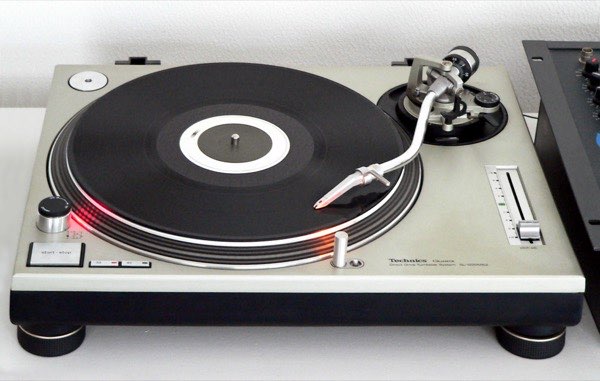 Technics SL-1200 · turntableRead the guide →
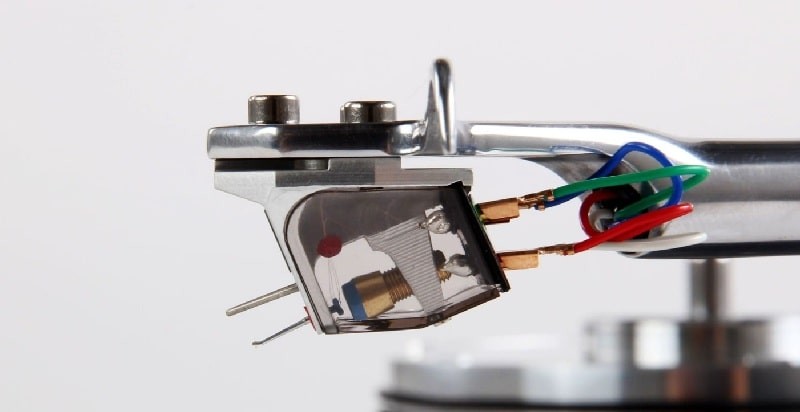 Cartridge · MM or high-output MCMM or MC? →
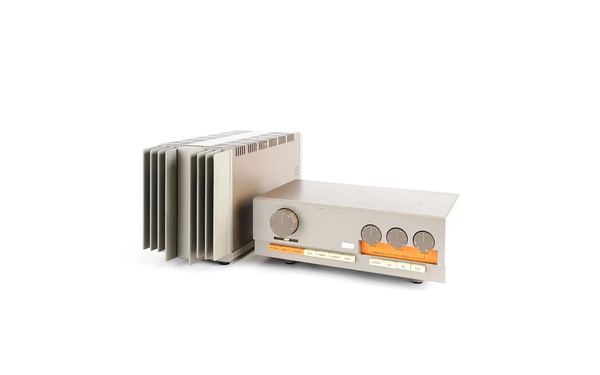 Quad 33 + 303 · pre and powerRead the guide →
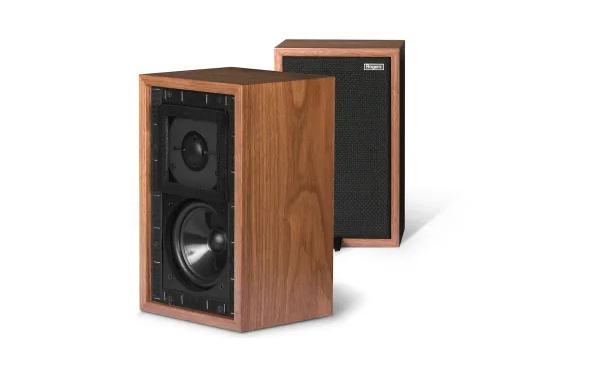 Rogers LS3/5a · speakersRead the guide →
Turntable — Technics SL-1200, vintage version (used, ~£300-500) It is the exact opposite of the Thorens: where the TD 160 is delicate and sprung, the SL-1200 is direct drive and near-indestructible — the turntable that never breaks. Born in 1972, with the famous MK2 from 1979, it stayed in production until 2010: die-cast cabinet, high-torque motor, an S-shaped arm with a universal headshell that takes any cartridge.
One thing must be known before buying, because the market is full of traps: Panasonic put the SL-1200 back into production from 2016, with modern models (the G, GAE, GR, GR2 badges for audiophiles, MK7 and M7 for DJs) that use a new motor and cost far more than the vintage used ones. If you want the original, the search must exclude those badges: an "SL-1200 MK7" or "GR" listing is not the vintage we mean. Be wary, and ask the year. The example to buy, for the sum to work, is the common MK2 that somebody has actually used — not the one that never left its box: the mechanics are the same, the price is not.
Amplification — Quad 33 (pre) + Quad 303 (power) (used, the pair ~£400-600) Here is the chain's real novelty: the amp is not an integrated, it is two separate units. The Quad 33 is the preamplifier, the Quad 303 the power amp — a British pair from 1967, made into the early 1980s, with Peter Walker's "triples" output stage and a character of smooth, transparent midrange, designed to drive Quad's electrostatic speakers. The vintage 303 delivers about 45 watts per channel into 8 ohms: no monster of power, but enough for monitors at sensible levels.
What "separate" means in practice: one more signal cable between pre and power, a larger footprint, and a period detail — the original connections are DIN, not RCA, so adapters may be needed. The advantage, in return, is real: in future you replace one piece at a time — a more powerful amp, or a better pre — without throwing the rest away. On price: the pair at the bottom of the band is the one with a marked fascia and a service either due or just done, not the display-cabinet example. That is the one we are after.
Speakers — Rogers LS3/5a (or another BBC licensee) (used, current licences ~£600-800) They are the most famous miniature studio monitors in history, and one misconception must be cleared up: the LS3/5a is not a Rogers product, it is a BBC standard granted under licence. The BBC never built them: it licensed the specification to several brands — Rogers, Chartwell, Spendor, Audiomaster, Goodmans, Harbeth, KEF — all using the same KEF drivers (B110 woofer, T27 tweeter) in a sealed box of about five litres. "Rogers LS3/5a" is the most famous and most searched version, but on eBay you will find the same model under other brands.
And this is exactly where the sum is decided. There are two impedance versions, 15 ohms (the early ones, from the 1970s to the mid-1980s) and 11 ohms (from the mid-1980s). The most prized by collectors are the early Rogers 15 ohm and the Chartwell, and they go for figures that on their own outweigh the rest of the chain: these are not the target. The pair that fits is from the less celebrated licences and the 11-ohm series — a Goodmans, an Audiomaster, a late Rogers — same BBC design, same drivers, a price from another category. The difference in sound between one licence and another is a matter for collectors; the difference in price is a matter for the budget.
One limit must be stated and it is not negotiable: these are nearfield monitors. They tell the truth about voice and acoustic instruments, but they are not made to fill a large room or to play loud — which is consistent with the precision register of the whole chain.
Cartridge — new (the only part not used, ~£50-100 in the entry option) As in the first serious system, the cartridge is bought new: it is the only component that wears out. The SL-1200's arm has a standard mount, so it takes any cartridge without trouble. But mind a technical detail that decides compatibility: the vintage Quad 33 has an MM-only phono stage. So an MM cartridge works, or a high-output MC that runs into MM inputs. A low-output MC, on the other hand, would need a step-up or a dedicated MC stage, which the period 33 does not have: avoid it, unless you add an external phono stage. The full reasoning on what separates the two families is in the MM or MC guide.
In the entry option a good MM at fifty to a hundred is enough: it is what keeps the total on the floor of the band, and on this chain it is by no means the weak link. If the budget allows, the two natural steps up are an Ortofon 2M Bronze (MM) or a Denon DL-110 (high-output MC, compatible with the Quad's input): they push the sum towards the two-thousand ceiling, and they are the first sensible upgrade once everything else is settled.
2. Why these four together
The hub's logic here all works in one direction: precision, not warmth.
The 303 and the LS3/5a were born for the same purpose — fidelity at sensible levels, the midrange as the priority, the soundstage as the strength. The Quad power amp has the same transparent temperament the BBC monitor demands, and 45 watts are enough because the LS3/5a asks not for quantity but for quality of watts. It is a period pairing, coherent down to the year of birth.
The Technics up front does the dirty work without ever complaining: nailed-on speed, no maintenance, an arm that takes the right cartridge. It is the solid pillar under a system made of delicate pieces like the LS3/5a. And the cartridge chosen for the MM input closes the circle: no low-output MC to spoil compatibility with a preamp from 1967.
Three vintage pieces and one new, each chosen for the other. That is the difference from the first serious system: there you bought four boxes that work; here you match four characters that must speak the same language.
3. What to play with this setup
This chain has a declared character, and as with the first serious system it is best known in advance, so no one is disappointed. It is a system of precision and midrange, not of power and deep bass.
It gives its best on music where voice, timbre and soundstage count: small-group jazz, chamber music, voices and singer-songwriter, acoustic. On a Chet Baker or a Bill Evans record, the LS3/5a and the Quad return the air around the instruments and the naturalness of the voice with a truth that bigger speakers often smear.
Where not to look for it is powerful rock, electronica with deep bass, high volumes in a large room: the LS3/5a is a sealed five-litre box, the 303 makes 45 watts, and neither is built to fill a hall. Asking them for what they cannot give is the one way to end up disappointed.
4. The total
In bands, not in firm figures, because on the used market the price depends on condition, version and how much work has already been done. Every line is the entry option discussed above: that is how the chain starts at fifteen hundred rather than three thousand.
| Component | Band — used |
|---|---|
| Technics SL-1200 vintage (common MK2, pre-2010) | ~£300-500 |
| New MM or high-output MC cartridge (entry option) | ~£50-100 |
| Quad 33 + Quad 303, the pair | ~£400-600 |
| LS3/5a, current licences or 11 ohm | ~£600-800 |
| Total | ~£1,350-2,000 · from ~£1,500 |
The theoretical floor sits below fifteen hundred, but it requires all four boxes to land at the bottom of their band in the same month: that rarely happens. With a single box in the upper half — and it is almost always the speakers — you are between fifteen hundred and two thousand. That is why this chain is called "and up".
The piece that decides everything is the LS3/5a pair: dig your heels in over the early Rogers 15 ohm or the Chartwell and the sum doubles, and it is no longer this chain. As with the Thorens and the NAD, the advice is to buy pieces already serviced with receipts where possible: with vintage, a documented service is what separates a bargain from a problem. The method for doing the full sum — price plus any work — is in the restoration hub.
5. The vintage pitfalls
Compared with the first serious system, the delicate pieces here are more numerous, and the buying traps must be known in advance.
- Technics: the right badge. The risk is buying a modern reissue (G/GR/GR2/MK7) thinking it is vintage. Ask the year and be wary of post-2016 badges.
- Quad: the DINs and the service. The original connections are DIN: budget for adapters to RCA. And a pre and power amp nearly sixty years old almost always want a service — capacitors first. Buy them already sorted, or budget for the work.
- LS3/5a: which version. Check the brand, the impedance (15 or 11 ohms) and the originality of the drivers: they are the most faked and "restored" part of the market. A pair with original KEF drivers and an intact cabinet is worth another pair put back together. And remember that here the less sought-after licence is an advantage, not a fallback.
- The cartridge and the MM input. I have said it, but it is the easiest technical trap: no low-output MC on the vintage Quad 33 without a step-up.
From fifteen hundred to twenty-five hundred on the used market, spent with method, you buy something the first serious system does not give: the move from a system that sounds good to one you choose piece by piece. The Technics is the pillar that never breaks, the Quad 33/303 brings separates and a transparent midrange character, the LS3/5a tell the truth about voice and instruments — as long as you don't ask them for power and large rooms. The figure holds as long as every box stays in the entry option of its band, and the point where the budget breaks is always the same: the prized LS3/5a licences. It is a chain of precision, not of warmth, and it should be matched accordingly: an MM or high-output MC cartridge for the Quad's input, and records made of voices and timbre rather than muscle.
Why a £1500-2500 band rather than a precise figure?
Because three of the four boxes are used, and on the used market a price is a band, not a number. Adding up the entry option for each component — common Technics MK2, standard Quad pair, LS3/5a from a current licence, a new MM cartridge — puts you between 1,350 and 2,000, with the realistic starting point around 1,500. Choose the most sought-after pieces instead, above all the early Rogers 15 ohm, and you go past the ceiling of the band — which makes it another chain.
What is the difference between the vintage Technics SL-1200 and the reissues?
The vintage is the one made from 1972 to 2010 (the most common model is the MK2 from 1979). From 2016 Panasonic put the SL-1200 back into production with new models — G, GAE, GR, GR2 for audiophiles, MK7 and M7 for DJs — which have a different motor and cost far more. When searching for the vintage used one, those badges should be excluded.
Why a separate pre and power amp instead of an integrated?
For two reasons: the transparent character of the Quad 33/303 pair, and the ability to upgrade one piece at a time in future. The downside is practical — one more cable, a larger footprint, and the period DIN connections that may need adapters.
Is the Rogers LS3/5a the only version to look for?
No, and that is why this chain fits the budget. The LS3/5a is a BBC standard made under licence by several brands — Rogers, Chartwell, Spendor, Audiomaster, Goodmans, Harbeth, KEF — all with the same KEF drivers. The early Rogers 15 ohm and the Chartwell are the most prized and the dearest; the less sought-after licences and the 11-ohm series have the same design at a fraction of the price. On eBay, check the brand, the impedance (15 or 11 ohms) and the originality of the drivers.
What cartridge can I fit?
The SL-1200's arm takes any cartridge, but the vintage Quad 33 has an MM-only phono stage. So an MM cartridge, or a high-output MC, which works into MM inputs. In the entry option a good MM at 50-100 is plenty; going up, an Ortofon 2M Bronze or a Denon DL-110. A low-output MC would need an external step-up, which this chain does not provide.