Lisbon and its record shops

Lisbon is the one city in this series where a record can hold three continents at once. Cross the Atlantic in one bin and you'll find a 1973 pressing from colonial Angola next to a Cape Verdean morna singer's forgotten debut and a hand-painted 12" from a housing estate on the edge of town — and in more than one shop here, the person who sold you the third record also helped write it. This isn't a scene assembled by curators after the fact. It's a living, working relationship between a record shop and the music it grew alongside, still going.
A short history: how the scene was born
Angola, Mozambique, Cape Verde, Guinea-Bissau and São Tomé and Príncipe were Portuguese colonies until 1974-75, following a colonial war that began in 1961 and a dictatorship, the Estado Novo, that had suppressed Portugal itself for decades before that. The 1974 Carnation Revolution opened the door to independence, and the wars that followed independence in Angola and Mozambique sent waves of people toward Lisbon — the capital of the country that had once ruled where they were born. The music came with them, in real luggage, and it settled into specific neighbourhoods: Arroios and Anjos first, later the housing estates the city built further out, among them Quinta do Mocho.
It was in Quinta do Mocho, in the 2000s, that a producer known as DJ Nervoso began building a stripped-down, hard-edged electronic style out of Angolan kuduro — vocals gone, tempo pushed hard, made on cracked copies of Fruity Loops. A teenager there, Marlon Silva, better known as DJ Marfox, born in Lisbon to parents from São Tomé and Príncipe, heard it and started making his own. In 2011, the people behind a Lisbon record shop called Flur — José António Moura and Márcio Matos, together with two former cultural programmers and an electronic duo — launched a label built entirely around this sound. They called it Príncipe, and its first release was Marfox's own Eu Sei Quem Sou ("I Know Who I Am"). Within a decade, the label's artists were playing at MoMA in New York and releasing on Warp Records in the UK.
Fado, Lisbon's older genre-mother, runs alongside this story rather than through it. Born in the Alfama in the early nineteenth century, it built its own recording industry from the 1950s through labels like Valentim de Carvalho, Columbia Portugal and Orfeu, with Amália Rodrigues as its defining voice. Her records are genuinely everywhere in this city's shops — common, not rare, and worth knowing that before you go looking for a bargain that turns out to be the norm. A third current, Brazilian samba, MPB and tropicália, threads through the same shelves thanks to a shared language and a genuinely overlapping market.
The geography today: where to go
Arroios, Anjos and Intendente are Lisbon's new record-shop district — three consecutive stops on the metro's Green Line where Tabatô Records holds the deepest African and Brazilian selection in the city, Flur Discos (Príncipe's own co-founder) sells electronic, experimental and world music from inside a covered market, Amor Records doubles as a bar after dark, and Groovie Records stays open later than almost anywhere else for garage, punk and surf. This is also a genuinely multicultural, working neighbourhood — not a district dressed up for effect.
Baixa, Chiado, Bica and Cais do Sodré, further down the same Green Line, hold the city's largest concentration of shops: Louie Louie for alternative rock down a quiet stairway, Sound Club Store and Carpet & Snares Records sharing one small building near the Chiado for collectible and DJ-focused vinyl, and a record-radio-bar hybrid on the Cais do Sodré nightlife strip.
Avenida da Liberdade, west of the centre, is home to Carbono, open since 1983 and the biggest shop in the city, famous for a basement where every record costs one euro.
Alfama and Graça, up on the hill, aren't a shop district at all — they're where the Feira da Ladra flea market happens, every Tuesday and Saturday, the place where lusophone rarities surface unpredictably among the antiques.
Why this scene matters
What makes Lisbon unusual in this series isn't any single genre — it's the fact that the shop and the scene it documents are, in places, the same handful of people. Flur didn't just stock the records that came out of Quinta do Mocho; two of its own team co-founded the label that released them. Príncipe's own monthly night, Noite Príncipe, ran for years at Cais do Sodré's MusicBox club before it closed in 2025; the label's biggest nights now happen at Lux Frágil, a short walk from where you can buy the records the next morning. And the African-lusophone stock filling Tabatô's shelves exists here for a material reason — migration, shared language, a record industry that always published across both sides of the Atlantic — not as an imported curiosity. Digging in Lisbon means walking through the actual social history that produced what you're holding.
Recommended routes
The Arroios afternoon. Start at Tabatô Records on Rua de Arroios, walk two minutes to Amor Records at Anjos, then a few more to Flur Discos inside the Mercado de Arroios. Three shops, three different souls, under half an hour's total walking.
Down the Green Line. Add Groovie Records near Intendente to the above, then ride the metro without a single change straight to Baixa-Chiado for Louie Louie, Sound Club Store and Carpet & Snares Records, finishing at Cais do Sodré for the evening.
Market morning. On a Tuesday or Saturday, start early at the Feira da Ladra in Alfama, then take the Tram 28 or a short walk down toward the centre for an afternoon of shops.
Practice: what you need to know
Getting around. Humberto Delgado Airport sits directly on the metro's Red Line, about 7km from the centre; change at Alameda onto the Green Line for Arroios, Anjos and Intendente. That same Green Line strings together almost every shop in this guide — Arroios to Cais do Sodré — without a single change of train.
Cash. Bring it. Sound Club Store takes nothing else, and several other shops and the flea market itself run more smoothly with euros in hand.
Opening hours. Many shops close on Sunday and take a lunch break in the early afternoon (Carbono among them); Monday knocks out both Carbono and the smaller Discolecção. Confirm hours before a special trip — several shift with the season.
The flea market. The Feira da Ladra, Campo de Santa Clara, Tuesday and Saturday 9am-6pm, is Lisbon's oldest street market and the unpredictable second front for lusophone rarities. The Feira de Vinil de Lisboa, held periodically inside the nearby covered Mercado de Santa Clara, is worth checking for on groovilla.com before you plan a trip around it.
Prices. Lisbon is a fair city, not a cheap one, with one loud exception: Carbono's basement, at €1 a record. Elsewhere, a decent Amália Rodrigues original runs €10-30, and genuinely scarce African-lusophone pressings can run well into three figures.
Frequently asked questions
What's the best record shop in Lisbon? For African and Brazilian lusophone music, Tabatô Records is the clear reference, named among the world's best shops by the Financial Times in 2025. For electronic and experimental music, Flur Discos — co-founder of the Príncipe Discos label — is the one to know.
Where can I buy African music vinyl in Lisbon? Tabatô Records, in Arroios, holds the deepest selection of Angolan, Cape Verdean and Guinea-Bissauan pressings in the city, alongside Brazilian and reggae stock. The Feira da Ladra flea market is the unpredictable second option.
Is Flur Discos still at Santa Apolónia? No — this is the single most common mistake visitors make. Flur moved from its twenty-year home at Santa Apolónia to the Mercado de Arroios in April 2021. Many older guides haven't caught up.
Where do I find fado vinyl in Lisbon? Original Amália Rodrigues pressings on Valentim de Carvalho and Columbia Portugal are common across most shops in the city, typically €10-30 in good condition. They aren't rare — the real fado rarities are specific live and limited editions.
What is Príncipe Discos? An independent Lisbon record label founded in 2011, documenting batida and related electronic styles from the city's peripheries, including artists like DJ Marfox and Nídia. Its co-founders include the team behind Flur Discos, one of this guide's featured shops.
Are Lisbon's record shops open on Sundays? Most are closed. Sunday is a good day for the Tram 28 and sightseeing instead, or for planning around Tuesday or Saturday, when the Feira da Ladra flea market runs.
Do I need cash in Lisbon's record shops? Yes, in several cases. Sound Club Store accepts cash only, and card acceptance elsewhere, including at Tabatô Records, isn't guaranteed.
A record to look for in Lisbon
If Berlin sends you home with the record that fused its two souls together, Lisbon sends you home with the record that proves its whole colonial and post-colonial history in a single sleeve.
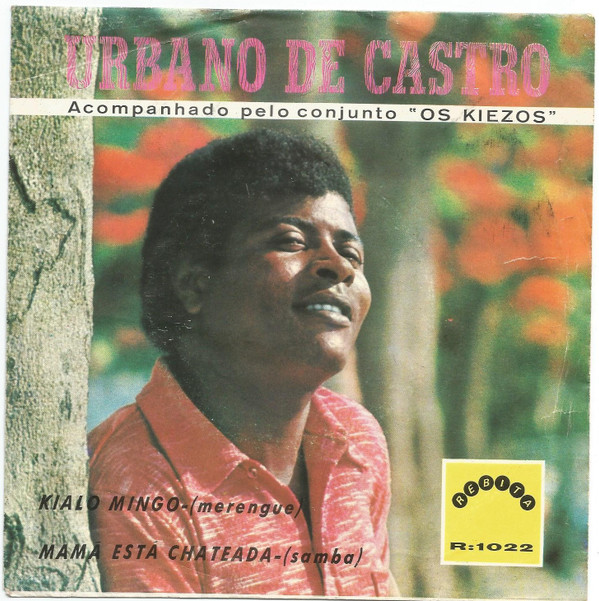
Pressed in 1973 by FADIANG, the Fábrica de Discos Angolana, Rebita was the first LP both recorded and manufactured on Angolan soil — two years before independence, in the middle of a colonial war. It brings together three foundational names in Angolan urban music, Os Kiezos, Urbano de Castro and the Jovens do Prenda, playing semba, Angolan merengue and rumba. Analog Africa, the reissue label most responsible for reviving this repertoire internationally, has called it nothing less than the holy grail of Angolan popular urban music. The original sleeve carries its own proof of authenticity: the words "1° Disco gravado e prensado em Angola / Fabricado pela Fadiang," alongside Luanda addresses printed directly on the cover. Analog Africa's own 2013 reissue (catalogue AADE 04, 1000 copies on 180-gram vinyl) is a fine record in its own right, but it carries the Analog Africa logo that instantly separates it from the original — worth knowing before you pay original prices for a very good copy of something else. In Lisbon, you can hunt the real thing at Tabatô Records, or trust the unpredictable stalls of the Feira da Ladra to turn it up when you least expect it.