Dublin and its record shops
In 1959 a young Dublin patron named Garech Browne founded a record label, Claddagh Records, and its second release — a 1964 album by a little-known group called the Chieftains — set off the modern revival of Irish traditional music. Two decades later, four teenagers from the north side of the city walked into a studio on Windmill Lane and recorded their first album, Boy. Both buildings are gone now: the Claddagh shop closed around 2021, the Windmill Lane studio was demolished in 2015. What survives is the music — and this guide to where you can still find it on record.

Start here, because it explains the shape of everything that follows. Dublin produced two of the most consequential moments in twentieth-century popular music, and let the physical evidence of both disappear.
Claddagh Records' shop on Cecilia Street, in Temple Bar, was for decades the place to buy Irish traditional music — the deepest stock anywhere, staff who'd let you listen before you bought. It closed around 2021; Claddagh survives today only as a label and a mail-order website. Windmill Lane Studios, where U2 recorded 1980's Boy, became a place of pilgrimage in its own right: fans covered its outer wall in graffiti for a decade, until the original building was demolished in 2015 to make way for an office block. Neither site can be visited today in any meaningful sense.
What's left is the record — and that's exactly what this guide is for. Dublin's surviving shops are fewer than you'll find in this series' larger capitals, but the hunting is real: a compact, walkable, English-speaking city where an Irish traditional pressing from the 1960s and a rare all-Irish U2 pressing from 1980 sit in the same small scene, underpriced relative to their importance, waiting to be found.
One honest correction before you dig: Thin Lizzy, Dublin's other great rock export and the band of the beloved Phil Lynott, recorded their 1971 debut not in Dublin but in London. Lynott was as Dublin as a musician gets; the record itself was made elsewhere. Worth knowing before you go looking for a Dublin pressing that doesn't exist. A statue of Lynott stands today on Harry Street, just off Grafton Street, a short walk from several shops in this guide — worth a look even if the record he's remembered for wasn't cut in this city.
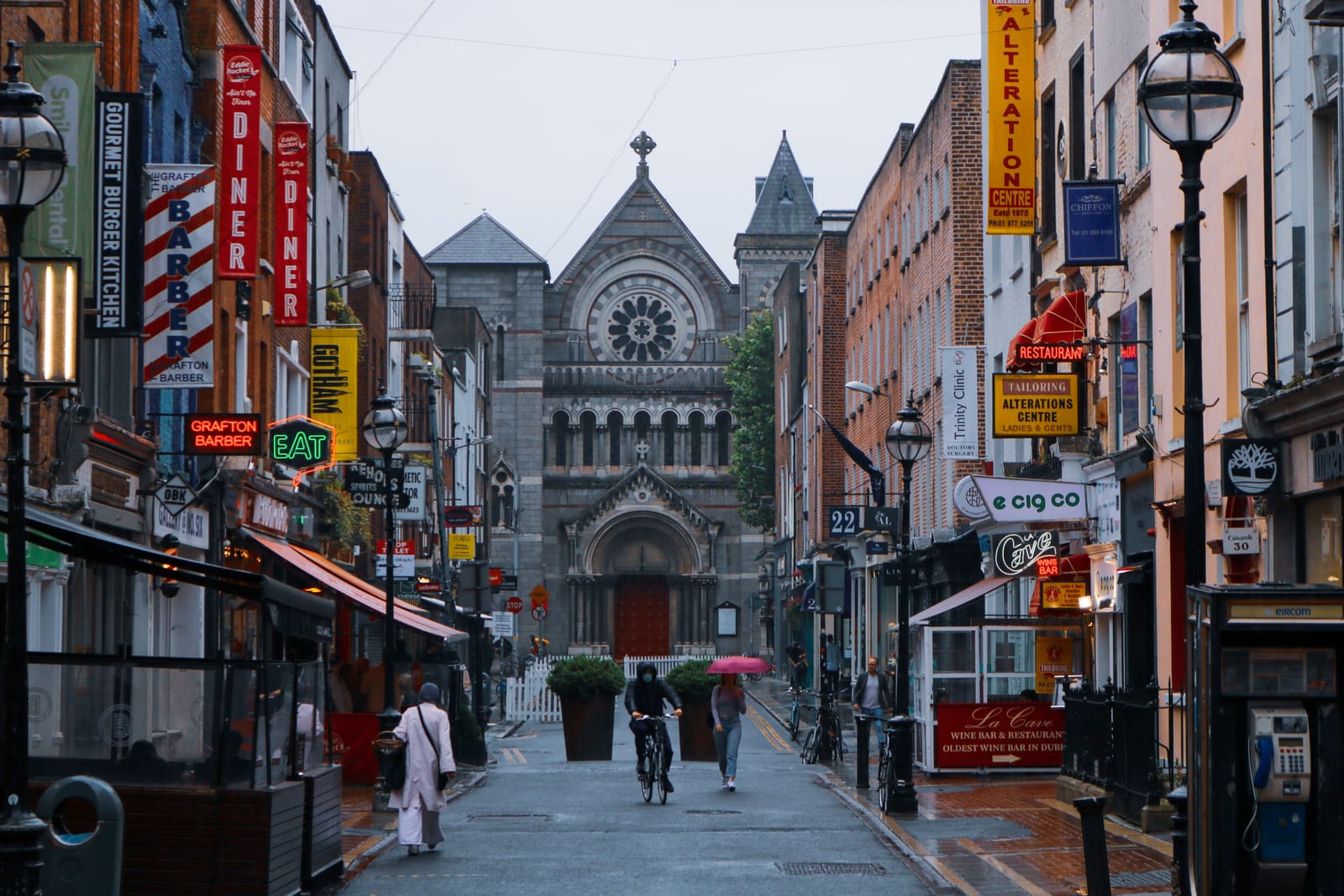
It's also a compact scene, in the best sense. Every shop in this guide sits within a fifteen-minute walk of every other, split across three small pockets on the south side of the river, with English spoken everywhere and cards accepted without a second thought. That won't be true of every city in this series — enjoy it while you can.
Temple Bar and Crow Street
Two minutes off Temple Bar's tourist-thronged main streets sits the densest cluster of shops in the city.
All City Records (4 Crow Street, Temple Bar Luas, 5 min walk, Mon-Wed 10-6:30, Thu 10-7, Fri 10-6:30, Sat 10-6, Sun 12-6) has been shop, label and community hub since 2001 — the address for hip-hop, house and underground dance, with its own label output on the shelves and regular in-store DJ sets.
The R.A.G.E. (8 Crow Street, Temple Bar Luas, 5 min walk, Mon-Sat 11-7, Sun 12-6), a few doors along, is Dublin's biggest second-hand record shop and, almost incidentally, its biggest retro video-game shop too. It moved here from nearby Fade Street in early 2020 — if an older listing sends you there instead, ignore it.
Mojo's Records (Merchant's Arch, Mon-Sat 11-6), a short walk toward the river, hides inside the covered passage that links Temple Bar to the Ha'penny Bridge — a small generalist shop easy to walk straight past without ever knowing it's there.
Wicklow Street and Grafton Street
Freebird Records (15A Wicklow Street, Mon-Wed & Fri-Sun 11-6:30, Thu 11-7:30), trading since 1978, lives today inside The Secret Book and Record Store — a narrow shop down a corridor off Wicklow Street, books and vinyl sharing the floor, with a blues section worth the search alone.
Tower Records (flagship: 7 Dawson Street, Mon-Sat 9-7, Sun 11:30-6:30) is Ireland's largest independent record store, wholly Irish-owned despite the name it inherited from the old American chain. It holds the country's biggest vinyl selection and, upstairs, Tower Hifi — turntables and components under the same roof. A second, smaller branch sits inside the Eason's building on O'Connell Street, on the river's north side.
George's Street
Spindizzy Records (32 The Market Arcade, South Great George's Street, Mon-Wed 10-6, Thu-Sat 10-7, Sun 11-6), trading since 1996 inside the George's Street Arcade — a covered Victorian market dating to 1881 — carries a wide sweep of rock, metal, punk and reggae, plus a declared Irish traditional section, useful in a city with no dedicated trad specialist left standing.
| Shop | Area | Specialism |
|---|---|---|
| All City Records | Temple Bar / Crow Street | Hip-hop, house, own label |
| The R.A.G.E. | Temple Bar / Crow Street | Biggest used-vinyl floor + retro games |
| Mojo's Records | Temple Bar | Small generalist, memorabilia |
| Freebird Records | Wicklow Street | Blues, eclectic used vinyl |
| Tower Records | Dawson Street | Biggest selection, hi-fi upstairs |
| Spindizzy Records | George's Street Arcade | Rock/metal/reggae + Irish trad |
Recommended Itineraries
The Temple Bar loop (two hours). All City, The R.A.G.E. and Mojo's, three shops within five minutes of each other on and around Crow Street. Add a look at 2 Cecilia Street, where Claddagh Records' shop once stood — nothing to buy there now, but worth the two-minute detour for the history.
The half-day round. Add Freebird and Spindizzy to the Temple Bar loop, crossing Grafton Street between them — a natural route past Trinity College and the top of Dublin's main shopping spine.
The full day. All six shops, finishing at Spindizzy, with time in hand for the George's Street Arcade itself, worth a browse beyond its record counter.
The evening. Save Smithfield, fifteen to twenty minutes' walk or one Luas stop away, for after dark: a live traditional session at The Cobblestone, followed by a listen at Fidelity or The Big Romance.
Practicalities
A small scene, honestly stated. Dublin holds six shops worth a special trip in this guide, not eighteen — smaller than several other cities in this series, and smaller than Dublin's own past: dozens of shops that once traded here, from an earlier Freebird location to the punk-era Advance Records, have long since closed. What's left is a survivor's list.
English everywhere, cards everywhere. No language barrier, and cash is rarely essential — a genuine convenience compared to much of this series.
Sunday starts late. Nearly every shop in this guide opens on Sunday too, but from around noon; Mojo's is the uncertain one, so visit it on a weekday.
From the airport. Dublin Airport has no rail link. The Airlink 747 bus (~€8, every 10-15 minutes, ~30 minutes) runs to O'Connell Street and Connolly Station and takes a Leap Card; Aircoach (~€9) serves the south side but doesn't. Dublin Bus routes 16/41 are cheapest (~€2-2.60 with a Leap Card) but slower.
Getting around. A Leap Card covers bus, Luas tram and DART rail at a standard fare of around €2 per 90-minute journey. The shop clusters in this guide are all comfortably walkable from each other; the Luas Red Line is the one to know for an evening in Smithfield.
No structured record fair. Nothing recurring or reliable enough to plan a trip around, at the time of writing — watch for occasional pop-up events online instead.
Beyond the shops, after dark. Two buildings that once mattered to this chapter are gone — Windmill Lane's original studio, replaced by an office block near Dublin's south docks, and Claddagh's shop on Cecilia Street — but what replaced them, in a sense, is a live scene that's very much alive. The Cobblestone, in Smithfield, hosts traditional music sessions every single night, played at a table among the drinkers rather than staged for an audience; a 2021 plan to demolish part of the pub for a hotel was thrown out by Dublin City Council after a public campaign, the first time in Irish planning history that a pub's cultural value shaped a building decision. Close by, Fidelity and The Big Romance — Dublin's two dedicated listening bars, built around custom sound systems — make a natural pair with a trad session for anyone who wants the evening version of this guide's daytime hunt.
Frequently Asked Questions
Where can I buy vinyl in Dublin? Three clusters cover almost everything: Temple Bar/Crow Street (All City Records, The R.A.G.E., Mojo's), Wicklow Street/Grafton Street (Freebird Records, Tower Records), and George's Street (Spindizzy Records).
Is Claddagh Records still open? No. Claddagh Records' shop on Cecilia Street in Temple Bar closed around 2021. The label survives as a mail-order website and a licensing deal with Universal Music Ireland, but there is no shop to visit in Dublin today.
Where can I buy Irish traditional music on vinyl in Dublin? No dedicated trad specialist remains open, but Spindizzy Records declares an Irish traditional section, and The R.A.G.E.'s deep used floor is worth checking. The genre's foundational label, Claddagh, no longer has a shop — see above.
Was Thin Lizzy's or U2's music recorded in Dublin? U2's 1980 debut Boy was recorded in Dublin, at Windmill Lane Studios — since demolished. Thin Lizzy's 1971 debut, despite the band's Dublin roots, was recorded in London.
Which days are record shops open in Dublin? Most open seven days a week, with shorter Sunday hours starting around noon. Midweek is still the most reliable time to find everything open.
Is there a record fair in Dublin? Not a structured, recurring one at the time of writing. Occasional pop-up events surface online — check ahead rather than planning a trip around one.
A Record to Hunt for in Dublin
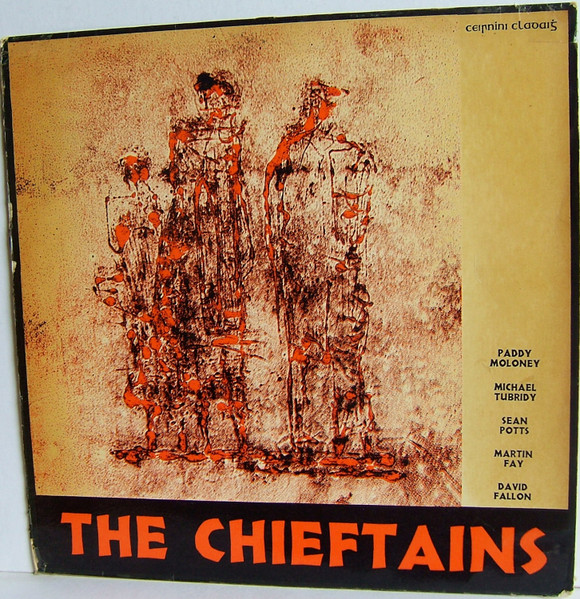
For each episode of this series we close with a record to look for in that city. For Dublin it has to be the one that started it all: the record that set off the modern revival of Irish traditional music, made in a city that no longer has a shop dedicated to selling it.
Which pressing? Check it on Discogs ↗
The grail is the 1964 original on Claddagh's own label, identifiable by rim text reading "Recorded in Ireland and pressed for Claddagh Records," larger track-title lettering than later reissues carry, and a narrower pressing ring than the purple-label repress that followed. It was Claddagh's second release, after Leo Rowsome's solo pipes album, and it broke every commercial rule of its day — no vocals, just uilleann pipes, fiddle, flute and whistle, played by Dublin musicians who kept their day jobs. It worked: the Chieftains became Irish traditional music's most internationally famous act, their work later featured on the Oscar-winning Barry Lyndon soundtrack. Expect to pay somewhere between €7 and €25 for a genuine original in decent shape, with around €13 a fair median — remarkably modest for the record that started a revival still running today.
Given Claddagh's own shop is gone, don't expect to find this behind a specialist's counter. Spindizzy Records' declared traditional section and the deep, unpredictable stock at The R.A.G.E. are the best bets left in the city — a record that outlived the shop that made it, found today in shops that had nothing to do with its birth.
The Vinyl Cities series continues. Subscribe to the Groov-illa newsletter for upcoming episodes.
If you live in Dublin and have corrections, suggestions or shop recommendations, write to hello@groovilla.com. The guide is updated periodically.