Bristol and its record shops

Episode 13 of the Vinyl Cities series
Outside the old Exchange on Corn Street stand four bronze pillars with flat tops, waist-high, worn smooth. They're called the Nails, and Bristol merchants once closed their deals across them, counting the money out on the spot; local legend says that's where "paying on the nail" comes from. Round the corner, inside St Nicholas Market, a reggae dealer named Paul Craine still trades the old way, from a single stall, with a story for every record. Bristol has always done its business in small units, face to face.
That's the shape of the city's record scene. Bristol has no megastore and no single shop that does everything. What it has are specialists: a reggae stall, a metal shop, a punk shop above a gig venue, a doom basement under a taco bar, a club-music shop with its own label. Each one picks a sound and turns it all the way up.
If that sounds like a sound system, it should. The music Bristol gave the world came out of sound-system culture, where every rig had its own selector, its own crowd and its own records, and the night belonged to whoever moved between them. Digging here works the same way. No shop, on its own, gives you the city. Walk between five of them in an afternoon and you've built the mix yourself: dub, hip hop, punk and soul, the same ingredients that went into the Bristol sound forty years ago.
Two practical warnings. Bristol is steep, and almost every shop is at the top of a hill rather than the bottom. And it has no metro or tram, so you'll walk, with the odd bus for the long stretches.
A Short History: From Sound System to Bristol Sound
In the decades after the war, St Paul's, just north-east of the centre, became home to one of Britain's largest Caribbean communities, people from Jamaica, Trinidad and Barbados who had come to fill post-war jobs and were met with a colour bar. In 1963 the community organised the Bristol Bus Boycott against a bus company that refused to employ Black drivers; the campaign fed directly into Britain's first Race Relations Act. In St Paul's homes and streets, hand-built sound systems did the job of the concert halls the community didn't have.
In the early 1980s a loose crew from St Paul's, Montpelier and Bishopston took that idea and threw everything they listened to into it: reggae, hip hop, post-punk, soul. They called themselves the Wild Bunch and played the Dug Out, a basement club on Park Row. Out of that circle came Massive Attack, whose Blue Lines arrived in 1991, then Portishead's Dummy and Tricky's Maxinquaye in 1994–95. The music press called it trip hop; Bristolians mostly didn't, and still prefer "the Bristol sound". In 1997 Roni Size and Reprazent won the Mercury Prize with New Forms, carrying the same lineage into drum and bass.
The line hasn't broken. Today it runs through Idle Hands and the labels around it, which do with techno and dubstep what the Wild Bunch did with dub: take the sound system's bass weight somewhere new.
Hours checked in October 2026 from public sources: they can change.
The Centre: the Market, Old Market and Trenchard Street
Start here if you're arriving at Temple Meads, the main station: everything is within fifteen minutes on foot.
Wanted Records (43 High Street, BS1 2AT, Mon-Sat 10:30-5:30) is the natural first stop and the centre's one true generalist. It has sold rare and collectable second-hand records since 2009 and recently moved out of St Nicholas Market into a bigger room facing Castle Park, with two listening stations. Jazz and reggae run deep; soul, Latin and funk too. The staff have a habit of explaining, unasked, how to tell an early pressing from a later one.
Payback Records (Unit 45, South Arcade, St Nicholas Market, Mon-Sat 9:30-5) is a stall inside the eighteenth-century covered market and the city's home for Jamaican music, "from Prince Buster to Busy Signal", as owner Paul Craine puts it. Reggae, ska and rocksteady, with some soul, rock and hip hop that wandered in. Paul buys reggae collections and talks happily about Bristol's sound-system years: this is where to understand what everything else grew from.
Specialist Subject Records (first floor of the Exchange, 72-73 Old Market Street, BS2 0EJ, Mon-Sat 12-6, Sun 12-4) sits above a live venue: bands play downstairs at night, records sell upstairs by day. The label started in 2007, the Bristol shop in 2017. Punk, hardcore, indie and emo, with the kind of attention to zines and DIY releases that few shops still bother with.
Black City Records (16 Trenchard Street, BS1 5AN, Mon 12-4, Tue-Sat 12-6, Sun 12-4) opened in April 2021, a few steps from The Gryphon metal pub, and sells exactly one thing: heavy metal, in every shape it comes in, with zines alongside the vinyl. Founder David Savage also runs a label from here. It's the only metal-only shop in the South West, and one of the few things in central Bristol you can count on being open on a Sunday.
Park Row and Upper Maudlin Street: Bass Music Now
A few minutes uphill from the centre, towards the university, is the street where the Dug Out stood. It now has three record shops.
Idle Hands (20-21 Lower Park Row, BS1 5BN, Wed-Sat 12-6, Sun 1-5, closed Mon and Tue) is the city's club-music shop, and its label is one of the most respected in British bass music. Chris Farrell opened it in 2011. Rising costs shut it in August 2022, and for two years Farrell kept the label going out of storage until a crowdfunder and plenty of stubbornness got the doors open again here on 20 November 2024. New 12-inches across house, techno, dubstep, grime, jungle and dub. Mind the days: Monday and Tuesday it's shut.
Astro Vinyl (68 Park Row, BS1 5LE, Thu-Sat 10-4, Sun 11-3) is only a few metres wide and does three jobs at once: record shop, café and small bookshop. Alex Reed runs it, and the stock follows his taste: Japanese pressings, industrial, punk, glam. A shop to browse with a cup in your hand, not to raid with a list. It opens Thursday to Sunday only.
Coffin Wax (18 Upper Maudlin Street, BS2 8DJ, Tue-Thu 12-4, Fri 12-8, Sat 12-6) is the best-hidden shop in Bristol. The sign says Alta Loma, which is a taqueria; the records are in the basement. It's the shop of Stolen Body Records, a Bristol label of psych, stoner, doom and hard rock with an international roster. Walk in, ask for the record shop downstairs, and go down. The hours are the venue's.
Cheltenham Road and Gloucester Road: the Long Climb North
From Stokes Croft the road climbs north and changes name twice, first to Cheltenham Road, then to Gloucester Road, which locals like to call the longest run of independent shops in the UK. It's an uphill walk.
Plastic Wax Records (222 Cheltenham Road, BS6 5QU, Mon-Fri 10-6, Sat 9:30-6, Sun 12-5) is Bristol's longest-established independent record shop: it began as a market stall in 1978 and has been on this road for most of the half-century since, with around twelve thousand LPs in every genre. The manager has been there over thirty years. Come with an hour and no plan. It's also open the longest on Sundays.
Collector Cave (184 Cheltenham Road, BS6 5RB, Tue-Sat 10-6, Sun 11-5) is a few doors down, next to a pub. New and used dance and electronic music, from funk to rare house, plus second-hand hi-fi, record cleaning and a Technics 1210 servicing bench that the city's DJs know well.
Prime Cuts (85 Gloucester Road, BS7 8AS, Mon 10-5, Tue-Sat 10-5:30) is for serious diggers. It's in the basement below RePsycho, a second-hand clothes shop, with no entrance of its own: walk into RePsycho and take the stairs down. Mike Savage opened it in 2000 in what had been a 1950s butcher's, hence the name. There are more than sixty thousand used records inside, each with a handwritten label. Dig without a list. That's the point.
The Centre for Better Grooves (33 Gloucester Road, BS7 8AA, Mon-Sat 10-5:30) sits at the back of Paul Roberts Hi-Fi. Gordon Montgomery, who founded the Fopp chain years ago, opened it in 2015: new and used records with a lean towards jazz, soul and funk, and a proper system next door to hear them on.
Hot Wax Records (Old Drumbank Studios, 4 Sommerville Road, BS7 9AA, hours vary: check Google Maps or their socials before you go) is on a side street off Gloucester Road and is the newest shop in this guide, opened on 11 October 2025 by Nathan Worm of the Worm Disco Club collective. Affordable dance 12-inches, soul, funk, jazz, 80s Japanese city pop and anime soundtracks, with a café inside.
South of the River and Clifton
Two addresses outside the main loop, worth an extra half day.
Friendly Records (59 North Street, Bedminster, BS3 1ES, Tue-Sat 11-5, Sun 12-4) is shop, café and gig space rolled into one, south of the river on a street of cafés and vintage shops. New and used records, clothing, and its own label, Friendly Recordings. Half an hour's walk from the centre, or a short bus ride.
Longwell Records (Clifton Arcade, Boyce's Avenue, BS8 4AA, Wed-Sat 11-5, Sun 11-4) moved into a Victorian arcade in Clifton in February 2026 after a decade in Keynsham. Iain Aitchison started selling online in 2015; he now has more than ten thousand used albums and puts on gigs in the shop. The Suspension Bridge is a few minutes' walk away.
| Shop | Area | Specialty |
|---|---|---|
| Wanted Records | Centre | Jazz, reggae, soul, collectables |
| Payback Records | St Nicholas Market | Reggae, ska, rocksteady |
| Specialist Subject Records | Old Market | Punk, hardcore, indie, emo |
| Black City Records | Centre | Heavy metal |
| Idle Hands | Park Row | House, techno, dubstep, jungle, dub |
| Astro Vinyl | Park Row | Eclectic used, Japanese pressings |
| Coffin Wax | Upper Maudlin Street | Psych, stoner, doom |
| Plastic Wax Records | Cheltenham Road | Generalist, all genres |
| Collector Cave | Cheltenham Road | Dance and electronic, hi-fi |
| Prime Cuts | Gloucester Road | Used records in bulk |
| The Centre for Better Grooves | Gloucester Road | Jazz, soul, funk |
| Hot Wax Records | Bishopston | Dance, soul, jazz, city pop |
| Friendly Records | Bedminster | New and used, indie |
| Longwell Records | Clifton | Used, all genres |
Recommended Itineraries
Half a day: the centre and Park Row. From Temple Meads to Wanted and Payback in the market, then up Park Row to Idle Hands and Astro Vinyl, finishing at Coffin Wax. All on foot, under twenty minutes between first and last. Do it Wednesday to Saturday, when everything is open.
The northern climb. From Stokes Croft to Plastic Wax and Collector Cave on Cheltenham Road, then Prime Cuts and The Centre for Better Grooves on Gloucester Road, with a detour to Hot Wax if it's open. A full afternoon, and a bus back down.
The sound-system round. Payback for reggae, Idle Hands for today's bass music, Specialist Subject for punk, Black City for metal: four shops, four rigs, and the mix is yours.
Practicalities
Watch Monday and Tuesday. Bristol has no common closing day. On Monday, Idle Hands, Astro Vinyl, Coffin Wax, Collector Cave, Friendly Records and Longwell are shut; on Tuesday, Idle Hands, Astro Vinyl and Longwell stay closed too. Wednesday to Saturday is when almost everything is open.
Sunday works. Unlike many cities in this series, plenty of shops open: Plastic Wax, Collector Cave, Idle Hands, Astro Vinyl, Specialist Subject, Black City, Friendly Records and Longwell.
No metro. Bristol is a city of walking and buses; the hills are real, and there's a serious cycle network if your legs give out. Temple Meads is the main station.
From the airport. There's no rail link. The Airport Flyer bus (A1) runs day and night to Temple Meads and the centre in roughly thirty to forty minutes.
Fairs. There's no weekly record market, but the Bristol Beacon hosts a record fair a few times a year; check the venue's website for dates.
Frequently Asked Questions
Where can I buy vinyl in Bristol? In the centre, Wanted Records is the collectable second-hand generalist and Payback Records is the reggae stall inside St Nicholas Market. On Park Row there are Idle Hands and Astro Vinyl; on Cheltenham Road and Gloucester Road, Plastic Wax Records, Collector Cave and Prime Cuts.
Where can I buy reggae and dub in Bristol? Payback Records, in the South Arcade of St Nicholas Market, specialises in Jamaican music. For dub and the club music that grew from it, go to Idle Hands on Lower Park Row; Wanted Records also has a deep reggae section.
Where can I buy electronic and club music in Bristol? Idle Hands on Lower Park Row is the reference for house, techno, dubstep, jungle and dub, and runs its own label. Collector Cave on Cheltenham Road carries new and used dance and electronic records.
Where did trip hop start in Bristol? In the sound systems of St Paul's and at the Dug Out, the Park Row club where the Wild Bunch played in the early 1980s. Massive Attack, Portishead and Tricky all came out of that circle. Locals rarely say trip hop; they call it the Bristol sound.
Are Bristol record shops open on Sunday? Many are: Plastic Wax Records, Collector Cave, Idle Hands, Astro Vinyl, Specialist Subject Records, Black City Records, Friendly Records and Longwell Records all open on Sundays, with shorter hours. Several shops close on Monday instead.
What is the oldest record shop in Bristol? Plastic Wax Records on Cheltenham Road: it began as a market stall in 1978 and is the city's longest-established independent record shop.
A Record to Hunt for in Bristol
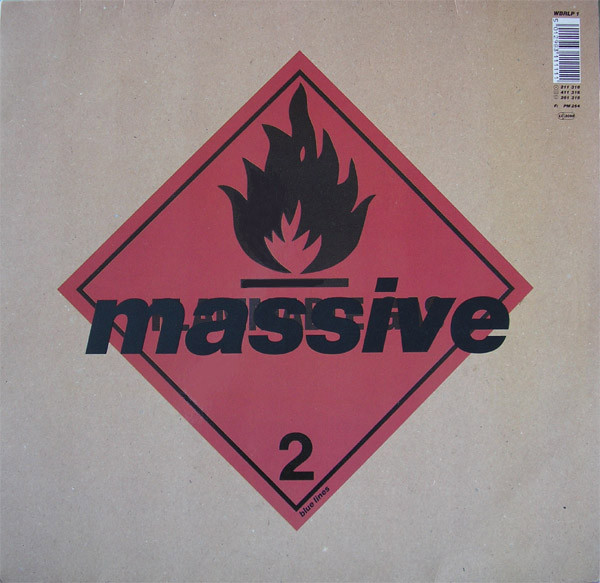
Blue Lines is the record where St Paul's sound-system music turns into the Bristol sound: reggae, hip hop and soul slowed down and laid on top of one another, with the voices of 3D, Daddy G, Tricky, Shara Nelson and Horace Andy. It's also the right record for this guide, because it's the very mix none of the city's shops makes on its own. You make it by walking between them.
The first pressing came out in April 1991 on the band's own Wild Bunch label, distributed by Circa: catalogue WBRLP 1. The detail to look for is on the sleeve and labels. During the Gulf War the band dropped "Attack" from the name to avoid looking tasteless, and some 1991 copies credit only "Massive". There's also a variant with identical labels on both sides reading as side A, so check both.
In town, ask at Wanted Records and Plastic Wax, the two generalists with the most collectable stock. The Bristol entry in The Grail Hunt has the identification details and links to search for a copy.
The Bristol chapter of The Grail Hunt: Europe goes further: fifteen shops and three records that trace the Bristol sound from 1988 to 1994, with the details you need to recognise a first pressing at the rack.
The Vinyl Cities series continues. Subscribe to the Groov-illa newsletter so you don't miss the next episode.
If you live in Bristol and have corrections, tips or a shop that deserves a mention, write to hello@groovilla.com. We update the guide regularly.