Glasgow and its record shops
Stephen McRobbie is usually behind the counter. Most days, if you push through the railway arch at Kings Court and step into Mono — the vegan café-bar that shares its address with a record shop — the man restocking the racks is the same man who has fronted the band The Pastels since 1980. He opened the shop, Monorail Music, in December 2002. Nothing about the opening required an idea. It required a corner, cheap rent, and someone who had already spent years learning the trade behind someone else's till.

That's worth sitting with for a moment before the history speeds up, because it's the whole city in miniature. Glasgow's vinyl story isn't one invention repeated at scale — it's two separate lineages of people who looked at what existed, decided it wasn't quite right, and built their own version a few streets over.
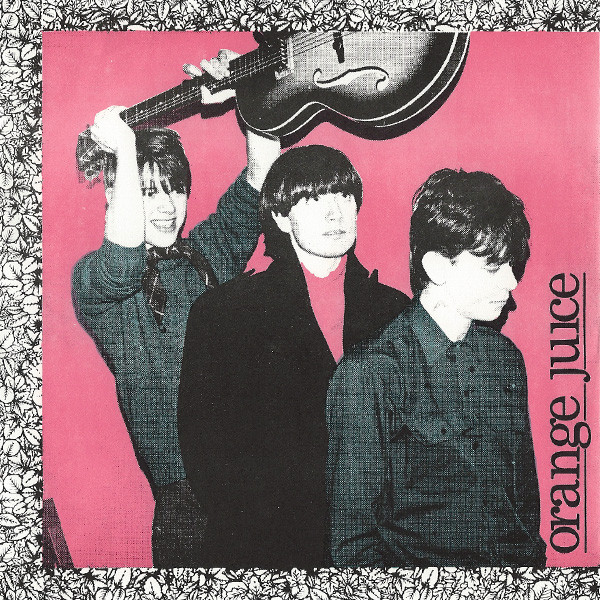
The first lineage starts with Alan Horne, who in 1979 founded a record label from his own flat — the accounts, by more than one account of the period, kept in a sock drawer. Postcard Records existed to release Orange Juice, fronted by Horne's friend Edwyn Collins; its slogan, "The Sound of Young Scotland," parodied Motown's own tagline under a cartoon cat banging a drum. Over about eighteen months Postcard signed Edinburgh's Josef K and Roddy Frame's Aztec Camera before folding when Orange Juice moved to a major label in 1981 — eleven singles and one album, never once leaving a Glasgow flat. Franz Ferdinand have said on record that when building their own sound, they looked past sixties rock and New York punk toward Orange Juice and Josef K instead — a lineage the later band claimed for itself, not one this guide is imposing from outside.
The label's second generation arrived in 1995, when four members of the Motherwell band The Delgados pressed their own debut single because nobody else would, and called the label Chemikal Underground — the home, soon after, of Mogwai's 1997 debut and of Arab Strap. Monorail is the third generation, and the thread runs closer than most visitors realise: Sandy McLean, who owns Love Music on Dundas Street today, co-founded the label 53rd & 3rd with Stephen Pastel back in 1985. Two men who ran a label together in the eighties now run two shops fifteen minutes' walk apart.
Glasgow's second lineage runs underground, on a different clock. The Sub Club opened on 1 April 1987 in a Jamaica Street basement and has never closed since — the longest continuously operating underground dance club in the world, by the standard measure. For thirteen years, every Sunday from 1997 to 2010, it belonged to Optimo Espacio, the night run by JD Twitch and JG Wilkes that played anything to a crowd that had stopped expecting a single genre. JD Twitch, born Keith McIvor, died on 19 September 2025, not long after making public a terminal illness; JG Wilkes continues to play and tour as Optimo. A few hundred metres away, Stuart McMillan and Orde Meikle — the duo Slam — founded Soma Quality Recordings in 1991, and in 1994 released the very first record by two unknown Parisian teenagers who'd written the label a fan letter: Daft Punk. Rubadub, on Howard Street, has been the scene's working shopfront since 1992, close enough to the Sub Club that touring DJs swing by before their own sets.
Glasgow is not the capital — Edinburgh holds that title — and Glaswegians will generally tell you which city they think is actually more fun. Where Edinburgh runs on institutions, Glasgow runs on rooms: a shop inside a café, a club that's kept the same basement since 1987. Prices here are fair rather than inflated, card works everywhere, and the real risk of a Glasgow digging day isn't a bad deal — it's arriving on a Monday, when more than one shop in this guide stays shut.
Centre, Merchant City and Trongate: Both Lineages at Once
The densest cluster in the city, and the one holding both lineages within a fifteen-minute walk of Glasgow Central and Queen Street.
Monorail Music (12 Kings Court, Argyle Street station, Mon-Sat 11-7, Sun 12-7) is the shop from the opening — indie, post-punk, electronic and the experimental fringe, curated by people who are actually part of the scene they're selling, inside a railway arch shared with the vegan café-bar Mono.
Rubadub (35 Howard Street, Tue-Sat 11-6) has been the dance lineage's working shopfront since 1992 — techno, house, disco and DJ equipment a street from the Sub Club, staffed by working producers who give real technical advice.
Love Music (34 Dundas Street) is Sandy McLean's shop, formerly Avalanche Records — rock and Scottish indie in every register, and the direct thread back to Postcard's era through McLean's old label, 53rd & 3rd.
Assai Records (231-233 Sauchiehall Street, daily) is the newest arrival, a Scottish chain from Dundee that opened its Glasgow branch in March 2023 — new releases, reissues and frequent in-store events with touring artists.
Record Fayre (13-15 Chisholm Street, Tue-Sat) has traded classic rock, prog and metal at genuinely low prices since 1983, the kind of shop where the music carries out onto the pavement.
Missing Records (51 Oswald Street, daily 10-5) is Glasgow's used-vinyl cave, trading since 1984 and settled on Oswald Street since 2019 — deep, well-filed stock with an unusually strong country section.
The West End: Slower, Greener Digging
Around Otago Lane and Byres Road, university territory built for browsing rather than a fixed schedule.
Mixed Up Records (16-22 Otago Lane, Mon-Sat) has traded sixties and seventies rock, prog and free jazz since 1997, tucked down a lane genuinely hard to find on the first visit — check the "Just In" crate on every trip.
Finnieston and the Southside: Two Outliers Worth the Trip
Strip Joint Records (956 Argyle Street, daily noon-midnight) is a record corner inside a Finnieston bar rather than a shop with its own door — new releases and classic catalogue alongside the pizza menu, with regular in-store sets from touring bands.
Some Great Reward (Unit 2, The Cooperage, 674 Pollokshaws Road, closed Tuesdays) is the Southside's record-shop-and-café, opened in 2018 by a local who still lives in the neighbourhood — new releases, curated rather than exhaustive, best paired with a slow Sunday.
| Shop | Area | Specialism |
|---|---|---|
| Monorail Music | Centre/Merchant City | Indie, post-punk, electronic |
| Rubadub | Centre/Merchant City | Techno, house, DJ equipment |
| Love Music | Centre/Merchant City | Rock, Scottish indie |
| Assai Records | Centre/Merchant City | New releases, reissues |
| Record Fayre | Centre/Merchant City | Classic rock, prog, metal |
| Missing Records | Centre/Merchant City | Used, all genres |
| Mixed Up Records | West End | Used rock, prog, free jazz |
| Strip Joint Records | Finnieston | New releases, in-stores |
| Some Great Reward | Southside | New releases, curated |
Recommended Itineraries
The Centre loop (half a day). Monorail and Rubadub sit twelve minutes apart on foot, the two lineages in a single afternoon; add Love Music, Assai and Missing Records if the legs hold out.
The West End loop. Mixed Up Records, on Otago Lane a few minutes from Byres Road, with a curry lunch at Shish Mahal or Mother India built in.
The weekend version. Both cores across two days, with Strip Joint Records folded into a Finnieston evening and, if it falls on a Saturday or Sunday, a morning at the Barras flea market in the East End before the shops open.
Practicalities
Watch Monday. Rubadub and Record Fayre are both shut; Some Great Reward closes on Tuesdays instead.
The Subway links the zones. Glasgow's circular underground railway, the world's third-oldest, nicknamed the Clockwork Orange, connects the Centre to the West End in minutes; a single ticket is £1.80.
Card works everywhere. None of the nine shops in this guide enforce a cash-only policy — bring cash for the Barras instead, where it still speeds things up.
Prices are fair, not cheap. Glasgow doesn't perform for tourists — what's on the shelves is what the staff actually care about, priced by people who know the market.
Frequently Asked Questions
Where can I buy indie and post-punk vinyl in Glasgow? Monorail Music, inside the Mono café-bar at Kings Court, is the reference — founded by Stephen Pastel of The Pastels, with direct ties to Postcard Records' legacy and to Chemikal Underground. Love Music, run by a former Postcard-era label co-founder, is the natural second stop.
Where can I buy techno and house vinyl in Glasgow? Rubadub, on Howard Street, has been the city's dance-music reference since 1992, a street from the Sub Club.
Which area of Glasgow has the record shops? Centre, Merchant City and Trongate hold the densest cluster, with six shops within a fifteen-minute walk. The West End has one more near Byres Road, and Finnieston and the Southside each hold one worth the detour.
Which days are record shops open in Glasgow? Watch Monday, when Rubadub and Record Fayre both close. Most other shops open six or seven days a week — Missing Records and Strip Joint Records trade daily.
Is Glasgow worth a dedicated trip for vinyl collectors? Yes. It's one of the few cities in Europe with two genuinely distinct, well-documented scenes — Postcard's indie lineage and the Sub Club's dance lineage — both still traceable through shops trading today, not only through history books.
A Record to Hunt for in Glasgow
For each episode of this series we close with a record to look for in that city. For Glasgow it could only be this one: the single that started Postcard Records, and with it, the whole first lineage this guide has followed.
Which pressing? Check it on Discogs ↗
The grail is the first pressing: Postcard Records, catalogue 80-1, released 22 February 1980. Fewer than a thousand copies were made. Most came with a free flexi-disc of a live "Felicity," first given away with a Glasgow fanzine; a much smaller run, around two hundred by Alan Horne's own account, also included an actual postcard tucked into the sleeve. The run-out groove is etched, not printed, and it talks: side A reads "80-1 A Made in FRANCE PORKY THINGS ARE TOUGH," a nod to mastering engineer George "Porky" Peckham, whose scratched-in puns turn up across a slice of British independent vinyl from this exact period; side B answers "80-1 B Made in FRANCE WE CAN STILL PICNIC." An early Glasgow indie label paying a French plant to press its first record is itself a tell — it's not what most collectors expect, and checking for it is what separates a confirmed original from a guess.
Clean copies have changed hands from around £150 to well over £1,000, most landing near the middle — roughly £500 for a presentable copy with its flexi intact. In Glasgow, it's hunted where the label's own history is still walkable: Monorail Music and Love Music, both run by people who lived through the era, are the shops most likely to know where a surviving copy might be found.
The Vinyl Cities series continues. Subscribe to the Groov-illa newsletter for upcoming episodes.
If you live in Glasgow and have corrections, suggestions or shop recommendations, write to hello@groovilla.com. The guide is updated periodically.