Brussels and its record shops
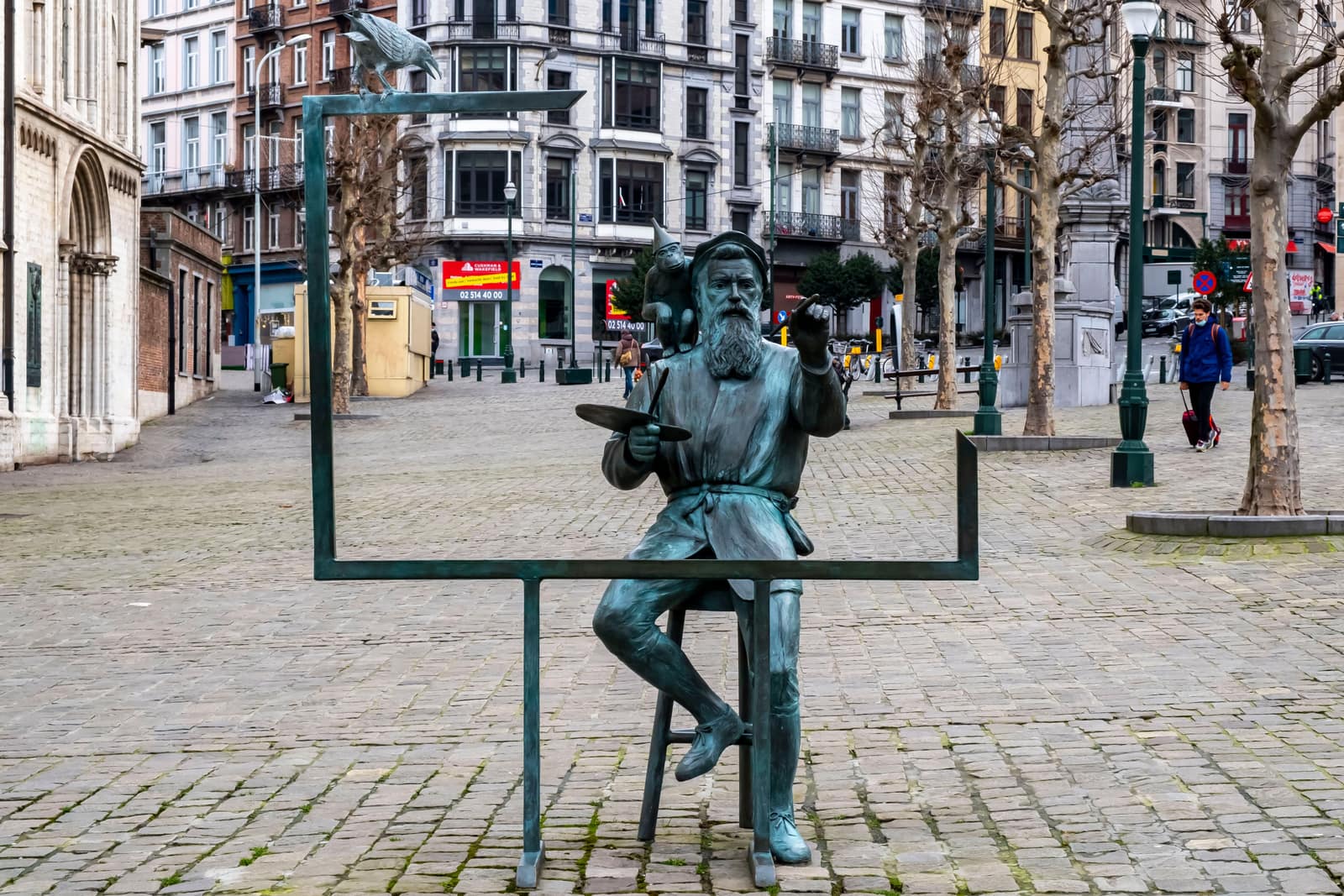
In a small square in Ixelles named after a man who was Prime Minister for ten weeks before he was murdered, Brussels' record-shop map actually begins — not with a genre, but with a documented history the city has only recently started to own. Place Lumumba sits inside Matonge, the Congolese quarter, a fifteen-minute walk from the Grand-Place. It is not a stop on a tourist itinerary. It is where this guide starts, because everything else in this chapter — the rumba in the record bins, the label that refused to say "world music," the EBM band that came home to end its career here — follows from what happened, and is still happening, in the streets around that square.
Brussels doesn't offer one dominant scene the way some cities in this series do. It offers four genuinely distinct ones, each rooted in a documented, material history rather than a marketing angle: Congolese rumba and the Matonge diaspora; Belgian New Beat and Electronic Body Music, correctly understood as an industry the city ran rather than a sound it invented; Crammed Discs, the Brussels label that has spent four decades refusing to file African and avant-garde music under the same lazy heading; and Jacques Brel, born here in 1929, a few streets from where he first sang.
The Congo thread carries real weight and needs to be told with real care. From 1885 to 1908, the territory that became the Congo was King Leopold II's personal property, run through forced labour and mutilation for rubber and ivory profits, with a death toll historians place, in scale if not exact method, close to ten million people. Belgium annexed it as a formal colony in 1908; independence came on 30 June 1960; Prime Minister Patrice Lumumba was assassinated in January 1961, in a plot Belgium has since acknowledged in two separate steps — a royal letter of "deepest regrets" in 2020, and a government apology specifically for the assassination in 2022. Matonge itself predates independence: the Maison Africaine, a residence for Congolese students, was founded here in the late 1950s, before a much larger wave of migration followed 1960 itself. The music this history left behind — Congolese rumba, soukous, the labels that pressed it — was never Belgian in origin. What Brussels supplies today is the diasporic audience and a reissue culture, led by the Brussels label Planet Ilunga, built on documentation rather than exoticism.
Centre, Sainte-Catherine and the Marolles
The city's digging life splits into small, walkable pockets rather than one continuous quarter. Doctor Vinyl (Rue de la Grande Île 1, Mon noon–7pm, Tue–Sat 1–7:30pm) is the closest thing Belgium's electronic underground has to a mecca — techno, deep house and the New Beat records this guide will return to below, run by a figure reviewers describe simply as Geert, whose recommendations are worth trusting over your own shortlist. Caroline Music (Bd Anspach 101, Mon–Sat 10am–7pm, Sun 1–6:30pm), two floors of new and used vinyl directly opposite the Ancienne Belgique concert hall, is the city's biggest single floor space for records and the natural stop before or after a show across the street. Arlequin (Rue du Chêne 7, Mon–Sat 11am–7pm, Sun 2:30–7pm), trading since the 1980s, hides real depth in rock, reggae, chanson and new wave behind a modest shop front — reserve more time than the doorway suggests.
Down in the Marolles, around the daily flea market at Place du Jeu de Balle, the city's densest cluster forms. Crevette Records (Rue Blaes 146, Wed–Sat noon–8pm, Sun 1–6pm) runs techno, house and disco with four listening booths facing the street. Tropicall Records (Rue Haute 235, open 7 days, 11am–7pm) is this guide's strongest single address for soul, spiritual jazz, Afro and Brazilian grooves — the shop most likely to carry the African pressings this city's Congo thread points toward. Hors-série (Rue du Midi 67, Mon–Sat 10:30am–6:30pm, Sun 12:30–6:30pm) is the best-value stop for jazz and classical, its 45s reliably graded Very Good Plus or better.
The Congo thread and the last EBM show
Turtle Records (Av. des Saisons 43, Ixelles, Thu–Fri 1–6pm, Sat 1:30–6pm) sits closest, in both geography and stock, to Matonge itself — jazz, hip-hop, bass, electro, Afro and Latin, curated by an owner reviewers describe as warm and precise. The hours are the most restricted in this guide: plan around them, don't improvise.
New Beat's real origin sits outside this city — the founding accident happened at a club in Antwerp or at Boccaccio, near Ghent, depending which version you believe. Brussels' honest contribution was the label and the archive: PIAS, founded here in 1982 to import records and turned into a label a year later, signed Front 242, a band formed in Aarschot, near Leuven, in 1981. Front 242 coined "Electronic Body Music" on their 1984 EP No Comment; their vocalist, Jean-Luc De Meyer, was born in Brussels; and on 25 January 2025 they played their final-ever concert at the Ancienne Belgique here — the venue chain that keeps circling back through this whole story. BXL Central [Chez PIAS] (Rue Saint-Laurent 36, Wed–Sat 11am–6pm) is the label's own café-shop-venue today, and the closest thing this chapter has to a listening bar.
| Shop | Area | Specialism |
|---|---|---|
| Doctor Vinyl | Centre | Techno, deep house, Belgian New Beat |
| Caroline Music | Centre | New and used, every genre, two floors |
| Arlequin | Centre | Rock, reggae, chanson, new wave |
| Crevette Records | Marolles | Techno, house, disco |
| Tropicall Records | Marolles | Soul, spiritual jazz, Afro, Brazilian |
| Hors-série | Rue du Midi | Second-hand jazz and classical |
| Turtle Records | Matonge/Ixelles | Jazz, hip-hop, Afro, Latin |
| BXL Central [Chez PIAS] | Centre | PIAS's own shop, café and venue |
Recommended Itineraries
The Centre loop (half a day). Doctor Vinyl, Caroline Music, Arlequin and BXL Central sit within a fifteen-minute walk of the Bourse — start at Doctor Vinyl, finish at BXL Central for a coffee among the racks.
The Marolles loop. Crevette Records, Tropicall Records and Hors-série cluster around Place du Jeu de Balle. Time it around the flea market's morning hours, then work the shops in the early afternoon.
The Matonge afternoon. A slower, single-purpose visit: Turtle Records, then lunch or dinner in Matonge itself (see Practicalities), and — if it's not rushed — ten minutes sitting in Place Lumumba once the shopping is done.
Practicalities
Four pockets, not one quarter. Centre and the Marolles are each walkable internally, and close enough to each other for a combined day; Matonge needs a short tram or bus ride southeast, ten to fifteen minutes each way.
Watch Monday and Tuesday. Crevette Records and Turtle Records are both closed Monday and Tuesday; BXL Central opens only Wednesday to Saturday. Wednesday to Saturday is the safe window across the whole guide.
Turtle Records needs planning. Three afternoons a week, and nothing more — check twice before building a day around it.
The bilingual city. French and Dutch share equal official status; street signs often carry both (Place du Jeu de Balle is also Vossenplein). Every shop above operates comfortably in English.
Prices. Fair rather than inflated across the board — Brussels hasn't worked out how to charge Paris rates for its own history.
Frequently Asked Questions
Where can I buy Congolese rumba records in Brussels? Tropicall Records, in the Marolles, has the strongest Afro-focused stock in this guide. Turtle Records, closer to Matonge itself geographically, is a second stop worth checking, alongside the general bins at the Place du Jeu de Balle flea market.
Where is the best area for record shops in Brussels? The Marolles, around the daily Place du Jeu de Balle flea market, is the densest cluster — three shops in this guide within a ten-minute walk of each other. The Centre, near the Bourse, is the second pole, with the city's biggest generalist floor space.
Is Brussels really where New Beat and EBM began? Not exactly — the genre's founding accident happened at a club in Antwerp or near Ghent, not in Brussels. What Brussels genuinely contributed was the industry: PIAS, the label that carried it internationally, and Doctor Vinyl, the shop that has kept the records in circulation for decades. Front 242, the band that coined "Electronic Body Music," played their final-ever concert here in January 2025.
Where can I buy jazz and classical vinyl in Brussels? Hors-série, on Rue du Midi, is the best-value stop, with 45s consistently graded Very Good Plus or better. Caroline Music and Arlequin both carry strong jazz sections alongside their wider stock.
Which days are record shops open in Brussels? Wednesday to Saturday is the safe window. Several shops, including Crevette Records and Turtle Records, close Monday and Tuesday. Turtle Records opens only three afternoons a week — plan around it specifically.
Is Matonge worth visiting beyond the record shop? Yes — it's the heart of this guide's Congo thread. Beyond Turtle Records, the neighbourhood's Congolese restaurants (Le Soleil d'Afrique, Inzia, Au Vieux Matonge) are worth the trip on their own, and Place Lumumba itself rewards a slow, unhurried visit.
A Record to Hunt for in Brussels
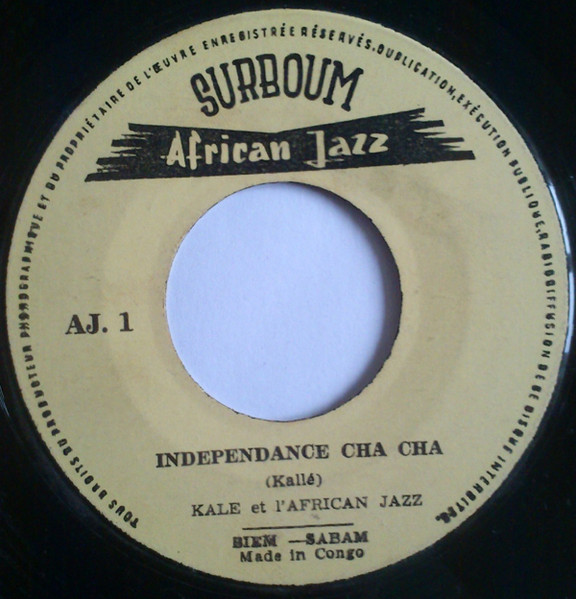
For each episode of this series we close with a record to look for in that city. For Brussels it could only be this one: a song that ties Congo, independence and this specific city together as documented fact, not metaphor.
Which pressing? Check it on Discogs ↗
Written and performed by Joseph Kabasele — Grand Kallé — with his band African Jazz, Indépendance Cha Cha became the informal anthem of Congolese independence in 1960, composed, by most accounts, around the Round Table Conference held in Brussels that January and February, where the terms of independence were actually negotiated. That makes the record's connection to this city a matter of documented sequence, not sentiment: the talks happened here, and the song that marked their outcome is still played across Central Africa at independence anniversaries today.
There's a technical wrinkle worth knowing before you start looking. Most Congolese rumba from this era survives on 78rpm shellac — the format the big Léopoldville labels were still using through the mid-1950s. Indépendance Cha Cha is a 7-inch vinyl 45, issued on the Surboum African Jazz label, catalogue AJ. 1, which puts it ahead of the format transition and means a genuine original vinyl pressing is scarcer than the song's fame suggests — not because it's obscure, but because vinyl itself was still new to the Congolese record trade in 1960.
In Brussels, the record is hunted where the city's Congo thread lives: Tropicall Records, in the Marolles, for the depth of its Afro-focused stock, and Turtle Records, near Matonge itself, for a shop rooted in the same neighbourhood the song's diaspora built. If the difference between a genuine 1960 pressing and a later reissue isn't yet second nature, our guide sets out what to check before you pay.
The Vinyl Cities series continues. Subscribe to the Groov-illa newsletter for upcoming episodes.
If you live in Brussels and have corrections, suggestions or shop recommendations, write to hello@groovilla.com. The guide is updated periodically.