Birmingham and its record shops
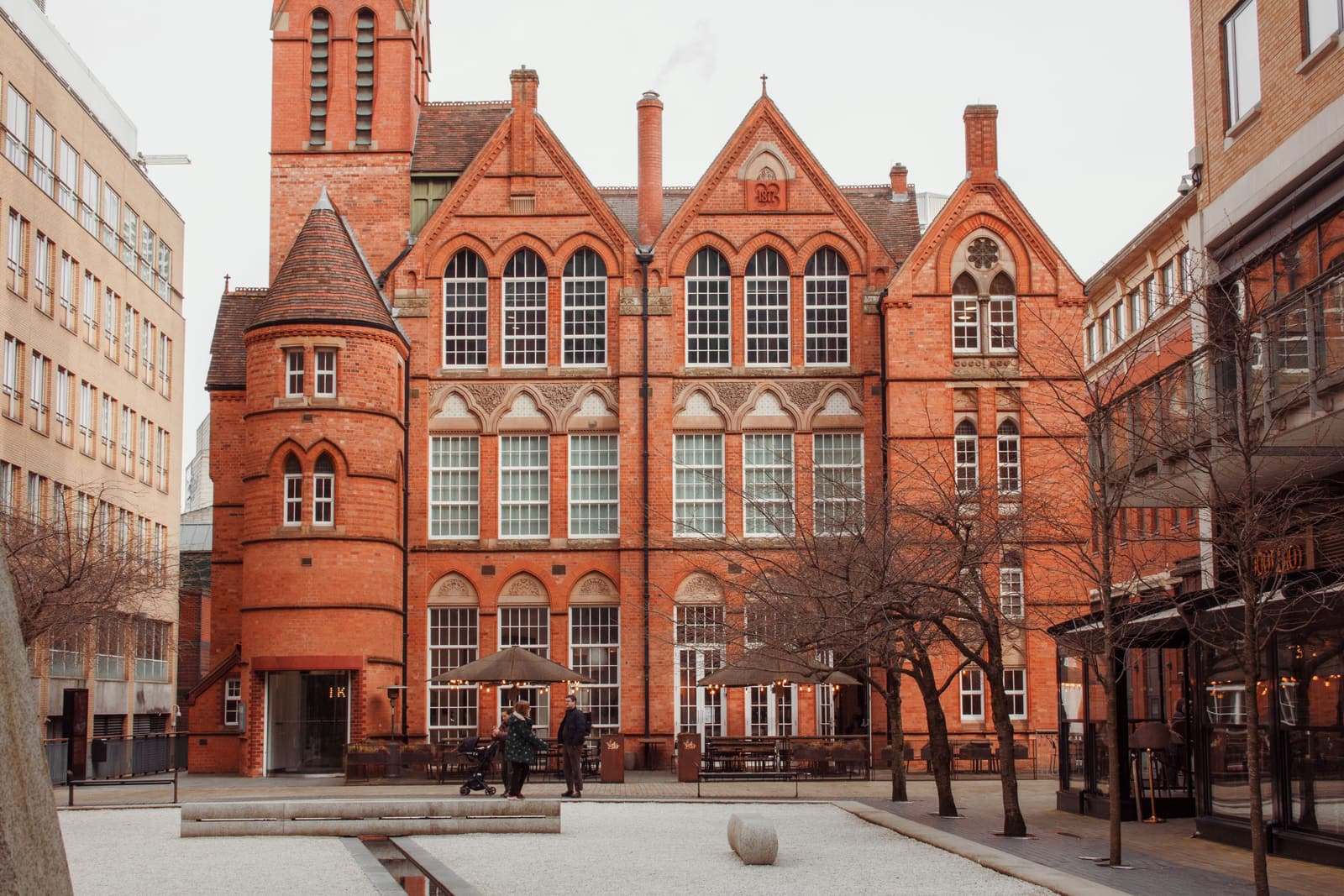
There is a pub two minutes from Birmingham New Street Station that has been locked since 2014, and it explains this city's entire record collection better than any museum could. At The Crown, in 1962, a folk singer named Ian Campbell recorded the first live folk album ever released in Britain — and seventeen years later, two of his sons formed a reggae band called UB40. Upstairs, from 1968, a blues club run by Jim Simpson hosted a teenage covers band called Earth, who renamed themselves Black Sabbath within the year. Judas Priest played there. So did Duran Duran. Birmingham didn't choose between heavy metal and reggae, or between the industrial city and the multicultural one. It made both, out of the same streets, in the same recession — and this guide walks you through where to find what's left of it on vinyl.

A short history: how the scene was born
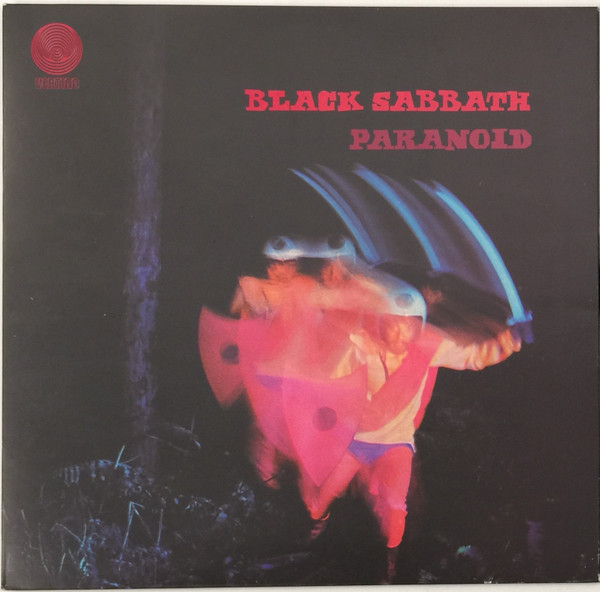
Jim Simpson, who ran the blues nights at The Crown, became Black Sabbath's first manager under his own company, Big Bear. When Paranoid went to press on Vertigo in 1970, the earliest copies carried his name and Birmingham's inside the gatefold — pulled within weeks over a contract dispute, and the single most useful pressing detail a collector can carry into this city's shops (see the record pick below). The sound itself has a stranger origin story: guitarist Tony Iommi lost the tips of two fingers in a Birmingham sheet-metal factory as a teenager, was told he'd never play again, and instead built plastic fingertip thimbles, switched to lighter strings and detuned his guitar to ease the strain — the accidental birth of the heaviest riff in rock.
Judas Priest formed close by in West Bromwich in 1969, young enough to have watched Sabbath's rise from the crowd at Mothers, the short-lived Erdington club that Billboard twice rated the best rock venue in the world. When Sabbath outgrew a rehearsal room, Priest inherited it directly. Their 1976 album Sad Wings of Destiny is where the second generation of Birmingham metal found its own identity.
A few miles south, in Balsall Heath, UB40 formed in December 1978 among the sons and friends of Windrush and Indian families who'd grown up together on the same streets. Their debut, Signing Off, was recorded in a Moseley front room belonging to Bob Lamb of the Steve Gibbons Band and released on Graduate, an independent label based in nearby Dudley. In Handsworth, Steven Kapur — Apache Indian — grew up in a Punjabi family alongside the reggae band Steel Pulse, and fused both traditions into "bhangramuffin," self-pressing 500 copies of Move Over India in 1990 before Island Records signed him. Birmingham also built its own bhangra recording industry: Nachural Records, founded here in 1991, became one of the genre's defining British labels, at a time when most bhangra circulated on cassette rather than vinyl — which makes the vinyl the rare format, not the common one.
The Crown itself was sold to developers in 2014 and never reopened. It won Grade II listed protection in March 2024, after a campaign backed by Tony Iommi, and the push to actually bring it back to life gathered new strength after Ozzy Osbourne's death in 2025, when a petition passed 26,000 signatures. As of this writing it remains closed — a monument to everything that started inside it, visible only from the pavement.
The geography today: where to go
Birmingham's shops sit in five loose clusters, and you'll need a bus or a short train ride between most of them — this is a spread-out, working city, not a compact old town built for a tourist's afternoon.
City centre
The Diskery (99-102 Bromsgrove Street) has traded since 1952 and moved only once, in 1972 — one of England's longest-running independents, though not, despite what some articles claim, the country's oldest (that's Spillers, in Cardiff). Everything is here: rock, reggae, jazz, soul, classical, 100,000-plus records deep. A short walk away, Swordfish Records (Dalton Street) opened in 1979 as Rockers before becoming Swordfish in 1989, and still trades on a remembered connection to Duran Duran. Ignite Record Store, run by Rich, is the city's metal and punk specialist, grown out of the closed Tempest Records in the indoor-market circuit around Corporation Street.
Winson Green and Hockley
Summit Records (Dudley Road), open since 1980, is the last of Birmingham's dedicated reggae, soul and gospel specialists — older shops like Don Christie and Brian Harris are long gone. Nearby, Artum at the Hockley Social Club is a café-bar with a genuine, browsable record collection on the wall, the closest thing this city has to a listening bar.
King's Heath and Stirchley
Polar Bear Records (York Road) sits two minutes from the Hare & Hounds, where UB40 played their first gig in 1979, and stocks jazz, classical and world music alongside an unexpectedly deep metal section. Emortal Records in Stirchley is the city's dance and drum'n'bass specialist, run by Marcel with a two-deck testing setup on the counter.
Beyond the city
Psychotron Records in Sutton Coldfield and Eclipse Records in Walsall are each worth a dedicated half-day trip — Psychotron for its bargain bins, Eclipse for genuine breadth across indie, metal, post-rock, punk, jazz and soul, inside a building with original stained-glass windows.
Two revolutions, one city
What makes Birmingham unusual, in a book full of cities that gave the world one sound, is that it gave the world two — and never treated either as more important than the other. The same working-class recession that produced Black Sabbath's detuned, guillotine-scarred riffs produced UB40's unemployment-form album cover a few streets away, and the same city that built the infrastructure for one genre — Jim Simpson's Big Bear management, the pressing plants, the local labels — built it again for the other, with Bob Lamb's home studio and Graduate Records standing in for Big Bear. Add Apache Indian's bhangra-reggae fusion out of Handsworth and Nachural Records' quiet but real bhangra catalogue, and Birmingham becomes the one city in this book where a single shop crawl can plausibly cross three separate diaspora and working-class musical traditions in the space of an afternoon.
Recommended routes
The metal and city-centre round. Start at The Crown for the photo, then The Diskery, Swordfish and Ignite — all within a short walk of New Street Station. A half-day, easily.
The reggae and bhangra thread. Summit Records in Winson Green, then south to Polar Bear in King's Heath (two minutes from the Hare & Hounds) and, if you're feeling ambitious, the Balti Triangle in Sparkbrook for lunch in the neighbourhood where UB40 grew up.
A day out of town. Pick one: Psychotron in Sutton Coldfield for the bargain bins, or Eclipse in Walsall for breadth. Either is a full half-day round trip — don't try to combine them with the city centre in the same afternoon.
Practice: what you need to know
Getting around. The city centre is walkable; buses run frequently to King's Heath and Stirchley along the Alcester Road and Stratford Road corridors. Sutton Coldfield and Walsall each need a proper train or bus journey of 20-40 minutes.
Opening hours. The real risk here isn't a bad price, it's a locked door: The Diskery closes Tuesdays, Swordfish Monday and Tuesday, Polar Bear Sunday to Tuesday, Eclipse Sunday and Monday. Plan around Wednesday to Saturday.
From the airport. Birmingham Airport connects to Birmingham International station by a free shuttle, then a ten-minute train to New Street — 20-30 minutes door to door.
Cash. No strict cash-only pattern here — ordinary UK card and contactless norms apply, though the smaller independents always appreciate it.
Prices. Fair rather than inflated. A common used pressing runs a few pounds; a desirable original heavy metal pressing (Vertigo, Gull) climbs into the tens to low hundreds; the rarest Sabbath pressings, with the Big Bear management credit intact, go higher still.
Frequently asked questions
What's the best record shop in Birmingham? It depends what you're after. For general depth and history, The Diskery; for metal and punk, Ignite; for reggae and soul, Summit Records. There's no single best — like most cities in this book, Birmingham rewards specialists over generalists.
Where can I find Black Sabbath and heavy metal vinyl in Birmingham? The Diskery has the deepest general stock, and Polar Bear Records in King's Heath keeps a surprisingly strong metal section. Look for Vertigo swirl-label Black Sabbath pressings and Gull Records-era Judas Priest.
Where do I find reggae and UB40-era vinyl in Birmingham? Summit Records on Dudley Road is the city's last dedicated reggae specialist. The Diskery's reggae section has been a fixture since the shop's earliest decades too.
Is there bhangra vinyl in Birmingham? Yes, though it's genuinely scarce — British bhangra circulated mostly on cassette. Nachural Records, founded in Birmingham in 1991, is the city's own bhangra label; ask at Summit Records, which occasionally carries stock that's crossed over from the genre.
Can I visit The Crown, where Black Sabbath started? Not currently. The pub has been closed since 2014 and is Grade II listed but not open to the public. You can walk past it, two minutes from New Street Station — it's worth the detour even from outside.
Are Birmingham's record shops open on Mondays? Many aren't. The Diskery, Swordfish, Polar Bear and Eclipse all close at least one day early in the week (see Practice, above). Wednesday to Saturday is the safest window.
Do I need cash in Birmingham's record shops? Not essential — card and contactless are widely accepted — but it's always worth carrying some for the smaller independents.
A record to look for in Birmingham
If Berlin sends you home with the record that fused its two sonic souls, Birmingham sends you home with the one whose sleeve names the man who ran the room where its story started.
Which pressing? Check it on Discogs ↗
Black Sabbath cut Paranoid in 1970, months after their debut, and the record gave heavy metal both its name and its sound. The earliest UK pressings on Vertigo carry a large "swirl" label and a matte, unlaminated gatefold sleeve — and, for a few weeks only, a management credit inside the gatefold reading "Jim Simpson, Big Bear, Birmingham." That credit was pulled after a contract dispute, and no pressing since has carried it: a copy with the name intact is provably among the very first off the press, a direct paper link back to The Crown, the pub where the band that made it got its start. The album was nearly called War Pigs — the title changed late, to avoid an unwanted reading against the Vietnam war on the American market, which is why the cover art still shows a running, sword-and-shield figure that doesn't quite match a song called "Paranoid." Hunt it at The Diskery, the shop with the depth and the staff knowledge to actually have one, and check the label position and the gatefold credit before you pay.